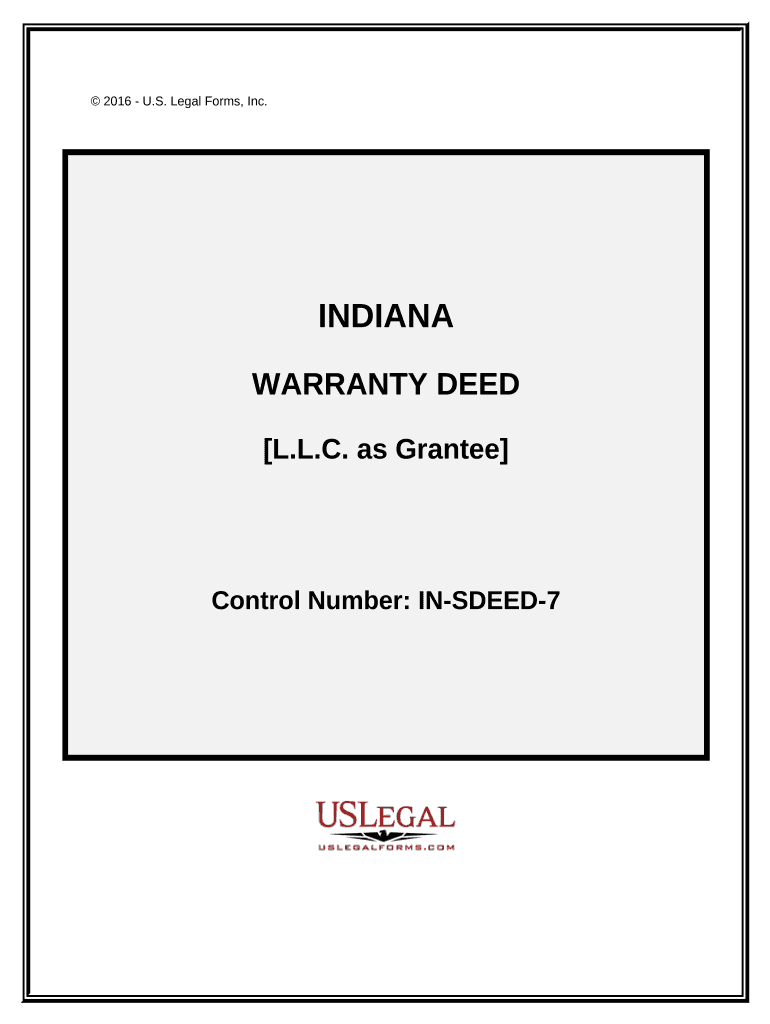
Warranty Deed from Limited Partnership or LLC is the Grantor, or Grantee - Indiana 2025

Get Form
Warranty Deed from Limited Partnership or LLC is the Grantor, or Grantee - Indiana Preview on Page 1

Here's how it works

01. Edit your form online
Type text, add images, blackout confidential details, add comments, highlights and more.
02. Sign it in a few clicks
Draw your signature, type it, upload its image, or use your mobile device as a signature pad.
03. Share your form with others
Send it via email, link, or fax. You can also download it, export it or print it out.

How to use or fill out Warranty Deed from Limited Partnership or LLC is the Grantor, or Grantee - Indiana

Form edit decoration
9.5
Ease of Setup
DocHub User Ratings on G2
9.0
Ease of Use
DocHub User Ratings on G2
  1. Click ‘Get Form’ to open it in the editor.
  2. Begin by entering the Grantee's name, address, and telephone number in the designated fields. Ensure accuracy as this information is crucial for legal purposes.
  3. Fill in the Grantor's details, including names and addresses. If there are multiple Grantors, ensure all are listed correctly.
  4. Specify the county and state where the property is located. This section is vital for jurisdictional clarity.
  5. Enter the sum of money involved in the transaction. This amount should reflect the agreed purchase price.
  6. Attach a legal description of the property as Exhibit A. This ensures that all parties understand what property is being conveyed.
  7. Have all Grantors sign and date the document. Notarization is required; ensure a Notary Public witnesses these signatures.
  8. Finally, review all entries for accuracy before saving or printing your completed Warranty Deed.

Start using our platform today to streamline your document editing and signing process for free!

be ready to get more

Complete this form in 5 minutes or less

Get form

Got questions?

We have answers to the most popular questions from our customers. If you can't find an answer to your question, please contact us.
Contact us
The Grantor is the seller (on deeds), or borrower (on mortgages). The Grantor is usually the one who signed the document.
In real estate, the grantor is the person who transfers property ownership, while the grantee is the one who receives it. The definition of grantor and grantee is important because these roles appear in legal documents like deeds, which outline each partys rights and responsibilities.
This kind of deed guarantees that there are no title defectsclaims against the title by a creditor or anyone elsethat were put in place during the time period the grantor owned the property. The deed does not offer any guarantees about the condition of the title from the time period before the grantor took ownership.
The Warranty of Title clause ensures that the seller guarantees they have the legal right to transfer ownership of the goods being sold and that the title is free from any encumbrances, liens, or other claims. This clause protects the buyer from any third-party claims on the title that may arise after the purchase.
Through the recording of a warranty deed, the seller is providing assurances to the buyer should anything unexpected happen. If a third-party filed a claim against the property, even if the seller was unaware, the seller is legally liable to remedy the issue.

People also ask

Members of the LLC: In general, a deed to transfer property owned by the LLC must be signed by all LLC members.
The grantee is the entire legal entity even if only a particular component of the entity is designated in the grant award notice (GAN). For example, a GAN may name as the grantee one school or campus of a university.
In real estate, the grantor is the current property owner. Typically, the term is used during real estate transactions, but not necessarily. In addition to individual property owners, grantors can also be banking institutions, municipalities and county sheriffs and the like.

Related links