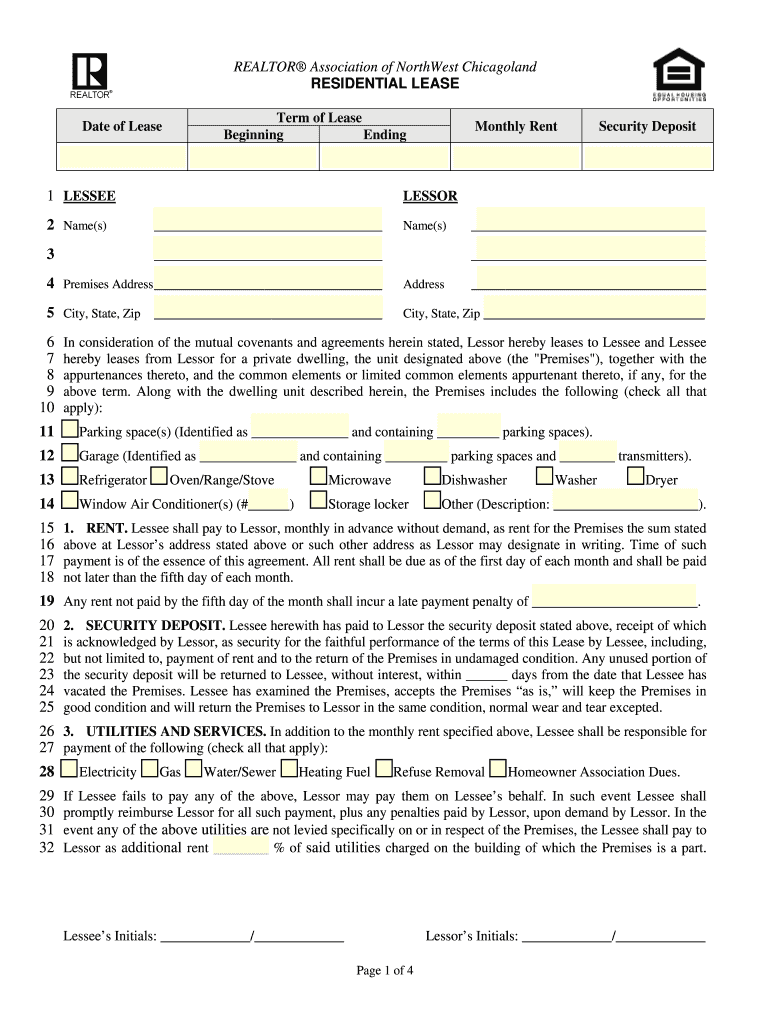







Overview of the Residential Lease Agreement
The residential lease agreement provided by the REALTOR® Association of Northwest Chicagoland is a crucial document for landlords and tenants in the region. This agreement governs the relationship between the lessor (landlord) and the lessee (tenant), outlining rights and responsibilities.
Key Components of the Residential Lease
The agreement typically includes several important elements:
-
Rent Details: Specifies the amount of rent due, the frequency of payment (monthly), and accepted payment methods. It may also detail late fees for overdue payments.
-
Security Deposit: Outlines the amount required as a security deposit, conditions for its use, and the timeline for its return after the lease termination.
-
Utilities: Defines which utilities are the responsibility of the tenant and which are covered by the landlord, such as water, gas, electricity, and internet services.
-
Maintenance Responsibilities: Specifies the obligations of both parties regarding the upkeep of the property, including repairs, lawn care, and routine maintenance.
Terms of Use and Alterations
The residential lease agreement contains clauses on how the tenant may use the property. Common points include:
-
Unauthorized Alterations: Restrictions on making changes to the property, like painting or structural modifications, without written consent from the landlord.
-
Pets: Details any prohibitions or permissions regarding pets, including applicable pet deposits.
-
Occupancy Limits: States the maximum number of occupants allowed in the rental unit, ensuring compliance with legal standards.
Age Restrictions and Termination Conditions
The lease includes provisions for compliance with local and state laws regarding tenant rights, such as age restrictions and the process for termination:
-
Termination Clause: Outlines the conditions under which either party may terminate the lease early and the required notice period.
-
Default Conditions: Details what constitutes a breach of the lease, such as non-payment of rent or violation of property rules, and the remedies available to the aggrieved party.
Possession and Damage Clauses
-
Possession Rights: Clarifies when the tenant is entitled to occupy the property and any penalties for the landlord's failure to provide access as agreed.
-
Damage Responsibilities: Outlines the responsibilities for damages incurred to the property during the lease tenure, differentiating between normal wear and tear and tenant-caused damage.
Legal and Compliance Aspects
The lease agreement must adhere to relevant Illinois laws governing residential leases, ensuring that all clauses are enforceable:
-
Compliance with Fair Housing Laws: Ensures that all terms conform to the Fair Housing Act, preventing discrimination based on race, gender, or familial status.
-
Electronic Signature Legality: Validates the use of electronic signatures as legally binding under the ESIGN Act, which can expedite the signing process.
Importance of Reviewing the Lease
It is advisable for tenants to thoroughly review the lease agreement before signing. Key strategies include:
-
Understanding Terms: Asking for clarification on any terms that seem ambiguous or unclear.
-
Negotiating Clauses: Being open to negotiate certain terms with the landlord to reach a mutually agreeable arrangement.
-
Seeking Legal Advice: Consulting with a legal professional, particularly for first-time renters or those unfamiliar with lease agreements.
Documenting Condition Prior to Move-in
Before moving in, establishing the property's condition is essential to avoid disputes later:
-
Walk-through Inspection: Conducting a detailed inspection with the landlord present, documenting any existing issues to prevent being held accountable after tenancy ends.
-
Photographic Evidence: Taking photographs of the property condition as a record can be beneficial if conflicts arise regarding damage claims when the lease concludes.
Considerations for Renewals or Extensions
As the lease term approaches its end, understanding renewal options is crucial:
-
Automatic Renewal Clauses: Noting any clauses indicating automatic renewal and understanding how to opt-out.
-
Negotiating New Terms: Utilizing the opportunity to negotiate better terms or adjustments in rent based on market conditions or personal circumstances.
By being informed about the detailed components of the residential lease agreement, tenants can protect their rights and ensure a smooth renting experience. This document serves as a foundation for a harmonious landlord-tenant relationship in the Northwest Chicagoland region.