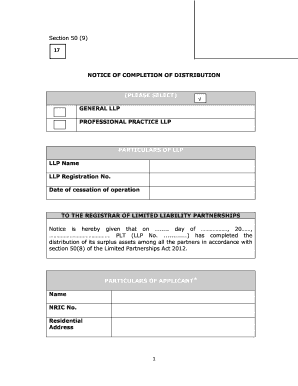
Wisconsin garnishment exemption form 2026

Get Form
wisconsin garnishment exemption form Preview on Page 1

Here's how it works

01. Edit your wisconsin garnishment exemption form online
Type text, add images, blackout confidential details, add comments, highlights and more.
02. Sign it in a few clicks
Draw your signature, type it, upload its image, or use your mobile device as a signature pad.
03. Share your form with others
Send wage garnishment hardship form via email, link, or fax. You can also download it, export it or print it out.

How to use or fill out Wisconsin Garnishment Exemption Form with DocHub

Form edit decoration
9.5
Ease of Setup
DocHub User Ratings on G2
9.0
Ease of Use
DocHub User Ratings on G2
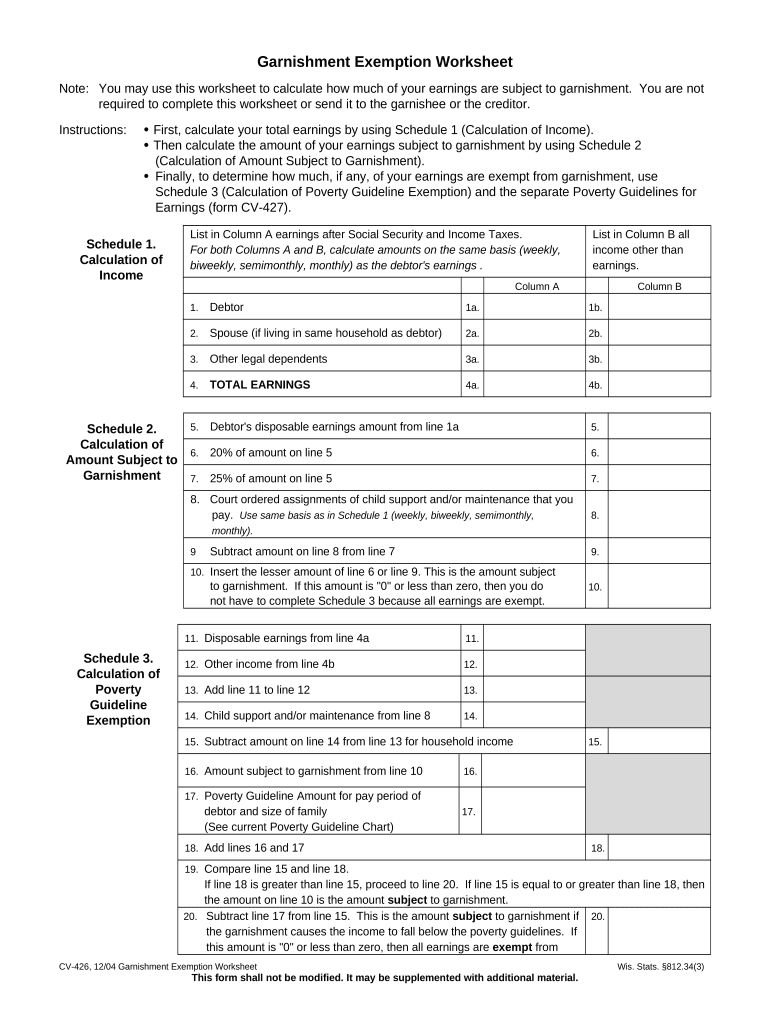
  1. Click ‘Get Form’ to open the Wisconsin Garnishment Exemption Worksheet in our editor.
  2. Begin with Schedule 1. List your total earnings after Social Security and income taxes in Column A, and any other income in Column B. Ensure you calculate these amounts based on the same frequency as your earnings (weekly, biweekly, etc.).
  3. Move to Schedule 2. Calculate your disposable earnings from line 1a and determine the garnishable amount by following the instructions provided for lines 5 through 10.
  4. Proceed to Schedule 3. Here, add your disposable earnings from line 4a and other income from line 4b. Follow the steps to compare household income against poverty guidelines to find out if any of your earnings are exempt.
  5. Review all entries for accuracy before saving or printing your completed form directly from our platform.

Start using our platform today for free to easily fill out your Wisconsin Garnishment Exemption Form!

be ready to get more

Complete this form in 5 minutes or less

Get form

Got questions?

We have answers to the most popular questions from our customers. If you can't find an answer to your question, please contact us.
Contact us
A creditor may not garnish more than 25% of your wages per pay period. For individuals earning minimum wage or near minimum wage, you must be left with an amount equal to 30 times the Maryland minimum hourly wage.
Quick Answer. If your wages or bank account have been garnished, you may be able to stop it by paying the debt in full, filing an objection with the court or filing for bankruptcy. If youve stopped paying a debt, your creditor could sue you and try to get a judgment from a court.
Consider Chapter 128: You may want to consider filing a Chapter 128 - which is a way to stop garnishment and force the creditor to accept monthly payments. This law also allows you to stop the interest from continuing to add to the balance of the debt owed!
At a minimum, your written objection to the garnishment should include the following information: the case number and case caption (ex: XYZ Bank vs. John Doe) the date of your objection. your name and current contact information. the reasons (or grounds) for your objection, and. your signature.
To file an emergency motion to stop wage garnishment, draft a clear motion explaining the urgent need to halt deductions. Include supporting evidence such as financial hardship or errors in the garnishment order. File the motion with the court handling the garnishment case, following local rules for emergency filings.

Security and compliance

At DocHub, your data security is our priority. We follow HIPAA, SOC2, GDPR, and other standards, so you can work on your documents with confidence.

Learn more
ccpa2
pci-dss
gdpr-compliance
hipaa
soc-compliance

People also ask

Creditors generally cannot garnish more than 25 percent of your disposable wages. Disposable wages are the earnings that remain after deducting all withholdings required by law, or any of your disposable wages if you make less than $380 per week. These limits do not apply to judgments for child support.
Certain types of income are protected from wage garnishment under federal and state law. This exempt income includes Social Security, unemployment benefits, and other public benefits and in many cases, you can stop or reduce garnishment by filing a claim of exemption.

garnishment exemption form