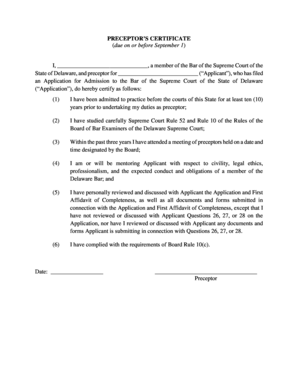
Order personal representative 2026

Get Form
order personal representative Preview on Page 1

Here's how it works

01. Edit your form online
Type text, add images, blackout confidential details, add comments, highlights and more.
02. Sign it in a few clicks
Draw your signature, type it, upload its image, or use your mobile device as a signature pad.
03. Share your form with others
Send it via email, link, or fax. You can also download it, export it or print it out.

How to use or fill out order personal representative with our platform

Form edit decoration
9.5
Ease of Setup
DocHub User Ratings on G2
9.0
Ease of Use
DocHub User Ratings on G2
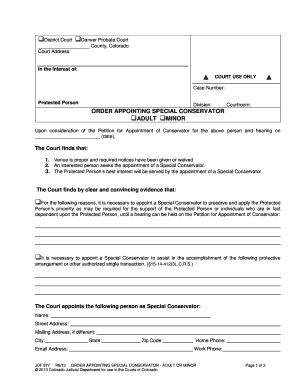
  1. Click ‘Get Form’ to open the order personal representative document in the editor.
  2. Begin by entering the court address and case number at the top of the form. Ensure that all details are accurate to avoid delays.
  3. In the section labeled 'In the Matter of the Estate of', input the name of the deceased individual. Follow this by filling in their date of death and confirming that 120 hours have elapsed since their passing.
  4. Provide information regarding the decedent's residence, including city, county, and state. This is crucial for establishing proper venue.
  5. List all heirs of the decedent along with their relationships to ensure transparency in estate distribution.
  6. Designate a qualified individual as Personal Representative by filling in their name, age confirmation, addresses, and contact numbers. This person will manage estate affairs.
  7. Indicate whether the Personal Representative will serve with or without bond and specify if administration is supervised or unsupervised.
  8. Finally, review all entries for accuracy before saving your completed form. Utilize our platform’s features to sign and distribute your document seamlessly.

Start using our platform today for free to streamline your document editing and signing process!

be ready to get more

Complete this form in 5 minutes or less

Get form

Got questions?

We have answers to the most popular questions from our customers. If you can't find an answer to your question, please contact us.
Contact us
There is not a major difference between an executor and a personal representative, as both are often used interchangeably.
As a personal representative (an executor or administrator) youre legally responsible for the money, property and possessions of the person who died (the estates assets). Youre responsible for the assets from the date of death until the date everything has been passed on to the beneficiaries.
While the starting position is that a Will can appoint anyone as a personal representative, there are some legal requirements limiting the possible executors. A personal representative must be: Over 18. Mentally capable.
Generally speaking, a Personal Representative is responsible for opening the estate, collecting the assets of the estate, protecting the estate property, preparing an inventory of the property, paying various estate expenses, valid claims (including debts and taxes) against the estate, representing the estate in claims
The individual who handles your affairs after your death is known generically as the Personal Representative of your estate. If you identify this person in your Last Will and Testament as part of the estate planning process, the Personal Representative is called an estate Executor.

Security and compliance

At DocHub, your data security is our priority. We follow HIPAA, SOC2, GDPR, and other standards, so you can work on your documents with confidence.

Learn more
ccpa2
pci-dss
gdpr-compliance
hipaa
soc-compliance
be ready to get more

Complete this form in 5 minutes or less

Get form

People also ask

Generally, the personal representatives powers and duties are limited to those required to manage and preserve the decedents assets during the period of administration. These duties include: Inventorying and collecting the assets of the estate (except nonprobate assets);

Related links