
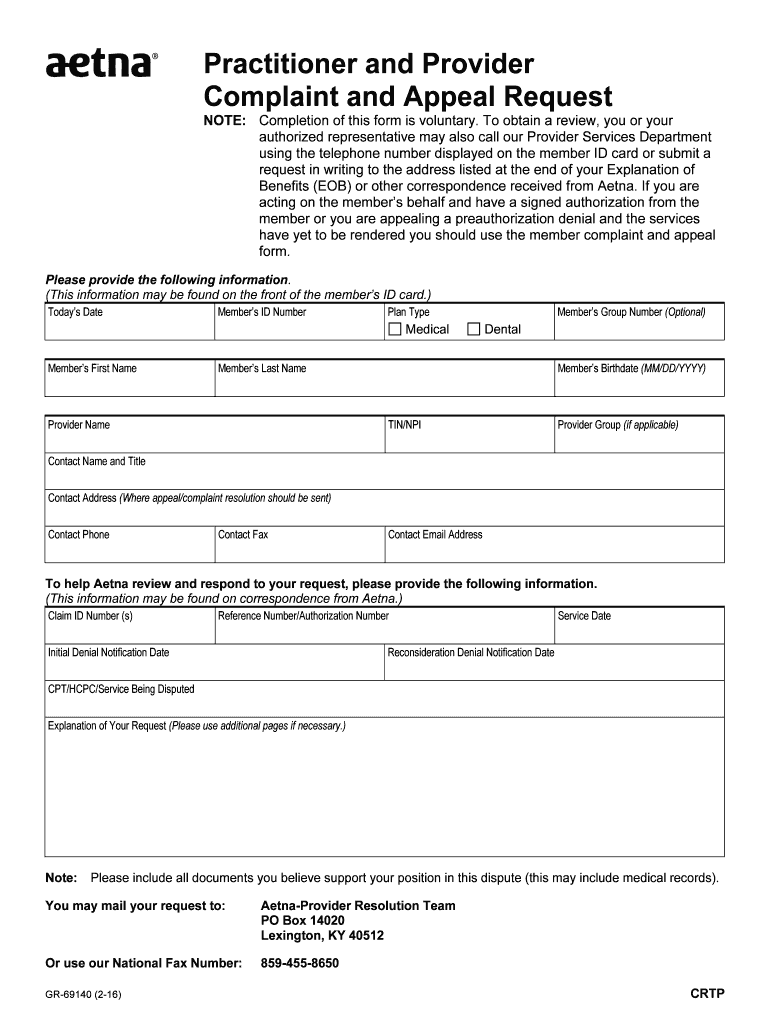







Overview of the Aetna Appeal Form
The Aetna appeal form is crucial for healthcare providers and members seeking reconsideration of denied claims or preauthorization requests. This form allows for a structured process to submit appeals and ensures that all pertinent information is collected for review.
Essential Components of the Aetna Appeal Form
This form includes several mandatory fields to ensure comprehensive submission. Key elements typically consist of:
- Member Information: Details such as the member's name, contact information, and insurance identification number.
- Claim Information: Specifics about the claim, including the claim ID, date of service, and referral number, if applicable.
- Provider Information: The name, contact details, and provider ID of the healthcare practitioner filing the appeal.
- Denial Reason: A section where the original reason for denial can be noted, which is crucial for proper assessment.
Each field must be accurately completed to avoid delays in the appeals process.
Step-by-Step Process to Complete the Aetna Appeal Form
Completing the Aetna appeal form involves a series of straightforward steps:
- Gather Necessary Information: Accumulate all relevant documents, including the original denial notice and any supporting evidence.
- Fill Out Member Details: Input the member's information clearly.
- Document Claim Details: Enter the claim information accurately to facilitate efficient processing.
- Explain the Basis for Appeal: Provide a detailed explanation regarding why the decision should be reconsidered, referencing relevant policies or additional documentation.
- Attach Supporting Documents: Include copies of any additional evidence that supports your case, like medical records or previous communications.
- Submit the Form: Send the completed form via the appropriate submission method (fax, email, or mail), ensuring you keep copies for your records.
By following these steps, healthcare providers can ensure they present a strong case for appeal.
Important Submission Guidelines for Aetna Appeals
Understanding submission guidelines is essential for effective appeal management. Important considerations include:
- Timely Filing Limits: Aetna generally sets specific timeframes for filing appeals. Members and providers should be aware of the deadlines to ensure their appeal is considered.
- Submission Methods: The appeal form can often be submitted online through designated portals, by fax, or via traditional mail. Each method has its pros and cons regarding speed and documentation.
Proper adherence to these guidelines greatly influences the likelihood of a successful appeal.
Understanding the Aetna Timely Filing Limits
Each insurance provider, including Aetna, has defined timely filing limits for claims and appeals. It is essential to note:
- General Timeframes: Aetna typically requires that appeals be filed within a specified period (usually between 30 to 180 days) following a denial.
- Extensions and Exceptions: In some cases, exceptions might be applicable, such as if there has been a delay due to extenuating circumstances. Documenting these instances carefully can be beneficial in the appeal process.
Awareness of the timely filing limits and adherence to them is critical to ensure that the appeal is not dismissed due to lateness.
Examples of Common Denials and Appeal Strategies
Providers may encounter various reasons for claim denials. Understanding these can help in better preparing an appeal. Some common denial reasons include:
- Preauthorization Issues: Lack of required preauthorization may lead to denials.
- Service Not Covered: Services rendered may not be covered under the member's plan.
- Insufficient Documentation: Failure to provide complete documentation to substantiate claims can result in denials.
To enhance the chances of success, it's important to reference the specific denial reason in the appeal and provide documents that support the case.
Final Considerations When Utilizing the Aetna Appeal Form
Preparation and thoroughness are vital when completing the Aetna appeal form. Consider the following:
- Reviewing Previous Claims: Analyzing previously successful appeals can inform the current submission strategy.
- Engaging Legal or Professional Help: In complex cases, consulting with specialists well-versed in healthcare appeals can provide an advantage.
- Continuous Follow-Up: After submission, engaging in routine follow-up can help track the status of the appeal and address any additional requests from Aetna promptly.
These considerations help ensure that the appeals process is as smooth and effective as possible, increasing the likelihood of favorable outcomes.




