






Overview of the QABF Assessment Tool
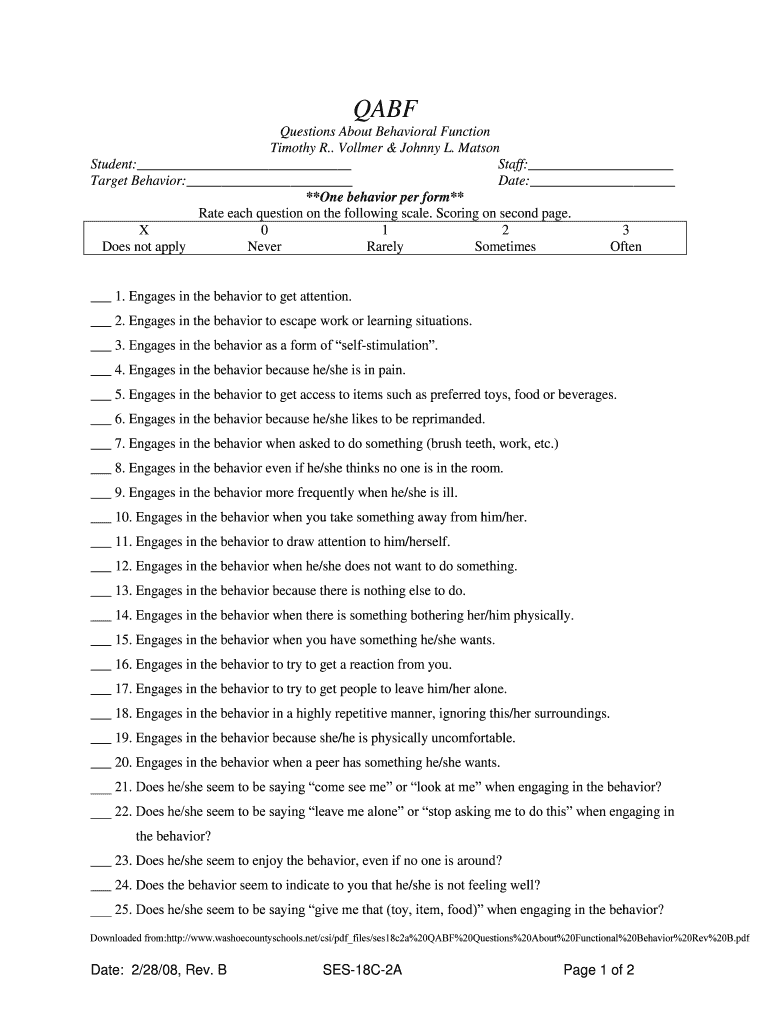
The QABF (Questions About Behavioral Function) assessment tool is designed to evaluate the underlying reasons for specific target behaviors in individuals. Developed by Timothy R. Vollmer and Johnny L. Matson, this assessment is utilized by professionals in various fields, including psychology, education, and behavioral analysis. The tool comprises a series of questions that require staff to rate behaviors based on five potential motivators: attention-seeking, escape from tasks, self-stimulation, physical discomfort, or desire for tangible items. This structured approach offers insights into behavioral patterns and informs intervention strategies.
Components of the QABF Assessment Form
The QABF includes several key elements that facilitate a comprehensive evaluation:
-
Behavior Categories: The QABF categorizes target behaviors into distinct types, allowing for a more targeted analysis. These categories help in identifying the specific motivations behind behaviors, which can guide intervention efforts.
-
Rating Scale: Each question within the QABF is rated on a scale, typically from one to five, which quantifies the intensity or frequency of the observed behavior. This scale provides a standardized method for assessing varying degrees of behavioral function.
-
Demographic Information Section: This part of the assessment collects essential data about the individual being assessed, including age, gender, and relevant background details. This context can help interpret the results more accurately.
-
Open-ended Questions: To complement quantitative data, the QABF also includes open-ended questions that allow respondents to provide additional insights or anecdotal evidence regarding the behaviors in question. This qualitative data enriches the overall understanding of the individual’s behavioral context.
How to Administer the QABF Assessment
-
Preparation: Ensure that the QABF assessment form is readily available in the required format, whether as a printable PDF or fillable online form on platforms like Google Forms.
-
Contextual Understanding: Administrators should familiarize themselves with the purpose and structure of the QABF to effectively guide respondents through the process.
-
Administering the Assessment: Present the QABF to the relevant stakeholders, such as teachers, caregivers, or clinicians, who can provide informed ratings. It's crucial to discuss the rating scale and the importance of honest and accurate evaluations.
-
Data Collection: Collect completed assessments in a secure manner, ensuring confidentiality and data protection throughout the process.
Scoring the QABF Assessment
Scoring the QABF is critical for interpreting the results effectively:
-
Calculating Scores: Sum the ratings for each behavior across the various motivators to obtain a total score for each category. Higher scores can indicate stronger motivations behind target behaviors.
-
Comparison Against Norms: Where applicable, compare individual scores against normative data to contextualize findings. This comparison can help identify significant deviations that may warrant further investigation or intervention.
-
Graphing Results: Visual representations, such as graphs, can be beneficial for displaying the frequency and intensity of behaviors across categories. This aids in visualizing trends and areas needing attention.
Practical Applications of the QABF Assessment
-
Behavioral Intervention Planning: The insights gathered through the QABF can guide the development of personalized intervention strategies tailored to the individual’s specific needs. For instance, if a particular behavior is identified as attention-seeking, targeted interventions can be created to address this form of motivation.
-
Monitoring Progress: Re-administering the QABF at regular intervals allows practitioners to track changes in behavior over time and assess the effectiveness of interventions. Consistent monitoring contributes to a more dynamic and responsive treatment approach.
-
Collaboration Among Professionals: The QABF can be used in interdisciplinary settings, allowing various professionals to share insights and strategies related to an individual’s behavioral management. This collaboration enhances the overall effectiveness of support provided.
Legal and Ethical Considerations
When utilizing the QABF, professionals must adhere to ethical guidelines and legal standards, especially concerning confidentiality and informed consent. It is essential to ensure that all parties involved understand the purpose of the assessment and how the data will be used. Additionally, complying with state and federal regulations related to data handling and behavioral assessments is paramount in maintaining professional integrity and protecting individuals' rights.
By integrating these considerations into the application of the QABF, professionals can foster a supportive and compliant environment for behavior assessment and modification.