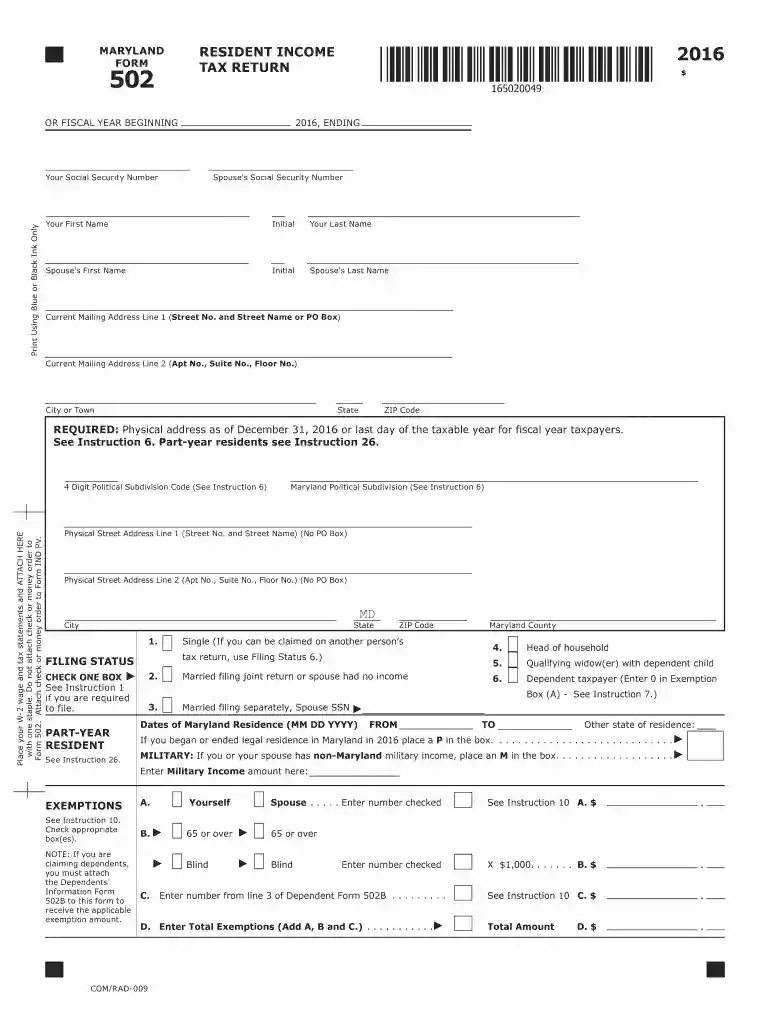
Definition and Purpose of Maryland Form 502 for 2016
Maryland Form 502 for 2016 is a crucial document for residents filing their state income tax return. This form facilitates the reporting of personal income, deductions, and tax calculations specific to Maryland residents. It's designed to ascertain the state tax liability by collecting detailed financial information. Residents are required to complete this form accurately to ensure compliance with Maryland’s tax laws. Understanding the purpose of this form helps taxpayers avoid errors that could lead to penalties.
Key Components of Form 502
- Personal Information: This section gathers essential data, such as name, address, and Social Security Number to identify the taxpayer.
- Income Details: Taxpayers must disclose their income from various sources, including wages, salaries, interest, and dividends.
- Exemptions and Deductions: Allows taxpayers to list eligible deductions and exemptions, which can reduce taxable income.
- Tax Credits: Includes available credits that can lower the overall tax liability, such as credits for education or energy efficiency.
- Tax Calculations: Guides taxpayers through computing their total taxable income and the resulting tax owed to the state.
Steps to Complete Maryland Form 502 for 2016
Completing Maryland Form 502 requires a series of methodical steps to ensure accuracy and compliance. Here’s a streamlined process to assist taxpayers:
- Gather Required Documents: Start by collecting all necessary documents, such as W-2s, 1099s, and documentation for deductions and credits.
- Fill in Personal Information: Enter your personal details accurately in the designated fields.
- Report Income Sources: List all income sources, using additional forms if required for complex cases.
- Calculate Adjusted Gross Income (AGI): Sum all income sources, subtract any allowable adjustments to determine AGI.
- Apply Deductions and Credits: Input applicable deductions to lower taxable income, and then apply eligible tax credits.
- Compute Tax Liability: Use the tax tables provided to determine the tax owed based on your taxable income.
- Review and Sign the Form: Carefully review all entries for accuracy before signing the form to certify its truthfulness.
Common Mistakes to Avoid
- Omitting Income: Ensure all income sources are reported to prevent discrepancies.
- Incorrect Calculations: Double-check calculations or utilize tax software to minimize errors.
- Overlooking Tax Credits: Failing to apply eligible credits can lead to overpayment.
How to Obtain Maryland Form 502 for 2016
Acquiring Maryland Form 502 is a straightforward process, offering several options for accessibility:
- Online Download: Visit the Maryland Comptroller's official site to download the digital version of Form 502, which can be filled out electronically or printed.
- Local Tax Offices: Forms are available at local tax agency offices where taxpayers can collect them in person.
- Tax Software: Programs like TurboTax and QuickBooks include Form 502, simplifying the filing process through digital means.
Digital vs. Paper Versions
- Digital: Offers convenience with features like auto-fill and error-checking.
- Paper: Preferred by those who may not have reliable internet access or are more comfortable with traditional methods.
Why You Should File Maryland Form 502
Filing a Maryland Résident Income Tax Return is not only a legal obligation but also serves several purposes for residents:
- Compliance with State Laws: Ensures adherence to state tax regulations and avoids potential legal repercussions.
- Potential Refunds: Filing accurately can result in refunds for overpayments or eligible credits.
- Contributions to State Resources: Taxes collected fund public services and infrastructure within Maryland.
Risks of Non-Compliance
- Penalties and Interest: Late filing or underpayment can lead to significant financial penalties.
- Audits: Inaccurate or incomplete filings may trigger audits from the state tax authorities.
Who Typically Uses Maryland Form 502
Maryland Form 502 is primarily used by residents who live full-time within the state. Specific groups who frequently file this form include:
- Employed Individuals: W-2 employees with taxes withheld throughout the year must file to reconcile any discrepancies.
- Self-Employed Residents: Must report earnings and expenses relating to their business activities within the state.
- Retired Individuals: Those receiving pension or retirement benefits that are taxable by the state.
Special Considerations for Unique Scenarios
- Students: May require additional attention to scholarships and educational credits.
- Military Personnel: Specific provisions exist for active service members regarding domicile and tax obligations.
Required Documents for Filing
Before filing Maryland Form 502, taxpayers should gather and organize necessary documentation:
- W-2 Forms: Reflects income received and taxes withheld by employers.
- 1099 Forms: For income received from non-employment sources like freelance work or investments.
- Receipts for Deductions: Document eligible expenses, such as medical or education costs, to support claims on the form.
Supporting Documentation
- Proof of Residency: Utility bills or lease agreements to affirm residency status.
- Tax Credit Information: Certificates or records that validate eligibility for claimed credits.
IRS Guidelines and Rulings
While Form 502 is specific to Maryland, understanding IRS guidelines helps align state filings with federal tax obligations:
- Consistency with Federal Returns: Ensure that figures reported on Maryland Form 502 match those on federal tax returns to avoid discrepancies.
- Understanding Federal Adjustments: Recognize federal adjustments and their implications on state tax calculations.
Key IRS Considerations
- Standard vs. Itemized Deductions: Knowing when to itemize can affect both federal and state returns.
- Dependents: Correctly reporting dependents and their details impacts exemptions and credits.
Penalties for Non-Compliance
Failure to comply with Maryland tax filing requirements can result in significant consequences:
- Late Filing Penalties: Imposed for forms not submitted by the deadline without a valid extension.
- Underpayment Interest: Charged on taxes owed but not paid by the due date.
- Failure to File: Can result in substantial fines and legal action by the Maryland Comptroller’s office.
Mitigating Non-Compliance Risks
- Extensions: Filing for an extension can prevent penalties for late submissions, though taxes are still due by the original deadline.
- Payment Plans: Offer a way to manage outstanding tax debts in installments, reducing immediate financial strain.