







Definition & Meaning of the Social Security Administration Representative Payee Report Form
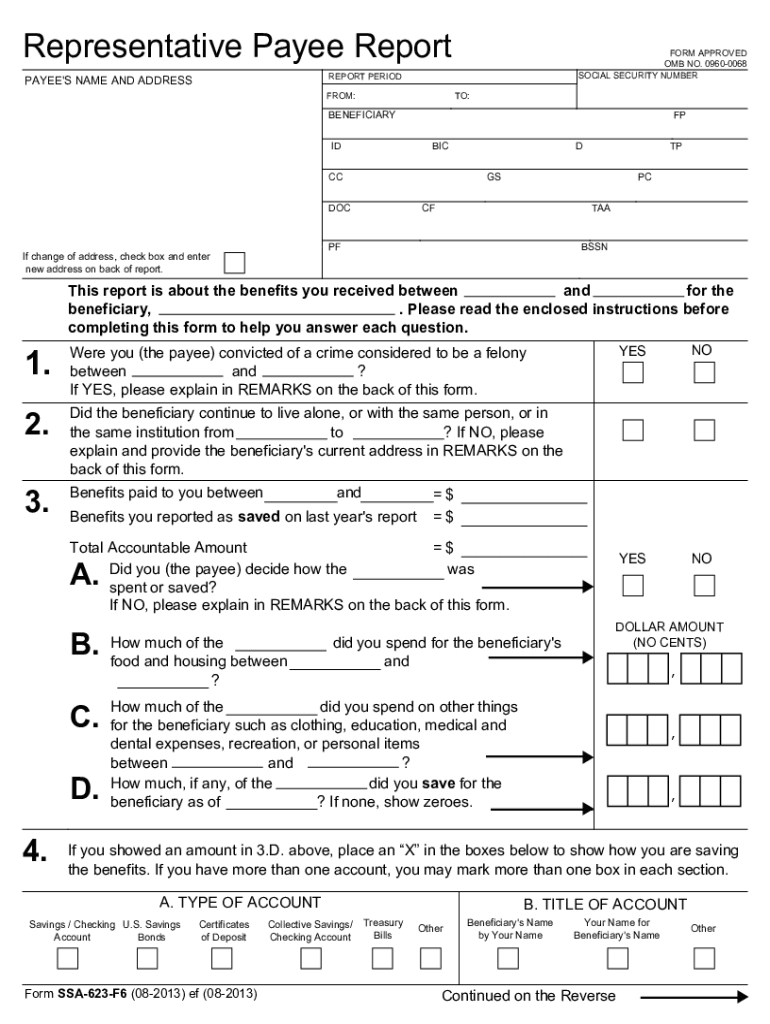
The Social Security Administration (SSA) Representative Payee Report Form, officially known as Form SSA-623, is vital for individuals appointed as representative payees. These appointed payees are responsible for managing Social Security or Supplemental Security Income (SSI) benefits on behalf of beneficiaries who are unable to manage their finances. The report form serves multiple purposes, including ensuring accountability and transparency in how funds are allocated and spent for the beneficiary’s needs.
The primary responsibility of a representative payee is to utilize the beneficiary’s funds for their essentials, which includes housing, food, and medical care. The SSA requires a detailed accounting of how these benefits were used over a specified 12-month period. This detailed reporting helps the SSA maintain oversight and ensures that beneficiaries receive the support they need for their well-being.
Key Responsibilities of a Representative Payee
- Managing and safeguarding the beneficiary's funds.
- Reporting on the expenditures made on behalf of the beneficiary.
- Maintaining records of all income and outgoings related to the benefits received.
Steps to Complete the Social Security Administration Representative Payee Report Form
Completing the Social Security Administration Representative Payee Report Form involves a systematic approach to accurately represent the financial activities for the beneficiary during the reporting period.
-
Gather Necessary Information: Before starting the form, collect all relevant documents regarding the beneficiary’s income and expenditures over the past year. This may include bank statements, receipts, and invoices.
-
Begin Completion of Form SSA-623: The form is structured to require information about how benefits were utilized. Be thorough in providing details for each category, including:
- Income: Total amount received in benefits.
- Expenditures: Breakdown of how funds were used, including categories such as:
- Food
- Housing
- Medical expenses
- Personal items
-
Report on Changes: If there have been any changes in the beneficiary’s financial situation, such as income changes or changes in living arrangements, these must be reported in the form.
-
Review for Accuracy: Once the form is filled out, review it for completeness and accuracy. Mistakes or omissions can lead to delays or complications in processing.
-
Submission: Once the form is finalized, submit it through the appropriate channel, whether online or by mail.
Important Reminders
- The form must be submitted within 30 days of the end of the reporting period.
- Maintain copies of all records for future reference.
How to Obtain the Social Security Administration Representative Payee Report Form
Obtaining the Social Security Administration Representative Payee Report Form is straightforward and can be done through several methods.
-
Online Access: Visit the SSA website where you can download the SSA-623 form as a PDF. This version can be filled out electronically or printed for manual completion.
-
Local SSA Office: You can visit your local Social Security office to request a paper copy of the form.
-
Phone Request: Alternatively, you can call the SSA to request that a form be mailed to your address.
Tips for Form Access
- Ensure you have the latest version of Form SSA-623 to comply with current requirements.
- If assistance is needed in completing the form, trained personnel at local SSA offices can provide guidance.
Important Terms Related to the Social Security Administration Representative Payee Report Form
Understanding the terminology associated with the SSA Representative Payee Report Form is essential for accurate completion and reporting. Here are some of the key terms:
-
Representative Payee: An individual or organization appointed to manage Social Security or SSI benefits on behalf of a beneficiary unable to do so themselves.
-
Beneficiary: The individual who receives Social Security or SSI benefits and for whom the representative payee is acting.
-
Expenditures: The specific amounts spent by the representative payee on behalf of the beneficiary during the reporting period.
-
Income Reporting: The obligation of the representative payee to report all sources of income received on behalf of the beneficiary.
Legal Use of the Social Security Administration Representative Payee Report Form
The legal framework surrounding the Social Security Administration Representative Payee Report Form mandates that all representative payees comply with federal regulations for the management of benefits.
-
Required Reporting: The SSA requires representative payees to submit the SSA-623 form to report expenditures systematically. Legal responsibility lies with the payee to ensure honest and accurate reporting.
-
Penalties for Non-Compliance: Failure to submit the report or inaccurate reporting may result in legal action, including penalties or being removed as the representative payee.
Compliance Considerations
- Regularly review SSA guidelines to stay informed of any changes regarding reporting requirements.
- Timeliness is critical; understand that reports are due within 30 days post the 12-month reporting period.
Who Typically Uses the Social Security Administration Representative Payee Report Form?
The social security administration representative payee report form is designed for various users, mainly focusing on representative payees assigned to manage benefits for individuals who cannot handle their financial affairs due to mental or physical impairments. Common users include:
- Family Members: Often a family member may be appointed as the representative payee to assist an elderly relative or a child.
- Guardians: Legal guardians of disabled individuals frequently manage benefits on behalf of their wards.
- Organizations: Non-profit organizations may act as payees for multiple beneficiaries, ensuring their needs are met.


Typical Use Cases
- Elderly Beneficiaries: Family members managing benefits for aging parents who may have cognitive limitations.
- Children: Parents acting as payees for children receiving SSI benefits due to disabilities.




