






Definition and Purpose of the Agreement to Lease
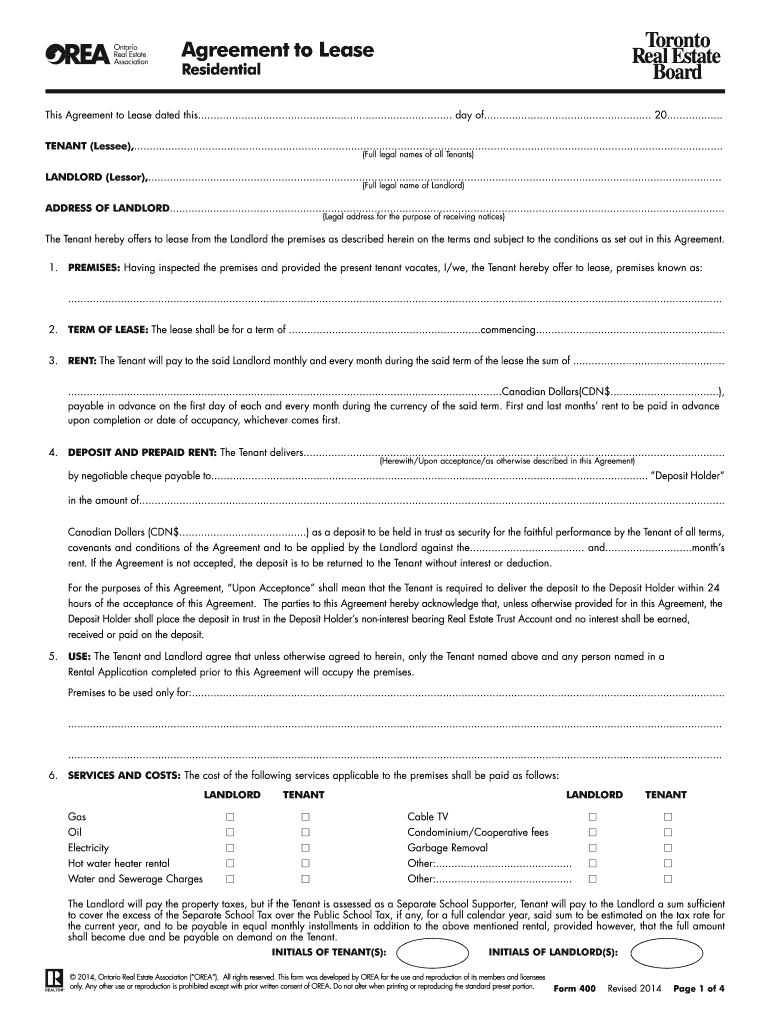
The "Agreement to Lease" is a legally binding document that outlines the rental terms for residential properties in Ontario, specifically tailored for transactions facilitated by the Toronto Real Estate Board. This agreement establishes the relationship between the Tenant and the Landlord, detailing each party's rights and responsibilities. It is crucial for ensuring clarity and reducing potential disputes.
Key elements often included in the agreement are:
- Premises Description: The exact address and description of the property being leased.
- Lease Term: The duration for which the lease is valid, with specified start and end dates.
- Rent and Payment Structure: Details on the amount of rent due, payment frequency, acceptable payment methods, and any late payment penalties.
- Deposit Requirements: Information about security deposits, including the amount and terms for its return.
- Usage of the Property: Restrictions or permissions related to how the property may be utilized by the Tenant.
- Maintenance Responsibilities: Assignments of responsibility for property upkeep, repairs, and utilities.
- Insurance Provisions: Any required insurance coverage that the Tenant must maintain during the lease period.
How to Utilize the Agreement to Lease
Using the Agreement to Lease effectively involves understanding all components of the document, accurately filling in essential information, and ensuring that both parties comprehend their obligations. To begin this process, both the Tenant and Landlord should review the agreement in detail and discuss any terms that may require negotiation.
Steps for effective utilization include:
- Review: Both parties should carefully review all sections of the agreement, paying close attention to rental payment terms and responsibilities.
- Negotiate Terms: If necessary, negotiate any terms that may not be agreeable to both parties, such as the lease duration or payment dates.
- Complete Required Fields: Fill out the framework of the document with all necessary personal and property details.
- Set Additional Conditions: Consider adding custom clauses related to the property usage or maintenance if standard terms are insufficient.
- Sign the Agreement: Both parties must sign and date the document to formalize the lease agreement.
How to Obtain the Agreement to Lease
The Agreement to Lease can be obtained from various sources:
- Real Estate Agents: Licensed agents often provide standard forms tailored to current Ontario regulations, including OREA's Form 400.
- Legal Websites: Many legal websites offer templates and samples of the Agreement to Lease for download.
- Real Estate Boards: The Toronto Real Estate Board provides this agreement to its members and may also have it available through its website.
- Document Preparation Services: Services like DocHub allow users to create, edit, and manage their lease agreements online.
When obtaining the document, it's essential to ensure you have the latest version to comply with the current laws.
Steps to Complete the Agreement to Lease
Completing the Agreement to Lease requires attention to detail to ensure all terms are accurately reflected. The steps are as follows:
- Identify the Parties: Clearly state the name and contact information of both the Tenant(s) and the Landlord.
- Detail the Premises: Provide the full address and any specific descriptors of the property being leased.
- Define Rental Terms: Specify the total rent amount, payment intervals, and accepted payment methods.
- Outline Lease Duration: Clearly indicate the start and end dates of the lease agreement.
- Set Deposit Amounts: Include information on any security deposits or advance rent payments required.
- Clarify Responsibilities: Assign responsibilities for utilities, maintenance, and other costs associated with the property.
- Incorporate Signatures: Ensure both the Tenant and Landlord sign and date the agreement in the designated areas.
Each of these steps aids in creating a comprehensive and clear understanding between both parties.
Important Terms Related to the Agreement to Lease
Understanding the key terms in an Agreement to Lease is vital for both parties to effectively manage their rights and responsibilities:
- Security Deposit: Money held by the Landlord to cover potential damages or unpaid rent.
- Occupancy: The right for the Tenant to take possession of the property under the agreed terms.
- Default: Failure of the Tenant or Landlord to adhere to the lease terms, which may lead to penalties or termination.
- Notice Period: The timeframe required for either party to notify the other about lease termination or renewal intentions.
- Alterations: Restrictions regarding what changes the Tenant may make to the property during the lease term.
These terms ensure that both parties have a clear understanding of their obligations and potential consequences for breach.
Legal Use of the Agreement to Lease
The Agreement to Lease must comply with local laws and regulations to be legally enforceable. In Ontario, this includes adherence to the Residential Tenancies Act, which provides rights and obligations for both landlords and tenants. Key legislative considerations include:
- Fair Housing Guidelines: Ensuring that the agreement is free of discriminatory language that may violate human rights legislation.
- Tenant Rights: Understanding the rights tenants have concerning maintenance, privacy, and notice for entry.
- Landlord Obligations: Clearly outlining the landlord's obligations regarding the property's condition and repairs.
- Termination Terms: Specifying permissible methods for terminating the lease and the notice required.
A well-constructed agreement should reflect these legal considerations to protect both parties and ensure fairness.
Key Elements of the Agreement to Lease
The Agreement to Lease should contain several critical components to ensure it covers all necessary aspects of the rental arrangement. These include:
- Identification of Parties: Names and contact details for both the Tenant and Landlord.
- Property Description: Clear physical address and details about the unit or property.
- Lease Duration: Specific dates indicating the start and end of the lease period.
- Financial Terms: Total rent, payment intervals, and any applicable fees or deposits.
- Maintenance Responsibilities: Detailed breakdown of each party's responsibilities for the upkeep of the property.
- Legal and Regulatory Compliance: Statements indicating adherence to relevant laws and regulations regarding the tenancy.
- Signatures: Signatures of both parties along with the date of signing to validate the agreement.
By ensuring these elements are well-defined, both the Tenant and Landlord can enjoy a clear and mutually beneficial leasing experience.
Variants and Alternatives to the Agreement to Lease
While the standard Agreement to Lease is widely accepted, there are variants and alternatives that may serve specific needs better. Some examples include:
- Commercial Lease Agreements: Tailored for business-related properties, addressing different needs compared to residential agreements.
- Short-Term Rental Agreements: Commonly used for vacation rentals or short-term leasing arrangements, often including different legal considerations.
- Sublet Agreements: Allows a Tenant to rent out the leased property to another individual under specific conditions outlined in the original lease.
Understanding these variants ensures that parties choose the most appropriate type of agreement for their specific situation.