




Definition and Meaning of the Aircraft Inspection Report Biennial Airworthiness
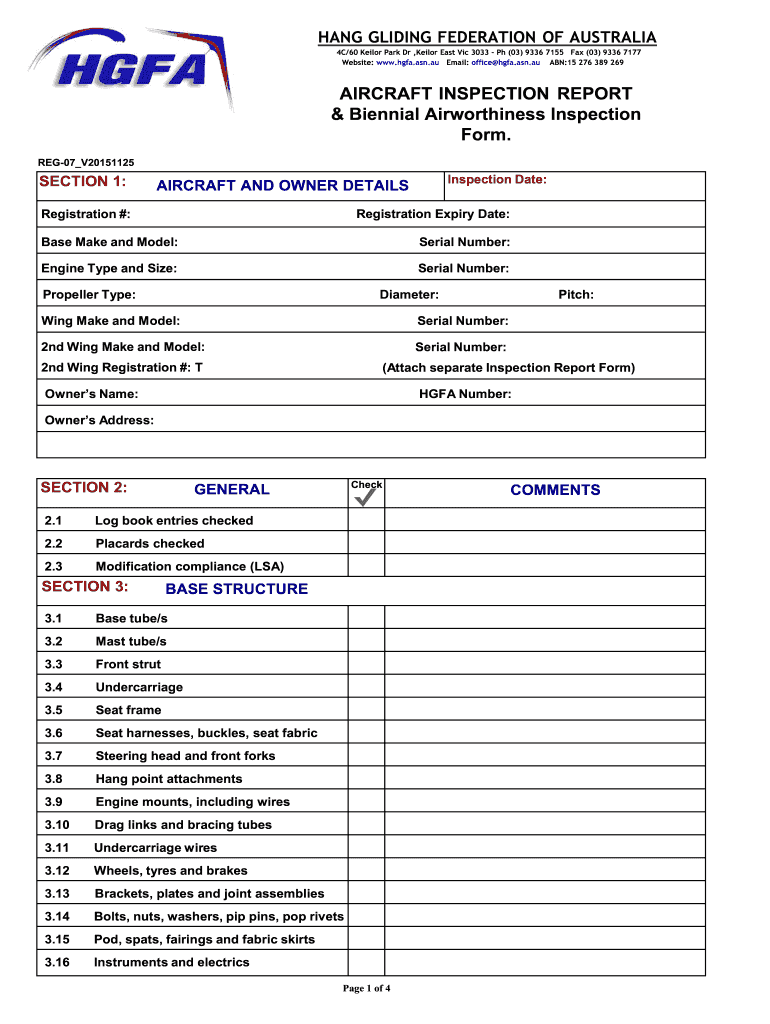
The Aircraft Inspection Report Biennial Airworthiness is a detailed document utilized to ensure that aircraft meet specific airworthiness standards. Primarily used in the United States, this report is essential for verifying that the aircraft has undergone the required inspections and maintenance to be deemed safe for operation. The term "biennial" refers to the inspection interval, which is mandated every two years.
The main purpose of this report is to provide a clear and comprehensive evaluation of the aircraft's condition, covering critical aspects such as structure integrity, systems functionality, and compliance with regulatory guidelines. Understanding the components of this report is crucial for aircraft owners, maintenance personnel, and aviation authorities, given its implications on safety and compliance.
Various sections within this report include:
- Aircraft Details: Identification information, including make, model, and registration.
- Inspection Findings: Detailed results of the inspections, including any discrepancies.
- Maintenance Recommendations: Suggestions for repairs, replacements, or further inspections.
- Inspector Declaration: A statement by the certified inspector regarding the overall airworthiness of the aircraft.
In practice, this report serves multiple stakeholders in the aviation ecosystem, ensuring that aircraft maintain the high safety standards required for public transportation and private use.
How to Use the Aircraft Inspection Report Biennial Airworthiness
Using the Aircraft Inspection Report Biennial Airworthiness effectively involves understanding its structure and leveraging its findings for optimal aircraft safety and compliance. The report acts as a comprehensive assessment tool to be utilized by aircraft owners, operators, and maintenance teams.
Steps to Utilize the Report
-
Review the Aircraft Details:
- Verify that the information accurately represents your aircraft, including the serial number and registration.
- Ensure that all relevant aircraft modifications or unique features are documented.
-
Examine Inspection Findings:
- Analyze each section to understand any observed discrepancies or maintenance issues.
- Categorize findings based on severity to prioritize repairs or follow-up inspections.
-
Implement Maintenance Recommendations:
- Refer to suggested maintenance actions to address issues identified during the inspection.
- Create a timeline for implementing necessary repairs to ensure continued airworthiness.
-
Track Compliance:
- Maintain records of the inspection report and any actions taken following the recommendations.
- Use the report as a reference for future inspections, showing a history of compliance and maintenance.
-
Prepare for Future Inspections:
- Know the timeline for upcoming biennial inspections and mark it on your maintenance calendar.
- After implementing any suggested actions, ensure that new maintenance findings are recorded and addressed.
This structured approach allows individuals and teams to utilize the Aircraft Inspection Report effectively, ensuring thorough compliance with aviation regulations and fostering a safety-first culture.
Steps to Complete the Aircraft Inspection Report Biennial Airworthiness
Completing the Aircraft Inspection Report Biennial Airworthiness involves multiple key steps, ensuring that all critical aspects of the aircraft are thoroughly evaluated. Below is a comprehensive outline of the process.
Step-by-Step Breakdown
-
Gather Necessary Documentation:
- Assemble previous inspection reports, maintenance logs, and any relevant aircraft modifications.
- Ensure access to a qualified inspector who is knowledgeable about the specific aircraft model.
-
Conduct Preliminary Inspection:
- Perform a visual examination of the aircraft to spot any obvious defects or irregularities.
- Pay attention to critical areas such as the fuselage, wings, and control surfaces.
-
Carry Out System Checks:
- Evaluate operational systems, including navigation, communication, and engine functionalities.
- Confirm that all systems comply with FAA regulations and manufacturer specifications.
-
Document Inspection Findings:
- Clearly detail any discrepancies or maintenance issues in the designated section of the report.
- Use consistent terminology to ensure clarity and accuracy.
-
Compile Recommendations for Maintenance:
- Based on the findings, provide actionable recommendations for any necessary repairs or replacements.
- Include timeframes and priority levels for addressing the issues identified.
-
Finalize and Certify the Report:
- The inspector should review the report for completeness and accuracy.
- Sign off on the document, certifying the airworthiness of the aircraft, accompanied by their credentials.
By following these steps rigorously, inspectors ensure that the Aircraft Inspection Report reflects the true condition and airworthiness of the aircraft, contributing to safety standards in aviation.
Important Terms Related to the Aircraft Inspection Report Biennial Airworthiness
Familiarizing yourself with essential terms related to the Aircraft Inspection Report Biennial Airworthiness will enrich your understanding of the report's context and significance. Here are key terms that are commonly used:
- Airworthiness: A term referring to the condition of an aircraft to be safe for flight, meeting all regulatory requirements.
- Inspection: A methodical evaluation of the aircraft's systems and structures to identify any issues affecting performance and safety.
- Compliance: Adherence to FAA regulations and standards pertinent to aircraft maintenance and inspection.
- Discrepancy: Any finding noted during the inspection that does not meet established safety standards or operational criteria.
- Maintenance: Routine actions taken to preserve or restore the aircraft's functionality and safety.
- Modifications: Changes made to the aircraft that may impact its performance, safety, or compliance status.
Understanding these terms fosters effective communication among aviation professionals and enhances the interpretation of the Aircraft Inspection Report.
Key Elements of the Aircraft Inspection Report Biennial Airworthiness
The Aircraft Inspection Report Biennial Airworthiness consists of several critical elements that collectively contribute to verifying the aircraft's safety for operation. Each element plays a vital role in ensuring that the aircraft meets all necessary standards and regulations.
Core Components of the Report
-
Identification Section:
- This includes aircraft make, model, serial number, and registration details.
- It may also encompass owner's information and any relevant modifications.
-
Inspection Details:
- A comprehensive summary of the inspection process, including the date, time, and conditions during the assessment.
- It outlines what was inspected and the methods used.
-
Findings and Observations:
- Detailed documentation of each aspect inspected, highlighting any discrepancies found.
- Categories of findings may include critical, major, and minor discrepancies.
-
Maintenance Recommendations:
- Clear guidance on required corrective actions based on the findings.
- Recommendations may involve immediate action items or longer-term maintenance plans.
-
Inspector's Declaration:
- A formal statement by the inspecting party confirming the findings and the overall airworthiness status of the aircraft.
- This declaration must be signed by a certified representative, providing accountability to the inspection process.
These key elements work in concert to establish a comprehensive overview of the aircraft's condition, promoting proper maintenance and compliance with aviation standards.
Legal Use of the Aircraft Inspection Report Biennial Airworthiness
The Aircraft Inspection Report Biennial Airworthiness serves several legal purposes within the aviation industry, ensuring compliance with federal and state regulations. Various stakeholders use the report to protect themselves legally and operationally.
Legal Implications
-
Regulatory Compliance:
- The report acts as evidence of adherence to Federal Aviation Administration (FAA) regulations, helping defend against potential legal actions related to aircraft safety.
-
Liability Protection:
- Properly completed reports can serve as vital evidence in the event of an accident, demonstrating that the aircraft was maintained according to established protocols.
-
Insurance Requirements:
- Many insurance policies for aircraft mandate regular inspections; thus, the report is a crucial document to provide to insurers.
-
Documentation for Sales and Transactions:
- When selling an aircraft, the report validates its airworthiness and is often a requirement for prospective buyers seeking assurance regarding safety.
By understanding the legal implications of the Aircraft Inspection Report, stakeholders can navigate compliance and liability effectively, ensuring that all regulatory obligations are met.