







Overview of the 4-H Club Management Attendance Record Form
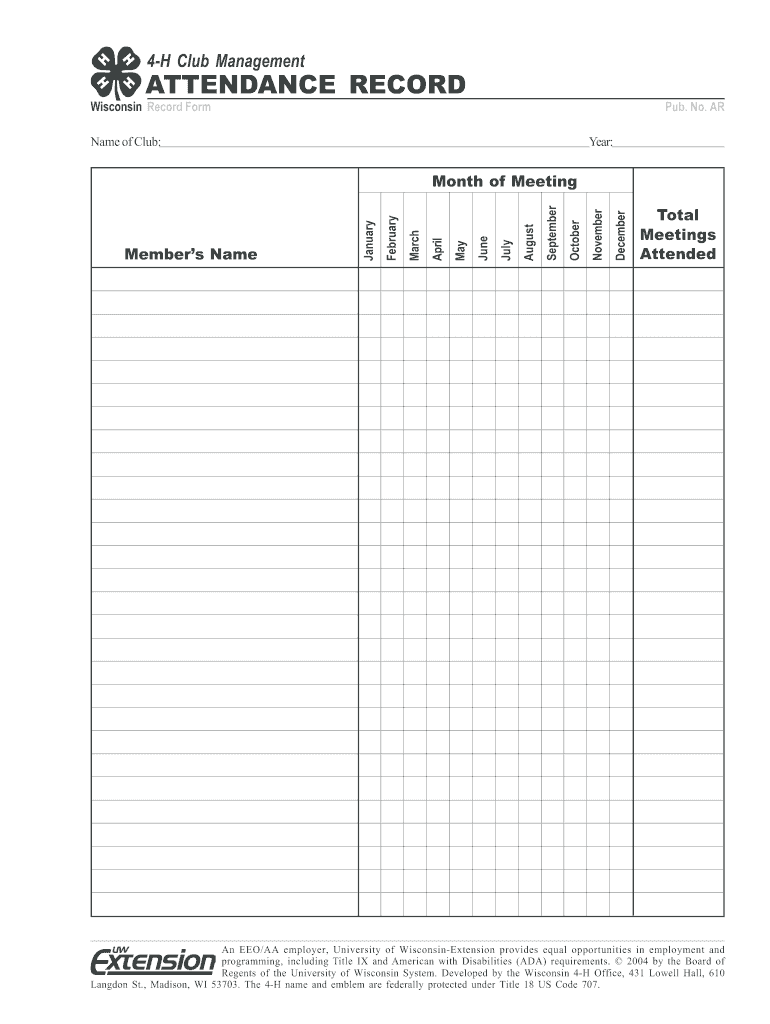
The "4-H Club Management Attendance Record" form is a valuable tool designed to track monthly member participation in club activities and meetings. This structured document satisfies essential organizational requirements, ensuring accurate attendance accounting in line with rules set forth by the University of Wisconsin-Extension. The form fosters accountability and engagement, benefiting club leaders as they manage their memberships effectively.
Purpose and Importance of the Attendance Record
This attendance record serves several key functions within the 4-H Club context:
- Monitoring Participation: Keeping detailed records of attendance helps clubs understand member engagement levels. This data is vital for planning future activities and maintaining an active membership.
- Eligibility and Funding: Some programs may require documentation of attendance for funding eligibility or awards. Accurate records assure compliance with these criteria.
- Historical Insight: An attendance log can serve as a historical reference, helping clubs assess their effectiveness over time and make informed decisions about future programs.
Key Sections of the Attendance Record Form
The attendance form typically includes the following components:
- Club Name and Year: These identifiers set the context for the recording period, ensuring clarity on which club and timeframe the data pertains to.
- Member Details: Space for listing each member's name encourages inclusivity and ensures accurate record-keeping.
- Meeting Dates: Allocating spaces for each monthly meeting allows for systematic tracking of attendance.
How to Utilize the Attendance Record
Using the 4-H Club attendance record efficiently requires a systematic approach:
- Gather Information: Before each meeting, prepare the form by entering the club name, year, and member list.
- Record Attendance: At the conclusion of each meeting, mark attendance for each member to maintain accurate records.
- Review and Analyze: Periodically evaluate the attendance records to identify trends in member participation and engagement.
Best Practices for Maintaining the Attendance Record
To maximize the utility of the attendance record form, consider these practices:
- Regular Updates: Make it a habit to update the attendance record in real-time during or immediately after each meeting.
- Member Notifications: Inform members about the importance of attendance and encourage regular participation to foster community within the club.
- Accessibility: Ensure that the attendance form is easily accessible to club leaders and members, whether digitally or in print, facilitating its use.
Legal and Compliance Considerations
Compliance with University of Wisconsin-Extension guidelines is vital for 4-H clubs using this attendance record. Important points include:
- Equal Opportunity: Clubs must adhere to equal opportunity principles in their programming and member participation, as mandated by the university's requirements.
- Data Protection: Safeguarding member information, including attendance records, remains a priority. Implement measures to prevent unauthorized access to sensitive data.
Examples of Effective Attendance Tracking Methods
In practice, clubs can enhance attendance tracking by considering innovative formats:
- Digital Tracking: Utilize cloud-based tools or apps that integrate with existing systems for real-time updates.
- Fillable PDF Forms: Implementing electronically fillable attendance forms can simplify data collection and review.
- Visual Reports: Consider presenting attendance data visually through charts, illustrating participation trends to facilitate discussion among leaders and members.
Conclusion on the Use of the Attendance Record
The 4-H Club Management Attendance Record is a crucial strategic tool for enhancing participation, accountability, and compliance within clubs. By following best practices and embracing modern technology, clubs can effectively manage attendance and promote active engagement among all members, aligning with the goals of the University of Wisconsin-Extension.




