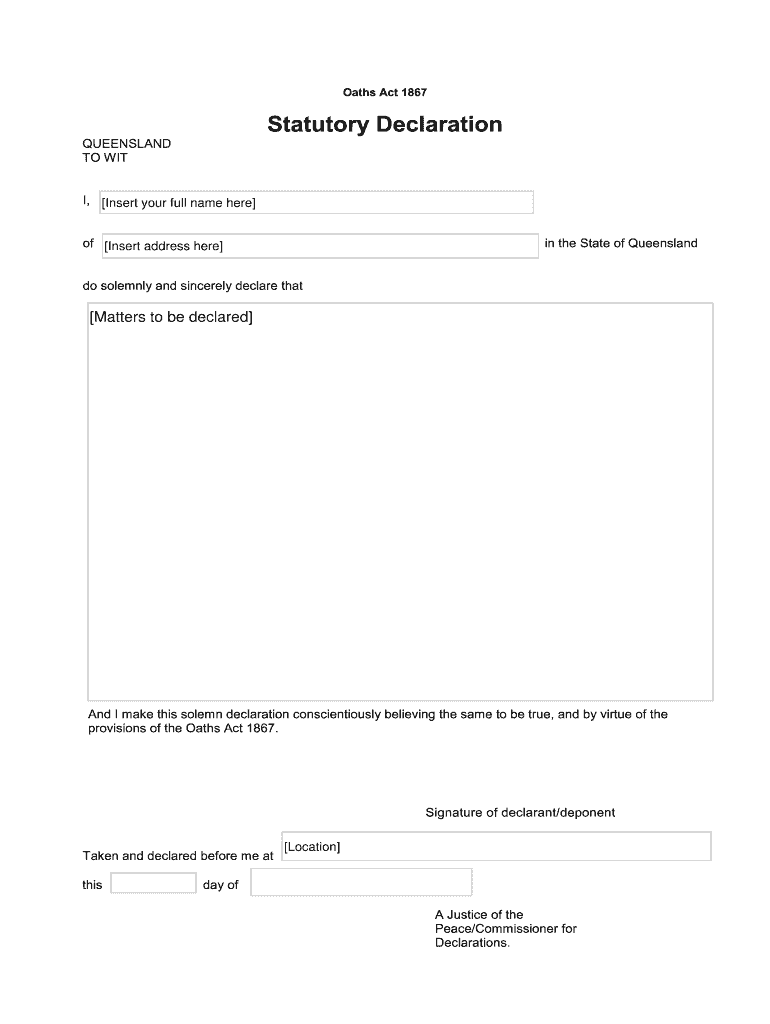







Definition and Meaning of a Statutory Declaration
A statutory declaration is a formal statement made by an individual affirming the truth of specific information, typically required for legal or administrative purposes. This declaration is often made in various scenarios, from confirming a person's identity to asserting details related to legal proceedings. Unlike affidavits, which require a witness's signature or notary acknowledgment, a statutory declaration can often stand alone, although specific legal frameworks may dictate the need for notarization.
In the United States, statutory declarations serve as a crucial tool in the legal landscape. They provide a means for individuals to verify the authenticity of information when submitting documents to government agencies, professional bodies, or other entities. The declaration acts as a sworn statement that the contents are true to the best of the declarant's knowledge and belief.
Common use cases include:
- Applying for Government Benefits: Individuals may be required to declare their income or personal circumstances.
- Legal Proceedings: A party may submit a statutory declaration to affirm facts pertinent to a case.
- Identity Verification: Tools such as credit applications or immigration processes sometimes request a statutory declaration.
How to Use the Statutory Declaration
Using a statutory declaration involves several straightforward steps, tailored to ensure both clarity and compliance with relevant regulations. To utilize a statutory declaration effectively, follow these steps:
-
Identify the Purpose: Determine why a statutory declaration is required. This could involve confirming personal information, stating a fact related to a legal process, or providing evidence for an application.
-
Obtain the Correct Form: Locate the official statutory declaration form, often available for download from legal or government websites. The form may vary based on its intended use—be it for personal, legal, or business-related applications.
-
Fill in the Information: Accurately complete the required fields on the form. This includes personal details, the specific statements being declared, and any corroborative information necessary for the declaration's validity.
-
Sign and Date: The declarant must sign and date the document, affirming the truth of the statements contained within. Depending on the jurisdiction, witnessing or notarization may be required to enhance the declaration's legality.
-
Submit the Declaration: Deliver the completed statutory declaration to the relevant authority, which could involve submitting online, mailing, or delivering in-person.
It’s essential to ensure accuracy and honesty when making a statutory declaration, as providing false information can lead to serious legal consequences, including penalties or criminal charges.
Important Terms Related to Statutory Declaration
Understanding specific terminology associated with statutory declarations is vital for navigating legal documents and processes. Here are some critical terms and their definitions:
- Declarant: The individual making the declaration, affirming the truth of the provided statements.
- Affirmation: A declaration made in lieu of an oath, often used by individuals who may have religious objections to swearing an oath.
- Witnessing: The act of a neutral third party signing the statutory declaration to confirm that the declarant has made the declaration voluntarily and has understood its contents.
- Notarization: A formal act in which a notary public witnesses the signing of the statutory declaration, providing an additional layer of verification.
- False Declaration: Making a statutory declaration with untrue statements, which can lead to legal repercussions.
Having a clear grasp of these terms enhances the effectiveness of using statutory declarations while also ensuring compliance with legal standards.
Key Elements of the Statutory Declaration
A statutory declaration must contain specific key elements to be valid and recognized. Understanding these components is crucial when drafting or reviewing a statutory declaration.
- Title of the Document: Clearly state that the document is a statutory declaration.
- Declarant Information: Provide the full name, address, and any necessary identification details of the declarant.
- Statement of Truth: Include a declaration affirming that the statements made are true to the best of the declarant's knowledge.
- Details of the Declaration: Present the specific facts being declared, which should be clear and concise for ease of understanding.
- Date and Signature: The declaration must be signed and dated by the declarant, with some forms requiring the signature of a witness or notary.
Each of these elements plays a critical role in ensuring the statutory declaration serves its intended purpose and meets legal standards.
Who Typically Uses the Statutory Declaration?
Statutory declarations are utilized across a wide range of sectors and among various individuals. Understanding who commonly employs these declarations helps contextualize their importance:
- Individuals: Everyday citizens often need statutory declarations for personal matters such as identity verification, legal proceedings, or government applications.
- Businesses: Companies frequently employ statutory declarations to verify business operations, answer regulatory inquiries, or prove compliance with laws.
- Legal Professionals: Lawyers and legal entities may use statutory declarations as a means of substantiating claims or presenting evidence in court.
- Government Agencies: Various governmental departments may require statutory declarations as part of compliance processes, especially in areas such as immigration and social services.
Recognizing the diverse applications and users of statutory declarations highlights their functionality as an essential instrument in both personal and professional contexts.