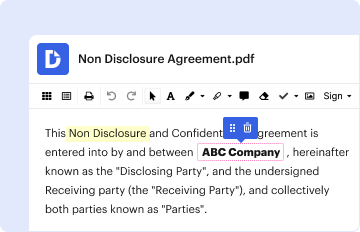
Type text, add images, blackout confidential details, add comments, highlights and more.
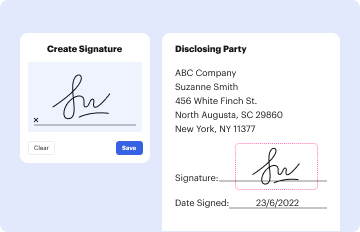
02. Sign it in a few clicks
Draw your signature, type it, upload its image, or use your mobile device as a signature pad.
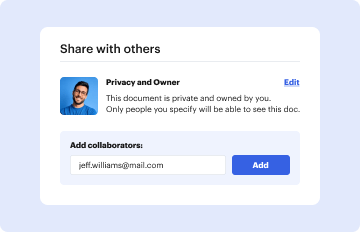
03. Share your form with others
Send adhd rating scale 5 pdf via email, link, or fax. You can also download it, export it or print it out.
How to use or fill out ADHD Scale with our platform
Ease of Setup
DocHub User Ratings on G2
Ease of Use
DocHub User Ratings on G2
Click ‘Get Form’ to open the ADHD Scale in the editor.
Begin by entering your name and today's date at the top of the form. This personal information is essential for tracking your responses.
Review each question carefully. For each statement, reflect on your experiences over the past six months.
Using the provided scale (Very Often, Often, Sometimes, Rarely, Never), place an 'X' in the box that best describes how you have felt regarding each symptom.
Once you have completed all questions, ensure that your answers accurately represent your feelings and behaviors.
Save your completed checklist and consider sharing it directly with your healthcare professional during your appointment for further discussion.
Start using our platform today to easily fill out and manage your ADHD Scale for free!
The World Health Organization Adult ADHD Self-Report Scale
by RC Kessler 2005 Cited by 4488 The ASRS includes 18 questions about frequency of recent DSM-IV Criterion A symptoms of adult ADHD. The ASRS screener consists of six out of these 18 questions.Read more
VANDERBILT ADHD DIAGNOSTIC TEACHER RATING SCALE (VADTRS). Scoring Instructions for the VADTRS: Behaviors are counted if they are scored 2 (often) or 3 (veryRead more
Cookie consent notice
This site uses cookies to enhance site navigation and personalize your experience.
By using this site you agree to our use of cookies as described in our Privacy Notice.
You can modify your selections by visiting our Cookie and Advertising Notice.