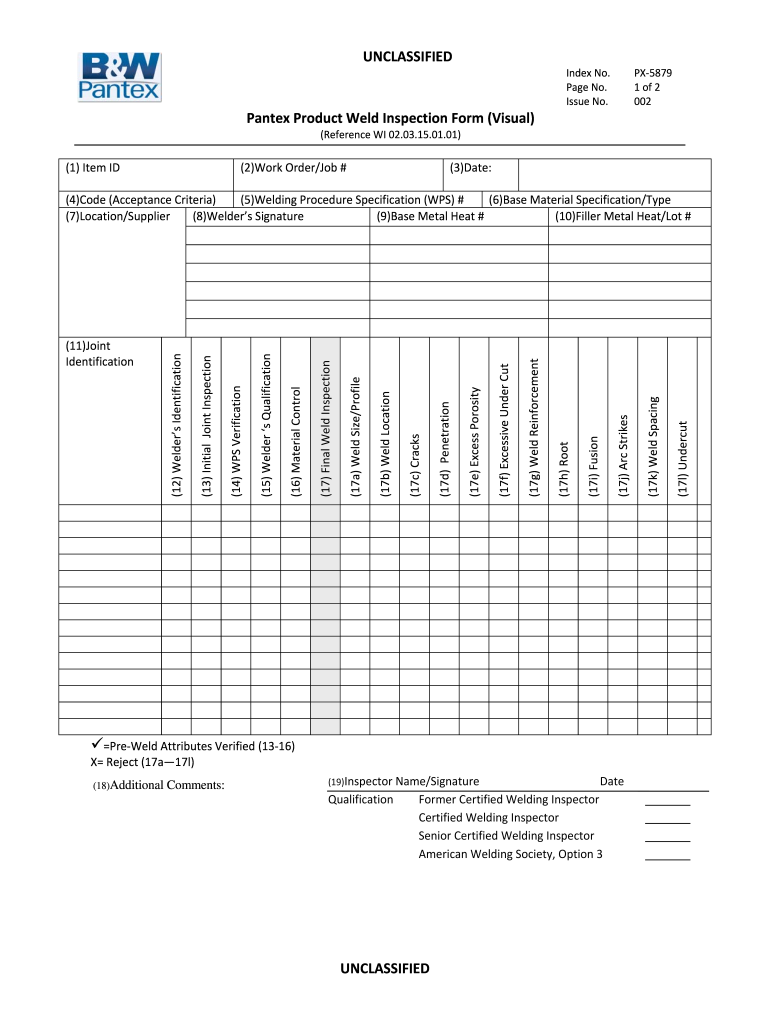







Key Elements of a Welding Inspection Report Format
A welding inspection report serves as a crucial document that outlines the findings from the inspection of welds. Its structure and content can significantly influence the effectiveness of quality control within various industries, particularly where integrity and safety are paramount. The following key elements are typically included in a welding inspection report format:
-
Inspection Overview
This section provides a summary of the inspection process, including the scope, purpose, and specific objectives of the welding inspection. It also details any standards or codes that the inspection adheres to, such as AWS or ASME. -
Project Information
Essential information about the project is documented, including the project title, location, client details, job number, and any relevant contractual specifications. This helps contextualize the inspection findings within the larger framework of the project. -
Welder Qualifications and Procedure Specifications
Including appropriate certifications and documentation of welders' qualifications ensures that the report reflects compliance with industry standards. Additionally, the welding procedure specifications (WPS) used during the project should also be listed to guarantee adherence to established practices. -
Visual Inspection Findings
A detailed analysis of the welds inspected is crucial. This section should note visual observations regarding weld appearance, profile, and any defects such as cracks, porosity, or inclusions. Utilizing photographs or sketches can provide an additional layer of clarity and detail. -
Acceptance Criteria
The report must include the acceptance criteria as per the relevant standards, indicating the permissible limits for the quality of welds. This includes dimensions, thickness, and any specific allowances for imperfections, ensuring clear guidance for assessment. -
Non-Conformance Reports (NCRs)
If any welds fail to meet the specified criteria, these should be documented through non-conformance reports. Details of the non-conformances, including the nature of the failure, potential impact, and corrective actions taken, should be cataloged for transparency. -
Additional Notes or Recommendations
This section allows inspectors to offer any observations that may not fit into the preceding categories. Suggestions for improvement or remedial actions to enhance welding practices can significantly contribute to future quality assurance.
Using the Welding Inspection Report Format
When utilizing a welding inspection report format, clarity and thoroughness play crucial roles. The following steps outline how to effectively leverage this document for optimal results:
-
Preparation
Gather all necessary documentation, including the WPS, project specifications, and previous inspection reports. This ensures consistency and completeness throughout the inspection process. -
Conduct the Inspection
Carry out the welding inspections as per the defined criteria. Utilize the report format to systematically document findings during the visual and possibly non-destructive testing (NDT) evaluations. -
Complete the Report
Fill out each section of the report format diligently. Avoid any ambiguity by being specific in descriptions and findings. Use photographs for visual evidence where applicable. -
Review and Verify
Engage in a peer review process wherein another qualified inspector verifies the findings and the report, ensuring that interpretations are consistent and accurate. -
Distribute the Report
Share the finalized report with relevant stakeholders, including project managers, welders, and quality control teams. Proper distribution aids in addressing any identified issues promptly.
Welding Visual Inspection Checklist
A checklist can enhance the effectiveness of the welding inspection report, ensuring no key aspect is overlooked during assessments. Here is a comprehensive list to consider:
-
Visual Surface Inspection
- Check for surface contamination (oil, rust, etc.)
- Review weld appearance (uniformity, texture)
- Identify visible defects (cracks, undercuts, etc.)
-
Dimensional Analysis
- Verify weld size against specifications
- Evaluate joint alignment and fit-up
-
Documentation Review
- Ensure WPS is available and followed
- Confirm welder qualifications
-
Reporting Non-Conformances
- Log any discrepancies and potential consequences
- Recommend corrective actions clearly
Employing a checklist format ensures thoroughness and consistency across inspections, allowing for improved outcomes in welding quality control.
Understanding Welding Test Report Formats
Welding test reports provide essential documentation about the performance and quality of welds under specific conditions. Various formats may exist, but they generally include:
-
Test Overview
- Purpose of the test
- Types of welding processes evaluated (e.g., MIG, TIG)
-
Materials Tested
- Details of base materials and filler metals used
- Specifications on material certifications
-
Test Results
- Data from destructive or non-destructive tests
- Measurements reflecting strength, ductility, or hardness
-
Compliance with Standards
- Confirmation that test results adhere to applicable industry standards, such as ASME or API
Documentation of test results not only showcases adherence to quality standards but also helps in verifying the performance capabilities of the welds produced.
Common Welding Inspection Report Examples
Real-world examples provide clarity on how welding inspection reports are structured and what essential aspects they encompass. Here are some common scenarios in which these reports are utilized:
-
Pipeline Construction
When inspecting welded joints in pipeline construction, the report may focus on implications for structural integrity and compliance with safety standards, given the critical nature of pipelines in transmitting fluids. -
Manufacturing Facility
In a factory setting, welding inspection reports might detail numerous welds on various components, assessing each against rigorous quality standards for mass production. -
Structural Engineering
Structural weld inspections entail documenting load-bearing welds, emphasizing safety and performance in accordance with building codes and engineering specifications.
The practical application of these examples emphasizes the importance of thorough inspection and reporting to maintain safety and quality across multiple disciplines.
Legal Considerations for Welding Inspection Reports
Welding inspection reports often hold legal implications due to their role in compliance, liability, and due diligence. Considerations include:
-
Compliance with Regulatory Standards
Reports must adhere to relevant federal, state, and industry regulations, ensuring that all inspections follow mandated guidelines. -
Liability and Responsibility
Documentation may serve as critical evidence in liability cases. Accurate reports can protect individuals and companies from claims related to material failure or accidents. -
Retention of Records
Keeping detailed records of welding inspections is essential for audit purposes and demonstrating compliance with quality standards over time.
Ensuring legal integrity and compliance fosters a trustworthy environment for all parties involved in the welding process.