






Definition and Meaning of the History THS
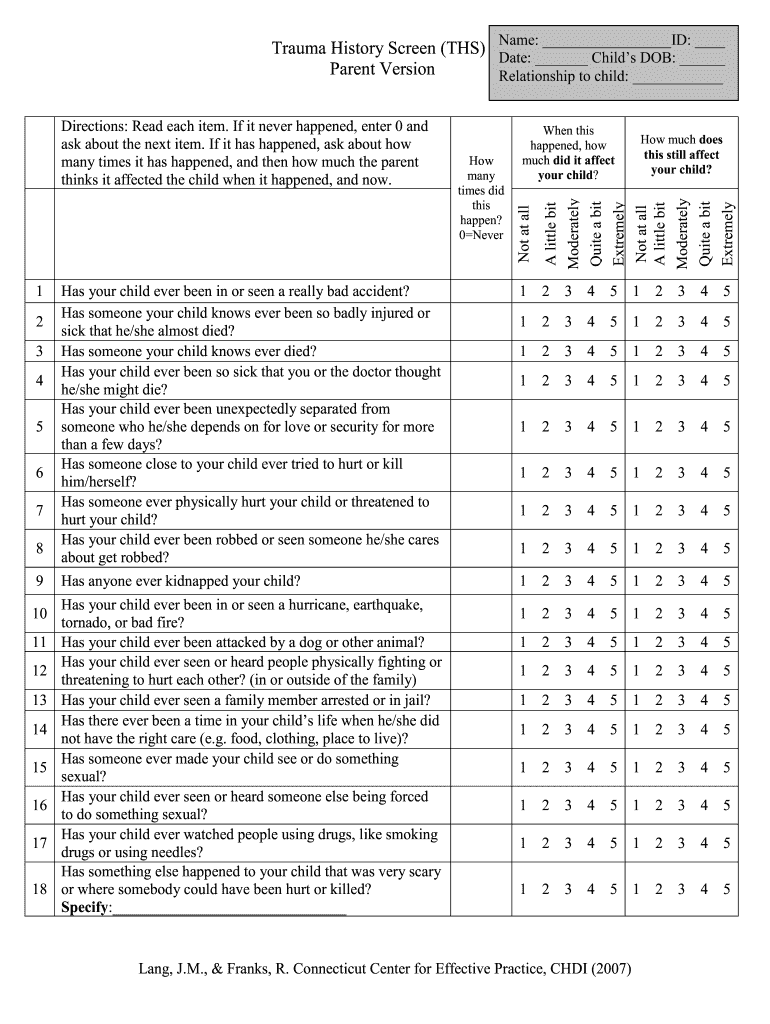
The History Trauma Screen (THS) is a structured questionnaire designed to assess exposure to traumatic experiences in children. Its primary goal is to evaluate the impact of potential traumatic events on a child's psychological and emotional well-being. The THS includes a comprehensive set of questions about various traumatic experiences, including but not limited to:
- Witnessing violence
- Experiencing neglect or abuse
- Surviving a natural disaster
- Facing significant medical issues
By gathering information through the THS, parents and professionals can identify the frequency and severity of traumatic experiences that children may have encountered. This screening tool is valuable in understanding the individual experiences of children and providing appropriate support and intervention when necessary.
How to Use the History THS Effectively
Using the History THS requires a systematic approach to ensure that all relevant information is captured accurately. The process typically involves the following key steps:
-
Preparation: Ensure that the questionnaire is accessible in its appropriate format, such as a PDF or printed copy, for ease of use. Familiarize yourself with each question to provide context to the child or guardians.
-
Engagement: When administering the questionnaire, create a supportive environment that encourages openness. Explain the purpose of the THS to the parent or guardian, emphasizing that the aim is to support the child's well-being.
-
Administration: Follow up with each question thoroughly. Allow parents or guardians ample time to think and respond. It's essential to listen actively and provide clarification on any items that may be confusing.
-
Review: After gathering responses, review the completed THS to check for completeness and accuracy. Ensure that you properly assess the impact of the identified trauma on the child's current functioning.
-
Follow-Up: Based on the results, determine if further evaluation or intervention is needed. If the THS indicates significant trauma exposure, it may be beneficial to consult a mental health professional.
How to Obtain the History THS
Obtaining the History THS can be accomplished easily through several avenues. Here are the most common methods for acquiring this document:
-
Online Resources: Many organizations, including educational and health institutions, provide the THS as a downloadable PDF from their websites. Search for trusted sources to find a standardized version.
-
Consulting Professionals: Healthcare providers, particularly pediatricians and mental health professionals, may have their own copies of the questionnaire. They can facilitate access and guide you through its utilization.
-
Educational Institutions: Schools and educational programs often have the THS available for parents and guardians to assess children's experiences related to trauma.
Make sure to use the latest version of the THS to ensure the accuracy of assessments and adherence to current guidelines.
Steps to Complete the History THS
Completing the History THS requires attention to detail and careful consideration of each question. Here’s how to proceed through the process effectively:
-
Gather Necessary Information: The parent or guardian should collect any pertinent information regarding the child’s past experiences before beginning the questionnaire.
-
Find a Quiet Space: Choose a distraction-free environment to facilitate open discussion about sensitive topics, allowing the child or guardian to feel comfortable.
-
Explain Each Section: Briefly explain what each section of the THS covers, alleviating any concerns or misunderstandings regarding the questions.
-
Complete the Questionnaire: Work through the questionnaire systematically. Encourage respondents to answer truthfully, emphasizing that there are no right or wrong answers.
-
Submit the Questionnaire: After completion, ensure that the THS is submitted to the appropriate professional or institution for evaluation.
Make a note of any sections that require further exploration or questions that warrant follow-up discussions.
Key Elements of the History THS
The History THS encompasses several critical elements essential for a comprehensive trauma assessment. Understanding these components aids caregivers and professionals in evaluating and supporting a child effectively:
-
Trauma History Questions: This section gathers information on various types of traumatic events the child may have encountered, such as physical abuse, emotional neglect, and community violence.
-
Frequency of Exposure: Questions about how often these experiences occurred help to gauge the potential impact on the child's mental health.
-
Outcome Assessments: The questionnaire often includes prompts to assess the child’s behavioral and emotional responses, providing insight into how trauma has affected their daily functioning.
-
Support Systems: The THS may inquire about existing support systems, including familial and social resources. This information helps in determining the necessary support and intervention strategies.
-
Recommendation for Follow-Up: Depending on the responses, the THS can guide whether further assessment or intervention from mental health professionals is required, ensuring the child receives appropriate care.
By focusing on these key elements, caregivers can gain valuable insights into the child's traumatic experiences and take appropriate measures in support of their well-being.
Legal Use of the History THS
Understanding the legal implications surrounding the use of the History THS is important for both practitioners and caregivers. The following considerations should be noted:
-
Consent: It is essential to obtain informed consent from parents or guardians before administering the THS, as it deals with sensitive information regarding a child's traumatic experiences.
-
Confidentiality: Protecting the privacy of the child and their family is paramount. Personal information collected through the THS should be handled in accordance with applicable laws, such as the Health Insurance Portability and Accountability Act (HIPAA).
-
Document Retention: Practitioners must maintain records of the completed THS securely. This is crucial for follow-up evaluations and any necessary interventions while ensuring compliance with legal standards.
-
Use in Judicial Settings: The findings from a completed THS may be pertinent in legal situations, such as custody disputes or child welfare cases. Therefore, accurate documentation and ethical handling of the questionnaire are vital.
Proper adherence to these legal guidelines helps maintain trust and integrity in the administration of trauma assessments.
Important Terms Related to the History THS
Familiarity with key terminology associated with the History THS enhances comprehension and application of the questionnaire. Important terms include:
-
Trauma: Refers to adverse experiences that significantly affect an individual’s mental, emotional, and physical health.
-
Screening: The process of evaluating or examining an individual to determine the presence or extent of a particular issue, in this case, trauma.
-
Psychological Impact: Refers to the effects of trauma on a child's mental and emotional health, including behavior, cognition, and overall well-being.
-
Child Welfare: A set of services and programs aimed at ensuring the safety, health, and well-being of children, often involving collaboration between families and professionals.
-
Intervention: Any planned action aimed at addressing the identified problems or needs following a trauma assessment, including counseling, therapy, or support services.
Understanding these terms facilitates more effective communication between caregivers and professionals working with children who have experienced trauma.
Examples of Using the History THS
Real-world applications of the History THS provide insight into its utility across various scenarios. Here are several indicative examples:
-
School Settings: A school psychologist utilizes the THS to assess students who exhibit behavioral issues, helping to identify any underlying trauma that may be contributing to disruptive behaviors.
-
Healthcare Environment: Pediatricians may implement the THS during routine check-ups when children display signs of anxiety or stress, ensuring early identification of trauma-related issues.
-
Community Programs: Mental health organizations can employ the THS in community outreach initiatives to support at-risk populations, guiding them towards appropriate therapeutic resources.
-
Legal Cases: Attorneys representing clients in custody disputes may request the THS as part of a broader assessment to understand the child’s experiences and needs, influencing judicial decisions.
By integrating the THS into diverse contexts, stakeholders can improve outcomes for children affected by trauma, aligning interventions with their specific needs and circumstances.