






Definition and Purpose of Form 3911
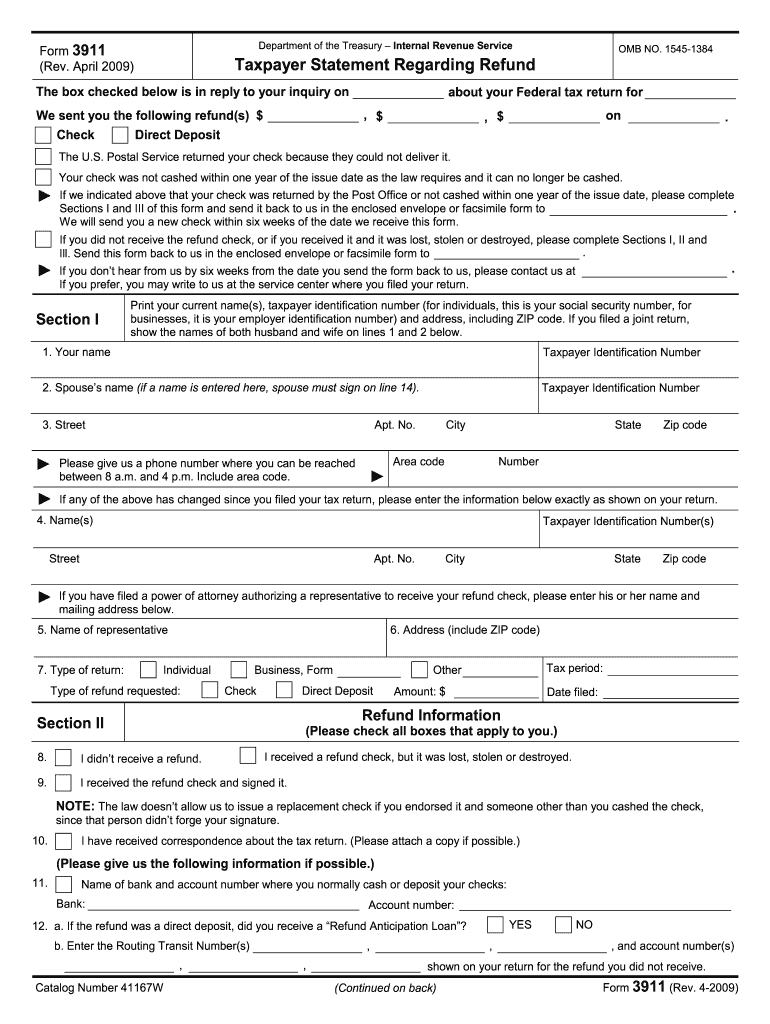
Form 3911, the 'Taxpayer Statement Regarding Refund,' is an official IRS document that taxpayers use when they have issues with their federal tax refund. This form is primarily utilized when a refund check has not been received, or if it was lost, stolen, or destroyed. It enables taxpayers to request a trace for the missing refund and to know the status of their payment. Ensuring the correct completion of Form 3911 facilitates efficient communication with the IRS and aids in resolving refund discrepancies.
Obtaining Form 3911
To obtain Form 3911, taxpayers have several avenues. The form is available for download from the IRS website, ensuring easy access for all U.S.-based individuals. Taxpayers can also request a copy by calling the IRS directly. Various tax preparation professionals and software platforms, such as TurboTax, may provide access to the form as part of their services. Ensuring you have the latest version of the form is critical, as it aligns with current IRS guidelines and requirements.
Steps to Complete Form 3911
Completing Form 3911 involves several steps that require attention to detail. Here’s a structured guide:
- Personal Information: Fill in your name, current address, and social security number to identify yourself accurately.
- Refund Information: Specify the tax period and the amount of the expected refund. This section provides clarity on which refund is being traced.
- Explanation Section: Detail the circumstances that led to the filing of Form 3911. This could include reasons like not receiving the check or destruction of the check.
- Certification: Sign and date the form to certify the accuracy of the information provided.
Accuracy in each section is crucial to prevent delays in processing.
Important Terms Related to Form 3911
Understanding certain terminology is essential when dealing with Form 3911:
- Tax Period: The specific filing period of the tax return associated with the refund.
- Refund Trace: The process initiated by Form 3911 to locate a missing refund check.
- Certification: A formal declaration of the authenticity of the information submitted on the form.
A clear grasp of these terms aids in comprehending the requirements and functionalities of the form.
IRS Guidelines for Form 3911
The IRS provides specific instructions on the correct use of Form 3911 to ensure efficient handling. Key guidelines include:
- Ensure that all requested fields are completed accurately.
- Submit the form only if the standard IRS processing time for refunds has lapsed.
- Follow the instructions on where to send the completed form, as it may vary depending on your location and situation.
These guidelines help in ensuring that the form is processed without unnecessary delays.
Filing Deadlines and Important Dates
Although Form 3911 does not have a strict deadline, it should be submitted after a reasonable wait—typically six weeks if filed electronically, or eight weeks if filed by paper. This allows the IRS sufficient time to process the original return. Additionally, timing is crucial; filing too early may lead to unnecessary complications, while filing too late could prolong the resolution process.
Submission Methods for Form 3911
Form 3911 can be submitted by mail or in person at an IRS office. Given the form's nature, online submission is not an option. When mailing, use the return address provided in IRS guidelines specific to your state. In-person submission allows for direct interaction with an IRS representative, which may be beneficial for immediately addressing any uncertainties about the form.
Penalties and Issues for Non-Compliance
While there are no direct penalties for incorrectly filing Form 3911, inaccuracies can lead to delays or complications in processing your refund trace. Ensuring complete and correct information can prevent the need for repeated submissions and further inquiries, optimizing the resolution time for your refund issue.
Versions or Alternatives to Form 3911
Currently, Form 3911 is the specific form designated for refund trace issues. Still, it’s essential to stay informed regarding any updates or alterations the IRS may introduce. Consulting the IRS website or a tax professional can provide insights into alternatives or related updates that could affect processing procedures for similar issues.