





Definition & Meaning of the U.S. Customs Invoice Form
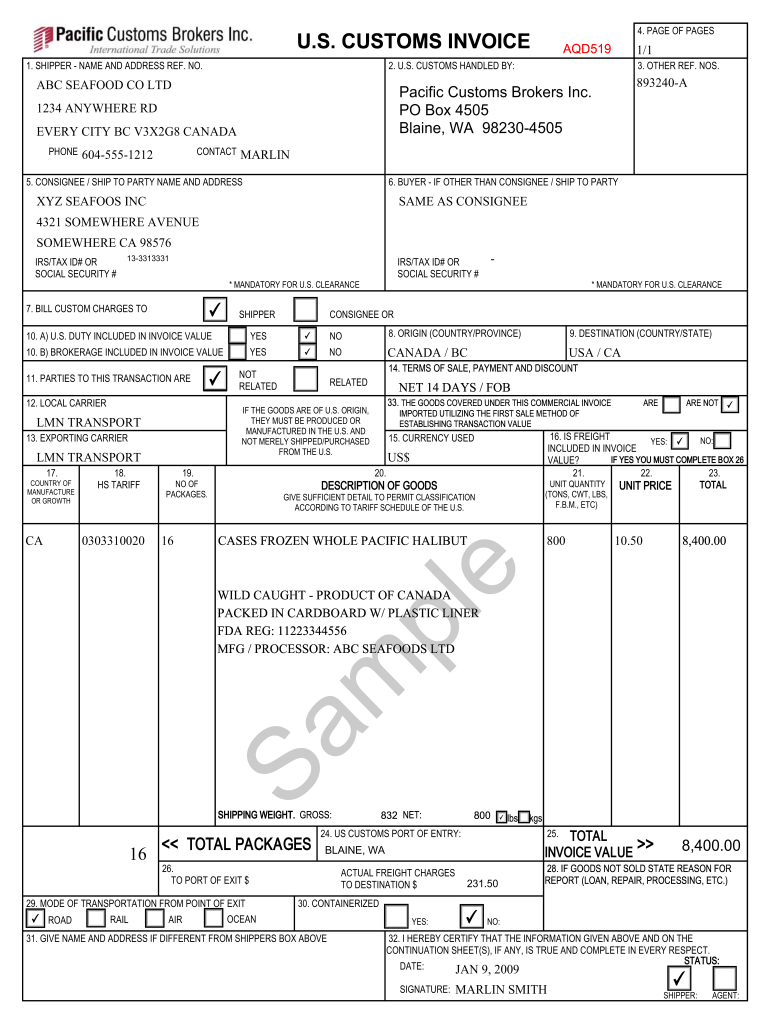
The U.S. Customs Invoice Form, commonly referred to as the customs invoice, is a crucial document utilized in international trade. It serves to declare the contents of a shipment and establishes the value of goods being imported or exported. This form is particularly vital for customs purposes, facilitating the assessment of duties, taxes, and regulatory compliance.
Purpose of the Customs Invoice
- Customs Declaration: The invoice provides essential information about the goods, including descriptions, quantities, and values. This data helps customs authorities determine applicable tariffs and assess any taxes.
- Legal Documentation: The customs invoice acts as a legal record of the transaction between the shipper and consignee, ensuring that both parties have clear documentation of the transferred goods.
- Facilitation of Clearance: By providing detailed and accurate information, the customs invoice can help expedite the clearance process, reducing the likelihood of delays at the border.
Key Components of the Customs Invoice
- Shipper and Consignee Information: Details about the sender and recipient of the shipment, including names and addresses.
- Description of Goods: A clear, detailed description of each item being imported or exported.
- Values and Totals: The total declared value of goods, critical for assessing any duties and taxes.
- Shipping Terms: The conditions under which the goods are transported, which may include Incoterms that detail responsibilities for shipping, insurance, and tariffs.
How to Use the SAMPLE U.S. Customs Invoice Form
Utilizing the SAMPLE U.S. Customs Invoice Form from Pacific Customs Brokers Ltd is straightforward but necessitates attention to detail. This form must be accurately completed to ensure a smooth customs process.
Filling Out the Form
- Gather Required Information: Collect all necessary documentation, including detailing the content of the shipment, along with any invoices or receipts that substantiate the goods' value.
- Enter Shipper Information: Input the complete name, address, and contact information for the shipper and consignee.
- List Goods: Describe each item in sufficient detail, including quantity and value. For items like frozen whole Pacific halibut, specify weight and any relevant standard classifications.
- Specify Terms: Indicate shipping terms to clarify responsibilities among parties involved.
Reviewing the Completed Form
- Double-check Values: Ensure that all values align with attached invoices or receipts to prevent discrepancies.
- Verify Descriptions: Confirm that the descriptions are accurate and align with the intended customs forms to avoid delays.
- Signature: Ensure that the designated person responsible for the shipment signs the form to validate it.
Steps to Complete the SAMPLE U.S. Customs Invoice Form
Completing the SAMPLE U.S. Customs Invoice Form requires a systematic approach to ensure compliance and accuracy.
- Obtain the Form: Acquire the SAMPLE U.S. Customs Invoice Form from Pacific Customs Brokers Ltd or authorized sources.
- Fill in Shipments' Information: Accurately enter details regarding the shipment, including type and origin of goods.
- Calculate Values: Total the values of the goods, ensuring that calculations match the attached commercial invoice.
- Attach Supporting Documents: Include any relevant commercial invoices, shipping labels, and permits that provide further clarification.
- Review for Accuracy: Before submission, double-check for errors or omissions that could complicate customs processing.
- Submit the Form: Deliver the completed form along with the shipment to customs officials, adhering to any specific submission methods required.
Important Terms Related to the U.S. Customs Invoice Form
Understanding the terminology associated with the U.S. Customs Invoice Form is essential for effective completion and compliance.
- Commercial Invoice: A document that details the transaction between a buyer and seller, often used in conjunction with the customs invoice.
- Duties and Taxes: Fees imposed by customs authorities on imported goods based on their declared value and classification.
- Incoterms: International commercial terms determining the responsibilities of buyers and sellers regarding shipping and insurance.
- Tariff Classification: A code that defines the category of goods for customs purposes, which influences duty rates and regulatory restrictions.
Key Elements of the SAMPLE U.S. Customs Invoice Form
The SAMPLE U.S. Customs Invoice Form contains several integral components that facilitate effective customs clearance.
Mandatory Information
- Shipper and Consignee Details: The accurate names and addresses of the parties involved in the shipment.
- Detailed Item Descriptions: Every item must be described explicitly, including its nature, purpose, and quantity.
- Valuation of Goods: Clear indication of the monetary value of each item and the total shipment value.
- Payment Terms: Conditions of payment that clarify how the buyer will compensate the seller.
Voluntary Information
- Country of Origin: Optional but beneficial information that may expedite processing.
- Special Handling Instructions: If applicable, mention any shipping conditions necessary for perishable or sensitive items.
Supporting Documentation
- Invoices: Attach original invoices that provide proof of the goods' cost.
- Shipping Documents: Include any relevant bills of lading or shipping confirmations that help customs verify the shipment.
This systematic completion and understanding of the SAMPLE U.S. Customs Invoice Form are invaluable for any business engaging in international trade. Adhering to these guidelines can minimize potential customs-related complications and ensure a smooth transaction process.


