






Definition and Meaning of the Texas Assumed Name
An assumed name refers to a business name that is different from the legal name of the entity or individual conducting business. In Texas, the process of registering this name is formalized through the filing of an Assumed Name Certificate, often referred to as Form 503. This registration is critical for ensuring that the public is informed about the true owner of a business operating under a different name.
- Purpose of an Assumed Name: The primary motivation for using an assumed name is to help businesses market themselves effectively while maintaining a legal presence. For example, a sole proprietor named John Smith may operate under the assumed name "Smith Carpentry" to enhance his market visibility.
- Legal Implications: Filing for an assumed name is a legal necessity in Texas. It protects the name from being used by other businesses within the same jurisdiction and provides a layer of transparency for consumers.
Steps to Obtain an Assumed Name Certificate in Texas
To successfully obtain an Assumed Name Certificate in Texas, business owners must follow a series of established steps. This process is crucial for ensuring compliance with local laws and protections for the business name.
- Determine Eligibility: Ensure you are eligible to file for an assumed name based on your business entity type—such as an LLC, corporation, or sole proprietorship.
- Choose an Assumed Name: Select a unique name that reflects your business and complies with Texas regulations. It is advisable to conduct a name search to confirm its availability.
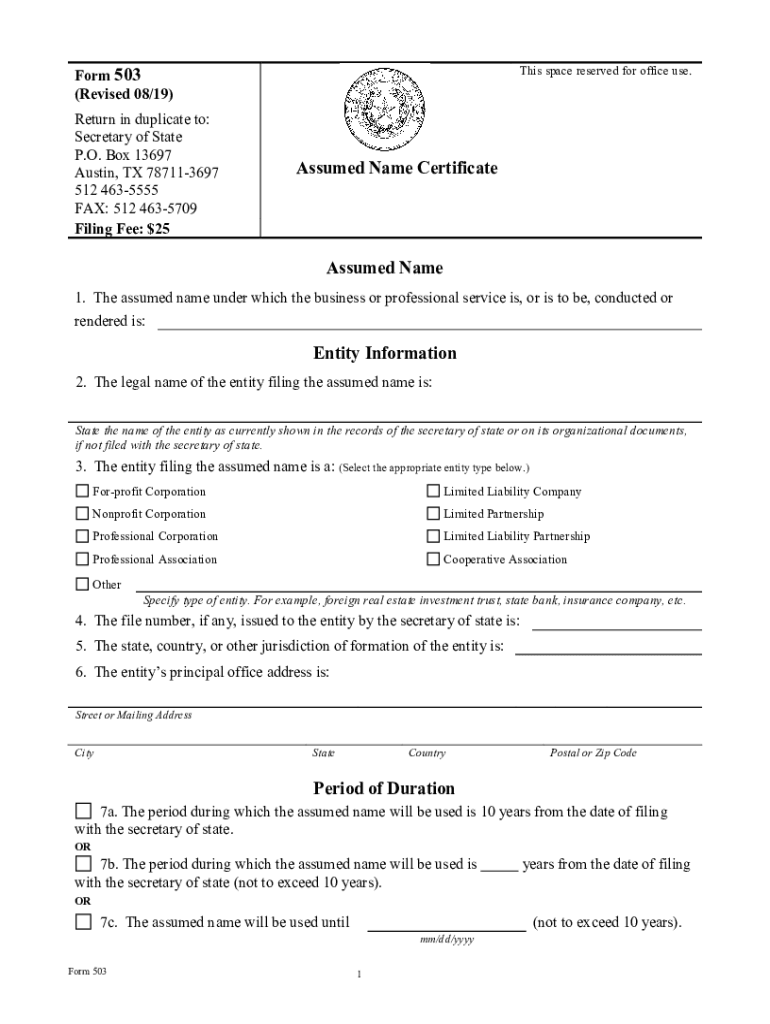
- Complete Form 503: Fill out the Assumed Name Certificate form accurately. Information required includes:
- The assumed name
- Legal name of the entity
- Type of entity
- Principal office address
- Duration of use
- Submit the Form: After completing the form, submit it to the appropriate county clerk's office, along with the required filing fee, which may vary by county.
- Publication Requirement: Some counties may require the assumed name to be published in a local newspaper to inform the public of the new business name.
Each of these steps is essential for the proper legal recognition of your business operations under an assumed name.
Key Elements of the Assumed Name Certificate
The Assumed Name Certificate encompasses several critical components that are necessary for proper registration. Understanding these elements aids business owners in ensuring full compliance with state laws.
- Assumed Name: This is the name under which the business will operate.
- Legal Entity Name: The official name of the entity as registered with the state.
- Type of Entity: Specify whether the business is structured as an LLC, corporation, partnership, or sole proprietorship.
- Principal Office Address: The location where the business operates.
- Duration of Use: Indicate how long the assumed name will be utilized, generally not exceeding ten years.
- Signature of Owner: The form must be signed by the individual or an authorized representative of the business entity.
This information provides a comprehensive overview of what is required for registering an assumed name in Texas.
Filing Deadlines and Important Dates for Assumed Names
Understanding the timeline for filing an Assumed Name Certificate is important for compliance and operational readiness. Failure to register in a timely manner can result in legal complications.
- Initial Filing: There is no strict deadline for filing; however, it is best to file before starting business operations under the new name.
- Renewal: Texas law typically allows for an assumed name to be valid for up to ten years. Business owners should plan to renew their filing before this expiration to maintain legal protection of the assumed name.
- Publication Deadlines: If required by the county, publication of the assumed name must occur within a specific timeframe following the filing to ensure public notification.
Keeping track of these dates ensures that businesses can operate without interruption or legal complications.
Penalties for Non-Compliance with Assumed Name Registration
Failure to properly register an assumed name can lead to several repercussions that may affect business operations.
- Legal Action: Operating under an unregistered assumed name can expose the business to legal challenges from other businesses claiming rights to the name.
- Fines: In Texas, penalties can be imposed for non-compliance, including fines during legal disputes.
- Loss of Rights to the Name: Without registration, business owners may lose their right to use the assumed name if another entity registers it.
These penalties underscore the importance of adhering to the registration process and maintaining documentation.
Examples of Assumed Name Use in Texas
Real-world scenarios can provide deeper insights into the relevance of assumed names for businesses in Texas.
- Sole Proprietorship: A barbershop owner named Mike Jones operates under the assumed name "Mike's Hair Studio." Filing for an assumed name allows him to market his business while ensuring legal compliance.
- Partnerships: Two individuals may form a partnership named “Tech Innovations,” filing an Assumed Name Certificate to secure their name for public identification and branding.
- Franchise Operations: A franchise owner may utilize an assumed name different from the corporate entity name to enhance local appeal and branding, while remaining compliant by filing the necessary paperwork.
These examples illustrate the versatility of assumed names across various business structures in Texas.
Texas Assumed Name Filing Online
To facilitate easier access and convenience for business owners, the State of Texas has implemented options for submitting Assumed Name Certificates online.
- Online Filing Process: Most counties in Texas now offer online services for business filing, allowing users to complete and submit Form 503 digitally, which can save time and streamline the process.
- Payment Options: Users can often pay the requisite filing fee through secure credit card transactions during the submission process.
- Confirmation of Filing: Upon successful submission, applicants typically receive a confirmation email, which serves as proof of registration.
Utilizing online filing options can significantly enhance efficiency while ensuring all regulatory requirements are met in a timely manner.