







Understanding Philosophical Chairs Preparation
Philosophical Chairs preparation is an educational strategy that fosters critical thinking and dialogue among students. This technique encourages learners to engage in structured discussions on various topics, allowing them to express their opinions based on evidence while considering opposing viewpoints. The preparation process is essential to ensure that the discussion remains productive and respectful.
Key Elements of Philosophical Chairs Preparation
Effective preparation for a Philosophical Chairs activity includes several essential components:
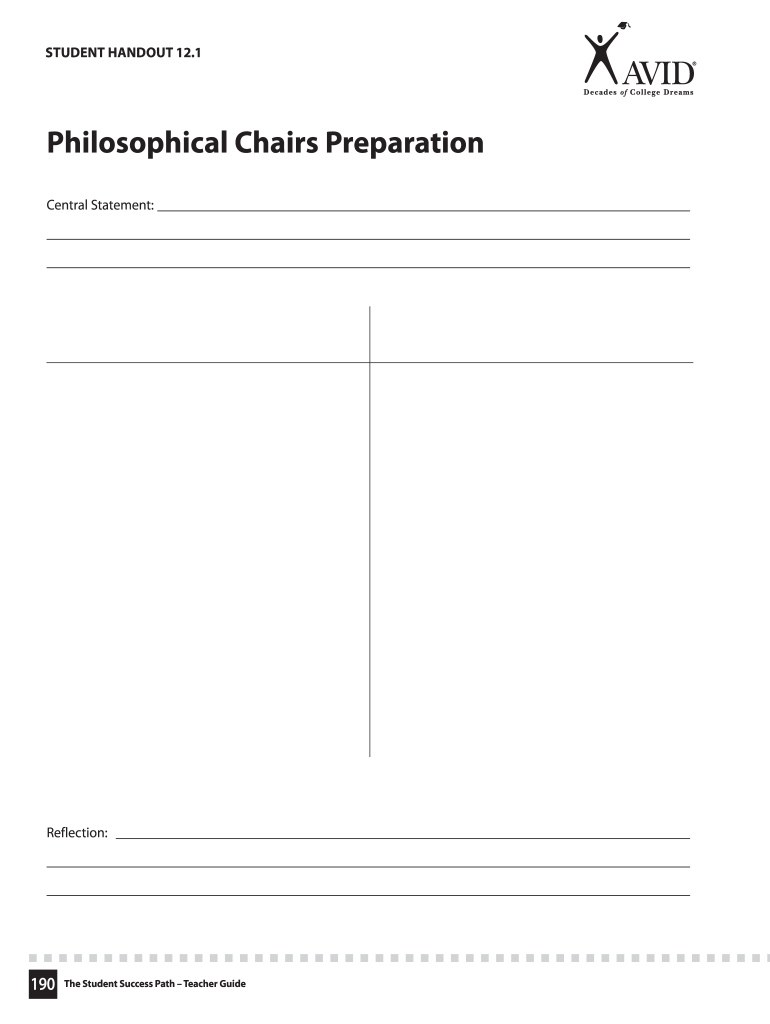
- Central Statement: Selecting a clear, thought-provoking statement that students can agree or disagree with. This statement serves as the foundation for the discussion.
- Preparation Sheet: A structured document that guides students in organizing their thoughts and arguments. This typically includes sections for notes, counterarguments, and personal reflections.
- Rubric for Assessment: A detailed rubric that outlines the criteria for evaluating student performance during the discussion. This might assess elements such as clarity of arguments, use of evidence, and the ability to listen and respond to opposing views.
- Group Roles: Assigning specific roles to students (e.g., speaker, listener, note-taker) can help manage the discussion flow and ensure that each participant is engaged.
Steps to Complete the Philosophical Chairs Preparation
Completing the preparation for a Philosophical Chairs discussion involves a systematic approach:
- Topic Selection: Choose a relevant topic that students are likely to have strong opinions about. This could relate to current events, ethical dilemmas, or social issues.
- Crafting the Central Statement: Develop a statement related to the topic that students can either support or oppose.
- Distributing Preparation Sheets: Provide students with preparation sheets to help them organize their thoughts. Encourage them to jot down supporting evidence and potential counterarguments.
- Explaining the Format: Clearly explain the rules and format of the discussion, including expectations for respectful dialogue and the importance of listening to one another.
- Conducting the Discussion: Facilitate the discussion, ensuring all voices are heard and guiding the conversation back to the central statement as needed.
- Reflection: After the discussion, ask students to reflect on what they learned and how their views may have changed.
Examples of Using Philosophical Chairs Preparation
The application of Philosophical Chairs preparation can extend to various classroom settings:
- Debating Ethical Issues: In a social studies class, students could discuss the ethical implications of a government policy, with the statement "Government surveillance is justified for national security."
- Literature Analysis: In a literature class, students might discuss character motivations with the statement "The protagonist's actions were justified."
- Current Events: In a contemporary issues course, students could engage in discussions about climate change with the statement "Individual actions can significantly impact climate change."
Important Terms Related to Philosophical Chairs Preparation
Understanding key terminology associated with Philosophical Chairs preparation can enhance student engagement and performance:
- Argumentation: The process of developing and presenting arguments logically and persuasively.
- Counterargument: An opposing viewpoint that students must consider and respond to during discussions.
- Evidence: Facts, statistics, or examples that support a student's argument or point of view.
Who Typically Uses Philosophical Chairs Preparation
This method is commonly employed by educators across various disciplines, including:
- Middle and High School Teachers: Often used in language arts and social studies classes to promote critical thinking and dialogue.
- University Professors: Applied in discussion-based courses to encourage analytical thinking and respect for diverse perspectives.
- Educational Workshops: Used in training sessions to help educators develop skills in facilitating meaningful discussions.
Why Should You Utilize Philosophical Chairs Preparation
Incorporating this preparation method in educational settings offers numerous benefits:
- Encourages Critical Thinking: Students learn to formulate and defend their opinions while considering alternatives.
- Promotes Engagement: The interactive nature of Philosophical Chairs keeps students involved in their learning.
- Builds Communication Skills: Participating in structured discussions enhances students’ verbal communication and argumentation skills.
Legal Use of Philosophical Chairs Preparation
While there are no specific legal requirements governing Philosophical Chairs preparation, educators should ensure their discussions adhere to institutional policies on inclusivity and respect for diverse opinions. Recognizing the diverse backgrounds of students may also provide necessary context for sensitive topics.




