
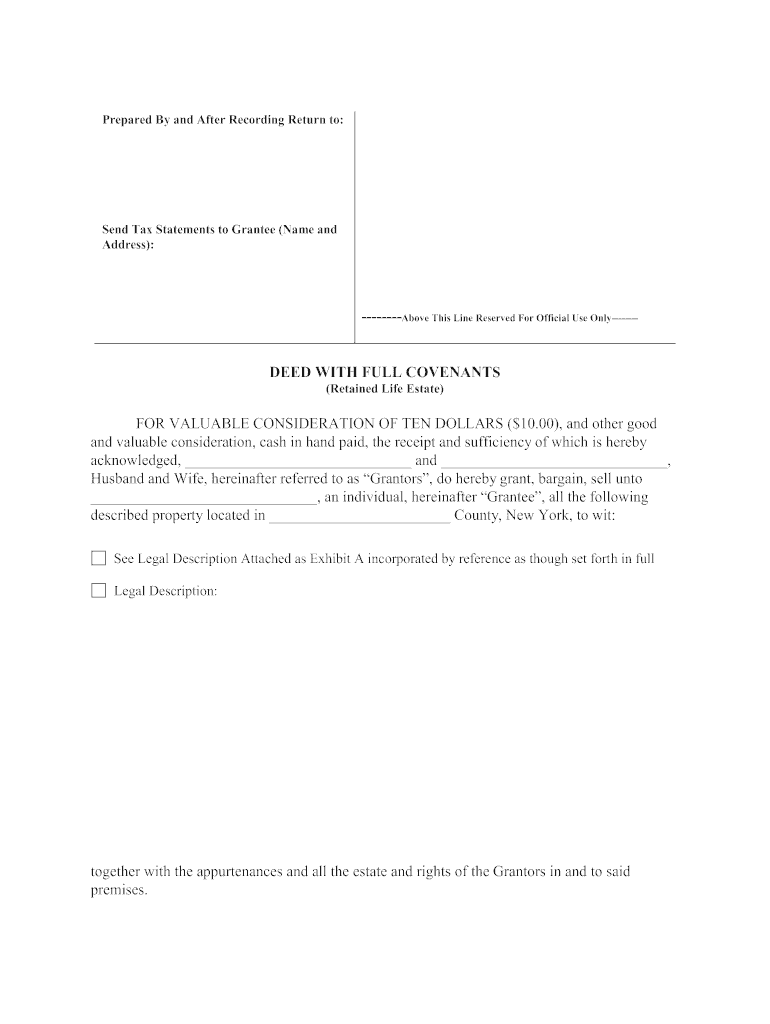







Understanding Life Estate Deeds in New York
A life estate deed in New York is a legal document that allows property ownership to be divided into a life interest and a remainder interest. This arrangement permits a grantor, typically the current property owner, to transfer property to a grantee while retaining the right to live in or use the property for the duration of their life. Upon the death of the grantor, the property automatically transfers to the grantee, simplifying the estate transfer process and avoiding probate.
Key Components of a New York Life Estate Deed
Life estate deeds include several essential elements to ensure their validity and enforceability. These components typically encompass:
- Parties Involved: Clearly define grantors (the ones creating the life estate) and grantees (the beneficiaries).
- Property Description: Include a detailed, legal description of the property being transferred.
- Life Interest Clause: Specific language stating that the grantor retains a life interest in the property.
- Remainder Interest Clause: Explicit language delineating the grantee’s future interest upon the grantor's death.
- Notarization and Witnesses: These deeds must be signed, notarized, and potentially witnessed to meet legal requirements in New York.
By structuring the deed correctly with these elements, both parties can ensure clarity in property rights and obligations.
How to Complete a Life Estate Deed Form in New York
Completing a life estate deed form entails several critical steps that must be meticulously followed to ensure the document achieves its intended legal effect.
-
Gather Necessary Information:
- Full names and addresses of both the grantor(s) and grantee(s).
- Complete legal description of the property, including any identification numbers or maps.
-
Draft the Deed:
- Utilize a template or create a draft that includes all necessary clauses. Specific legal language should be used to denote the life estate and remainder interests.
-
Signing:
- Both parties should sign the document in the presence of a notary. In New York, two witnesses may also be required to validate the deed.
-
File the Deed:
- Record the signed and notarized deed with the county clerk's office where the property is located. Filing typically incurs a small fee.
-
Understanding Tax Implications:
- It is vital to consult a legal or tax professional regarding any impacts related to property taxes or transfer taxes resulting from the life estate.
Following these steps ensures that the life estate deed is properly executed and recorded, providing legal protection and clarity for all parties involved.
Sample Life Estate Deed Language
The language within a life estate deed should be precise to ensure understanding and legal enforcement. Here is a simplified example of what the text might include:
- Granting Clause: "I, John Doe, hereby convey, transfer, and set over to Jane Smith the following property…"
- Life Estate Reservation: "The Grantor, John Doe, reserves for himself a life estate in said property, with full right to use and occupy the premises during his life."
- Remainder: "Upon the death of John Doe, the property shall pass in fee simple to Jane Smith, free of any encumbrance."
This language clarifies the intentions of both parties and provides a clear path of property ownership transfer.
Cost Considerations for Creating a Life Estate Deed
The costs associated with creating a life estate deed in New York can vary based on several factors such as:
- Legal Fees: Hiring an attorney to draft or review the deed may incur costs ranging from a few hundred dollars to over a thousand, depending on complexity.
- Filing Fees: County clerks may charge a fee for recording the deed, often ranging from $20 to $100.
- Potential Gift Taxes: Transferring property may be considered a gift and could trigger gift tax obligations, depending on the property's value.
Understanding these costs upfront helps parties budget effectively for the creation and recording of a life estate deed.
Legal Considerations and Implications
Using a life estate deed can have significant legal implications that should be understood to avoid future disputes:
- Control and Use: The grantor maintains control over the property during their lifetime, but this comes with the obligation to maintain the property and pay applicable taxes.
- Limitations: The grantor cannot sell or mortgage the property without the permission of the grantee, which can limit financial flexibility.
- Inheritance Rights: The life estate can also affect the inheritance rights of the grantor's heirs, as the property is not included in the grantor's estate upon death, bypassing probate.
Recognizing these implications allows individuals to make informed decisions when considering a life estate deed as part of their estate planning.
Variations of Life Estate Deeds in New York
There are variations of life estate deeds tailored to meet different needs:
- Enhanced Life Estate Deeds: Often referred to as "Lady Bird Deeds," provide the grantor with additional rights to sell or change the beneficiaries without requiring consent from the grantee.
- Life Tenancy Agreements: These are similar but may involve rental agreements or payments to the grantor during their life.
Understanding the differences and selecting the appropriate type of life estate deed is crucial for achieving desired estate planning outcomes.
When to Consider a Life Estate Deed
A life estate deed is particularly beneficial in specific scenarios such as:
- Estate Planning: Individuals wishing to transfer property to heirs while retaining the right to use it during their lifetime.
- Avoiding Probate: The automatic transfer upon death helps bypass the lengthy probate process, simplifying estate management.
- Tax Planning: Potential benefits might arise from reducing estate tax liability through strategic property transfers.
Considering these factors allows individuals to determine if a life estate deed aligns with their overall estate planning goals.




