
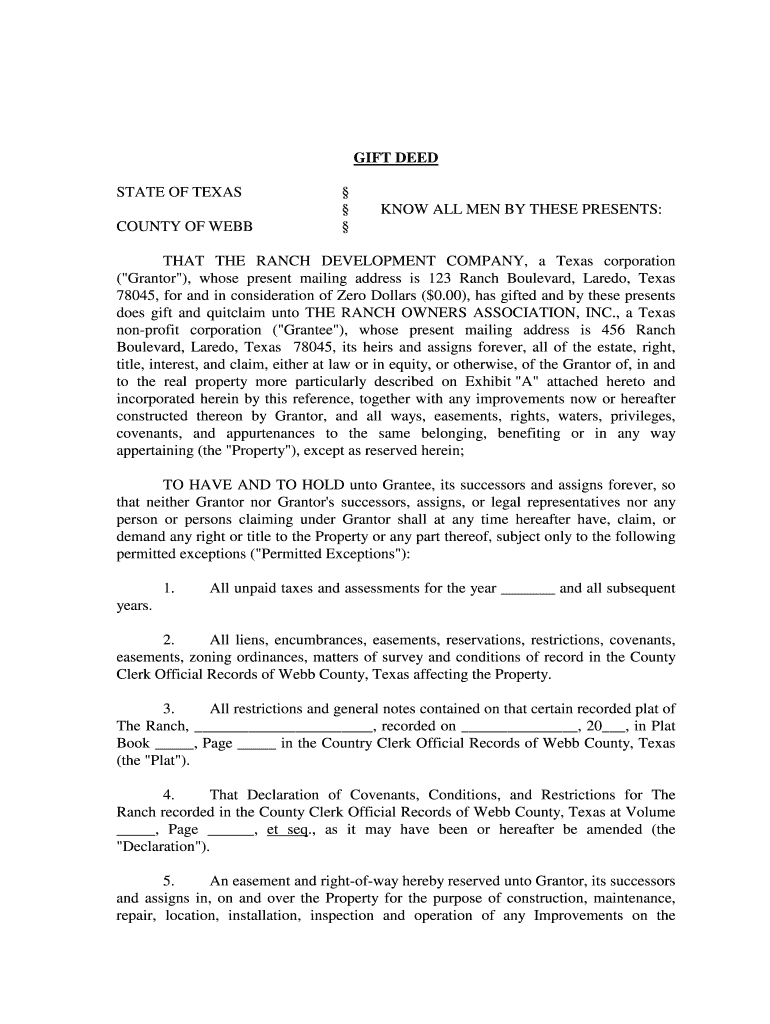







Overview of a Gift Deed in Texas
A gift deed is a legal document used in the state of Texas to transfer property ownership without any monetary compensation. This type of deed is commonly executed when the owner of a property wants to give their real estate to another party, often a family member or friend. Such transactions are not subject to sales tax, making gift deeds a practical option for transferring ownership without the costs typically associated with property sales.
Key Terminology Associated with Gift Deeds
- Donor: The individual or entity giving the gift.
- Donee: The individual or entity receiving the gift.
- Quitclaim Deed: A type of deed often used in gift transactions that conveys whatever interest the donor has in the property without warranties.
- Expressed Intent: An essential requirement in Texas, indicating the donor’s clear intention to make a gift.
Requirements for a Valid Gift Deed in Texas
To create a legally binding gift deed in Texas, certain requirements must be met:
- Written Document: The deed must be in writing to comply with state property laws.
- Signature: The donor must sign the document. The signature needs to be notarized for it to be enforceable.
- Identification of Parties: The deed must clearly identify the donor and donee, including their full names and addresses.
- Property Description: A detailed description of the property being transferred must be included to prevent ambiguity.
- No Consideration: The deed must state that the transfer is a gift, confirming that no consideration (payment) is involved.
Steps to Prepare a Gift Deed in Texas
- Draft the Gift Deed: Using a template or legal software, prepare the gift deed. Ensure it includes all necessary information about the parties and the property.
- Sign the Deed: The donor signs the deed in the presence of a notary public. This step is crucial as it adds an additional layer of authenticity to the document.
- Record the Deed: After execution, the deed should be filed with the county clerk’s office in the county where the property is located. This makes the gift public record and protects the rights of the donee.
- Provide Copies: After recording, provide copies of the completed deed to both the donor and donee for their records.
Common Scenarios for Using Gift Deeds
- Transferring Property to a Child: A parent may use a gift deed to transfer ownership of a family home to their child without involving the complexities of selling the property.
- Gift Among Relatives: Often used in cases where family members wish to share ownership of a vacation home or other real property.
- Charitable Donations: Individuals may transfer real estate to a charitable organization using a gift deed.
Legal Considerations and Implications
When creating a gift deed, it is crucial to be aware of the legal implications:
- Tax Implications: Although gift deeds typically do not incur sales taxes, they may have implications for gift taxes. Donors should consult with a tax advisor to understand potential liabilities.
- Existing Liens or Debts: If the property has any liens or debts, these may still apply to the donee after the transfer.
- Revocation: Gift deeds cannot be revoked once executed and recorded unless certain legal conditions are met.
Understanding the aspects of gift deeds in Texas is essential for anyone considering transferring property. The absence of monetary exchange does not negate the need for proper legal procedures to ensure the transaction is valid and enforceable.




