







Understanding the Plant and Plant Product Declaration Form
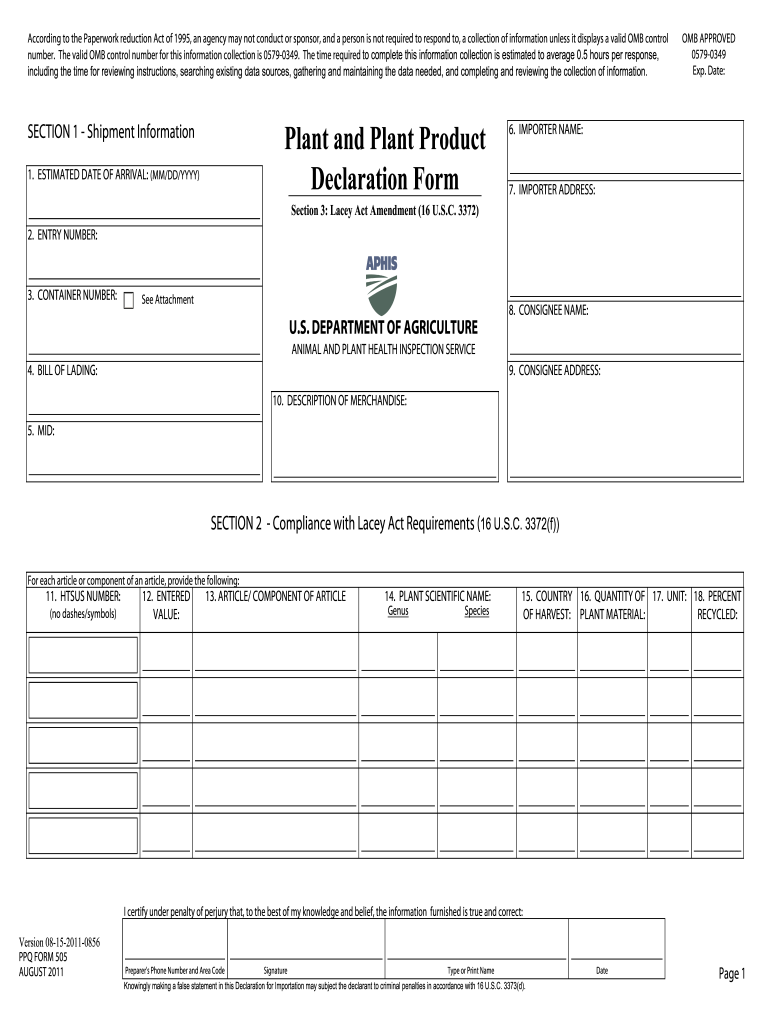
The Plant and Plant Product Declaration Form is an essential document required for the importation of plant materials into the United States. Governed by the Paperwork Reduction Act of 1995, this form ensures compliance with federal regulations surrounding the importation of plants, which are subject to specific tracking and containment measures to prevent the spread of invasive species and pests.
Importance of Accurate Information
Providing accurate details on the form is crucial, as errors can lead to significant penalties, including fines or the rejection of shipments. The form collects vital information including:
- Estimated Arrival Date: Specifying when the plant materials will arrive helps authorities plan for inspection and compliance checks.
- Importer and Consignee Details: These sections require names, addresses, and contact information, ensuring that any issues can be communicated quickly.
Accuracy is not just about compliance; it enhances the efficiency of processing the declaration and aids in minimizing delays during customs inspections.
Compliance with the Lacey Act
The declaration plays a critical role in adhering to the Lacey Act requirements. This legislation prohibits the importation of plants and plant products that are harvested in violation of local, state, or national laws. The form includes a section where importers certify their compliance with the Lacey Act, which requires an understanding of their source documentation and proof of legality.
- Lacey Act Declaration: This is an integral part of the plant and plant product declaration, confirming the legality of the imported flora.
- Tracking Requirements: Importers must document where their materials were sourced, including any needed permits.
Submission Instructions for the Form
Submitting the Plant and Plant Product Declaration Form involves several careful steps to ensure compliance and successful entry into the U.S.
- Complete the Form: All required fields must be filled out, focusing on accuracy and specific details related to the imported materials.
- Attach Supporting Documentation: This may include invoices, phytosanitary certificates, and any Lacey Act documentation.
- Submit to the Relevant Authority: The form must be sent to the USDA's Animal and Plant Health Inspection Service (APHIS) or the appropriate customs authority, depending on the entry point of the import.
By following these steps, importers can facilitate a smooth customs process and help ensure their products make it through without unnecessary holdups.
Necessary Information on the Form
Each section of the plant and plant product declaration form requires careful attention to detail. Key information to include consists of:
- Description of Plants: Clear identification of each species being imported, including common and scientific names.
- Quantity and Type of Products: This may include seeds, soil, or other plant materials, which must be accurately reported.
- Location of Origin: Detailing the specific locations from which the materials were sourced aids in tracing any potential issues.
By providing this information in a structured manner, importers can ease the review process and enhance compliance with federal regulations.
Consequences of Non-Compliance
Being aware of the consequences associated with non-compliance is vital for any importer. Failing to properly complete or submit the Plant and Plant Product Declaration Form can result in:
- Financial Penalties: Importers may face fines for each infraction, depending on the severity of the oversight.
- Confiscation of Products: Items may be held or destroyed if they do not meet the necessary compliance standards.
- Import Ban: Repeated violations can lead to a loss of import privileges, severely impacting future business operations.
It is crucial for importers to stay informed of their responsibilities under U.S. law to avoid these penalties.
Examples of Providing Necessary Detail
To illustrate how to effectively use the plant and plant product declaration form, consider the following examples:
- Importing Exotic Plants: An importer seeking to bring in a shipment of orchids must accurately list species names and provide phytosanitary certificates proving the plants are free of pests and diseases.
- Importing Edible Plants: For tropical fruits, the declaration must include details about their compliance with the Lacey Act, ensuring they were harvested legally and come from a reputable source.
By leveraging practical examples, importers can better understand the form's requirements and the importance of each section.




