
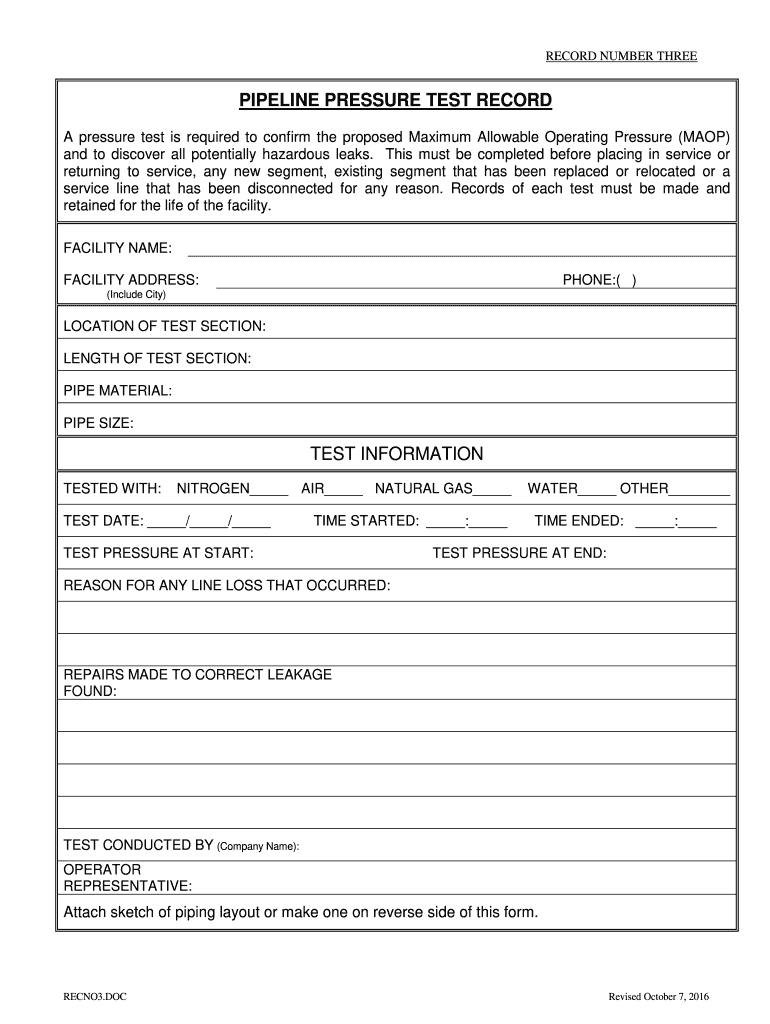







Definition and Importance of the Pipeline Pressure Test Record
The Pipeline Pressure Test Record is a crucial document used to confirm the Maximum Allowable Operating Pressure (MAOP) of a pipeline before it goes into service. This document serves multiple purposes, primarily ensuring the safety and reliability of gas transmission systems. It allows operators to verify that the pipeline can withstand the operational pressures it will encounter in regular use.
Key Components of the Document
- Facility Details: Essential information about the pipeline's location, type, and construction details.
- Test Information: Data related to the pressure testing, including pressure levels, duration, and results.
- Repair Records: Documentation of any repairs or modifications made to the pipeline post-testing, ensuring compliance with safety standards.
This record plays a vital role in maintaining operational integrity and protecting public safety by ensuring that any potential leaks or vulnerabilities are identified and addressed prior to the pipeline being put into operation.
How to Complete the Pipeline Pressure Test Record
Completing the Pipeline Pressure Test Record involves several key steps to ensure comprehensive documentation and compliance with regulatory standards.
Step-by-Step Process:
- Gather Required Data: Collect all necessary information regarding the pipeline's specifications and testing procedures.
- Include technical details like the type of materials used and pressure ratings.
- Conduct the Pressure Test: Perform the pressure test as per regulatory guidelines. Ensure the use of calibrated equipment to obtain accurate readings.
- Document Results: Clearly record the pressure levels reached during testing. Include times, dates, and the technical personnel involved in the testing process.
- Analyze and Iterate: Review the results for compliance. If the pipeline fails the test, document required repairs and retest dates.
- Final Review and Submission: Ensure all sections are filled out accurately and submit to relevant oversight bodies.
Following this structured approach not only ensures regulatory compliance but also enhances safety measures across pipeline operations.
Who Typically Uses the Pipeline Pressure Test Record?
Various stakeholders in the gas and pipeline industry utilize the Pipeline Pressure Test Record.


Typical Users:
- Pipeline Operators: Responsible for maintaining the safety and integrity of the pipeline infrastructure.
- Regulatory Agencies: Entities such as the Pipeline and Hazardous Materials Safety Administration (PHMSA) review these records to ensure compliance with safety standards.
- Engineers and Technicians: Professionals conducting tests and repairs need to document every detail of their work to maintain a safe operational environment.
- Safety Inspectors: These individuals use the records to evaluate adherence to safety practices and regulations.
By ensuring that all relevant parties have access to this documentation, organizations foster a culture of safety and accountability.
Importance of Retaining Pipeline Pressure Test Records
Retaining Pipeline Pressure Test Records is essential for several reasons:
Reasons for Retention:
- Regulatory Compliance: Many regulatory bodies require that these records be maintained for the lifetime of the facility. This ensures transparency and accountability.
- Safety Audits: Keeping these records aids in future safety audits. Inspectors can verify historical data to identify potential issues or compliance gaps.
- Operational Efficiency: Access to historical testing data can help identify trends, facilitating more efficient and timely maintenance and repairs.
- Legal Protection: In case of any incidents or regulatory inquiries, having thorough documentation acts as protection against potential legal liabilities.
Maintaining these records can play a vital role in the long-term success and safety of pipeline operations.
State-Specific Rules for Pipeline Pressure Testing
The regulations governing the Pipeline Pressure Test Record can vary by state.
Examples of Variations:
- Regulatory Authority: Some states may have their own regulatory bodies in addition to federal oversight, which sets additional requirements.
- Documentation Retention Period: States may differ in how long records must be retained. While some may require ten years, others could demand indefinite retention.
- Testing Standards: Individual states might have unique standards for conducting pressure tests, including specific methodologies for different types of pipelines.
Understanding these state-specific rules is vital for pipeline operators to ensure compliance and enhance safety measures.
Real-World Applications of the Pipeline Pressure Test Record
Practical applications of the Pipeline Pressure Test Record can be seen in various scenarios that demonstrate its importance in real-world operations.
Use Case Examples:
- Initial Pipeline Installation: When a new pipeline is installed, the pressure test record is used to ensure that it can handle the expected operational pressures safely.
- Post-Repair Inspections: After a significant repair, the pipeline must undergo pressure testing again to verify that all issues have been addressed.
- Safety Audits: During regulatory inspections, having well-maintained pressure test records allows for swift verification of the pipeline's safety history and operational integrity.
These case studies highlight the document's critical role in ensuring pipeline safety through rigorous testing and compliance monitoring.




