




01. Edit your nhs pension opt out form online
Type text, add images, blackout confidential details, add comments, highlights and more.

Type text, add images, blackout confidential details, add comments, highlights and more.

Draw your signature, type it, upload its image, or use your mobile device as a signature pad.

Send sd502 form word via email, link, or fax. You can also download it, export it or print it out.
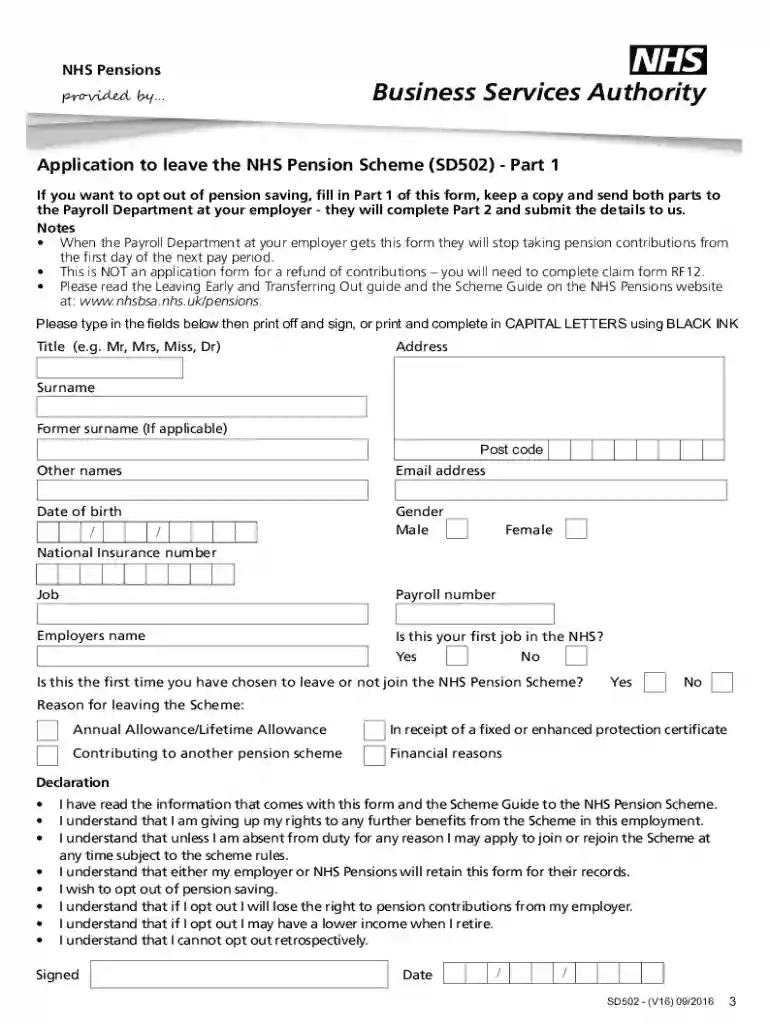
The Application to leave the NHS Pension Scheme (SD502) is a formal document used by members of the NHS Pension Scheme wishing to opt out of the scheme. This application signifies that a member has decided to cease future contributions to the pension plan, effectively relinquishing any associated benefits that would have accumulated during their continued participation. Understanding the implications is crucial, given the potential loss of retirement benefits including pensions, lump sums, and life assurance coverage tied to membership in the scheme. Members need to evaluate the long-term financial impact of their decision, as exiting the scheme can have significant ramifications on their retirement savings.
The SD502 is particularly pertinent within the regulatory framework governing NHS pensions, ensuring that members are formally documented when choosing to opt out. This process is essential in maintaining accurate records and helping the NHS manage its pension obligations transparently. Before submitting the form, individuals are encouraged to consider the advice of financial advisors to fully grasp the consequences of leaving the pension scheme.
Completing the Application to leave the NHS Pension Scheme involves specific steps that must be carefully followed to ensure accuracy and compliance with the requirements.
The SD502 is commonly used by NHS staff who find themselves in changing employment situations or reconsidering their long-term financial planning. Typical users include:
Thus, understanding the usage of the SD502 is advantageous for a diverse range of employees within the NHS, allowing for personal financial decisions aligned with their life circumstances.


Familiarity with specific terminology surrounding the SD502 is essential for effective navigation of the pension opt-out process. Key terms include:
Grasping these terms assists in understanding the components of the pension scheme and aids members in making informed decisions regarding their retirement planning.
The legal framework that governs the NHS Pension Scheme stipulates the regulations surrounding the opt-out process. The submission of the SD502 is legally binding, meaning once submitted and accepted, it confirms that the member is voluntarily relinquishing their rights to future benefits.
Members need to be aware that:
Understanding these legal aspects ensures transparency and helps members avoid potential pitfalls associated with withdrawing from the NHS Pension Scheme.
The SD502 can be submitted through various methods, each with its own advantages to accommodate user preferences and operational efficiency.
This comprehensive overview of submission methods enhances clarity and assists users in making informed decisions based on their personal preferences and circumstances.
We've got more versions of the nhs pension opt out form form. Select the right nhs pension opt out form version from the list and start editing it straight away!
At DocHub, your data security is our priority. We follow HIPAA, SOC2, GDPR, and other standards, so you can work on your documents with confidence.


