




Definition and Meaning of Form MVR 28
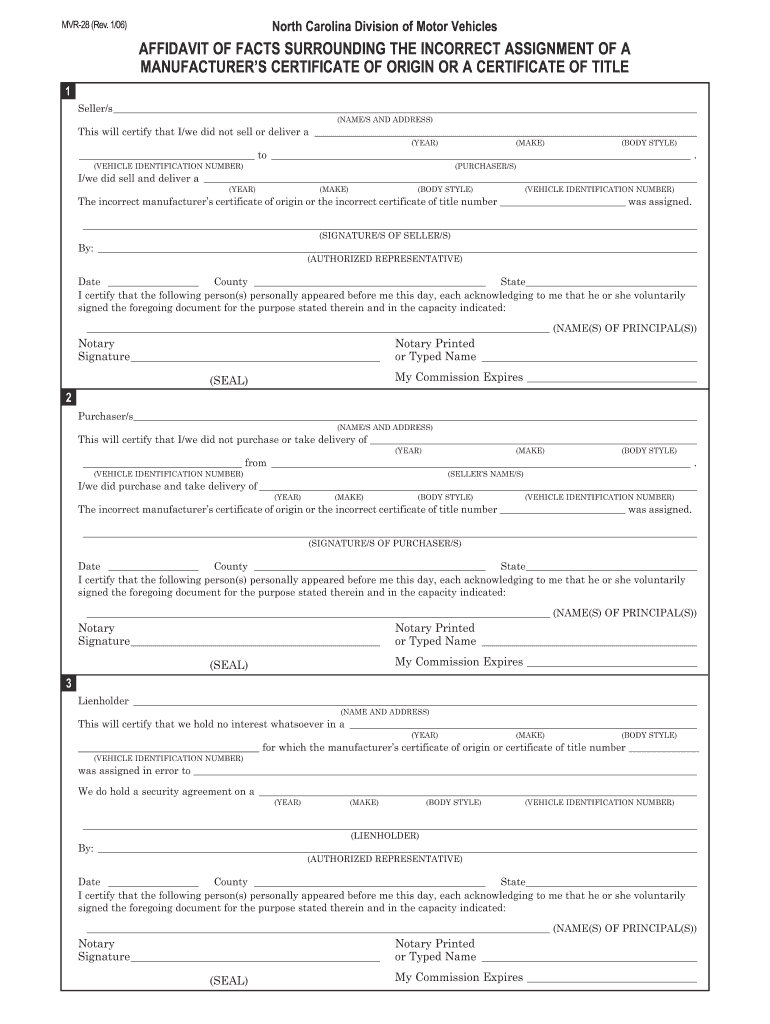
The MVR 28 is a North Carolina Division of Motor Vehicles form that documents the sale and transfer of a vehicle. It's officially known as the Notice of Vehicle Sale Form MVR 28 and is used by sellers to report the sale or transfer of a vehicle. This form serves several critical functions, including notifying the DMV of the transaction, protecting the seller from liability associated with the vehicle after the sale, and providing important details about the vehicle and parties involved.
Purpose of the MVR 28
- Notifies the DMV of a vehicle's sale or transfer
- Releases the seller from future liability for the vehicle
- Provides a record of the transaction for buyers and sellers
The form captures essential information such as the vehicle identification number (VIN), the names of the buyer and seller, and the date of the sale.
Key Elements of the MVR 28
Understanding the components of the MVR 28 is crucial for completing the form accurately.
Required Information
- Seller Details: Name, address, and contact information of the seller.
- Buyer Information: Name, address, and contact information of the buyer.
- Vehicle Information: VIN, make, model, year, and odometer reading at the time of sale.
- Sale Information: Date of sale and sale price.
Each section must be filled out completely to ensure the form is legally binding and accurate. Incomplete information may result in delays or complications with the DMV.
Certification Section
This section often requires signatures from both the seller and buyer, which confirms their agreement regarding the sale. It may also necessitate notarization to validate the authenticity of the document legally.
Steps to Complete the MVR 28
Completing the MVR 28 involves several key steps to ensure that all necessary information is accurately conveyed.
- Gather Necessary Information: Collect details of the vehicle and both parties involved in the sale.
- Fill Out the Form: Input the seller's details, buyer's details, and comprehensive vehicle information. Double-check for accuracy.
- Sign the Document: Both the seller and buyer must sign the form in the designated areas.
- Notarize if Required: Some transactions may require notarization, particularly for formal proof of sale.
- Submit the Form: File the completed form with the North Carolina DMV either online, through mail, or in person.
Tip: Always keep a copy of the completed MVR 28 for your records, as it serves as proof of the sale and release of liability.
Who Typically Uses the MVR 28
The MVR 28 is primarily utilized by individuals or business entities involved in selling or transferring ownership of a motor vehicle. These users can include:
- Private Sellers: Individuals who sell their personal vehicles.
- Dealerships: Auto dealerships that frequently buy and sell vehicles.
- Lienholders: Banks or institutions that have a financial interest in the vehicle.
- Buyers: Those acquiring a vehicle, whether from private sellers or dealerships.
Each of these parties has a vested interest in ensuring the transaction is documented properly and that necessary legal protections are in place.

Important Terms Related to MVR 28
Familiarity with specific terminology is essential for understanding and correctly using the MVR 28. Key terms include:
- Release of Liability: A clause that releases the seller from responsibility for any incidents related to the vehicle after the sale.
- VIN (Vehicle Identification Number): A unique 17-character code that identifies individual vehicles for regulatory and record-keeping purposes.
- Notarization: The process of obtaining an official signature from a notary public to validate a document.
Awareness of these terms ensures that all parties involved in the transaction clearly understand their rights, responsibilities, and the implications of the MVR 28.
Legal Use of the MVR 28
The MVR 28 is legally recognized by the North Carolina DMV and serves as a formal record of a vehicle sale. Its proper use is essential for compliance with state regulations regarding vehicle ownership transfer.
Compliance Requirements
- The form must be submitted within a specified timeframe following the sale to ensure the transfer of ownership is officially recognized.
- In case of disputes or legal issues related to the vehicle after the sale, the completed MVR 28 serves as a legal document evidencing the sale and release of liability.
Failure to correctly file the MVR 28 can result in continued liability for the seller and potential fines or penalties from state authorities.