




01. Edit your form online
Type text, add images, blackout confidential details, add comments, highlights and more.

Type text, add images, blackout confidential details, add comments, highlights and more.

Draw your signature, type it, upload its image, or use your mobile device as a signature pad.

Send it via email, link, or fax. You can also download it, export it or print it out.
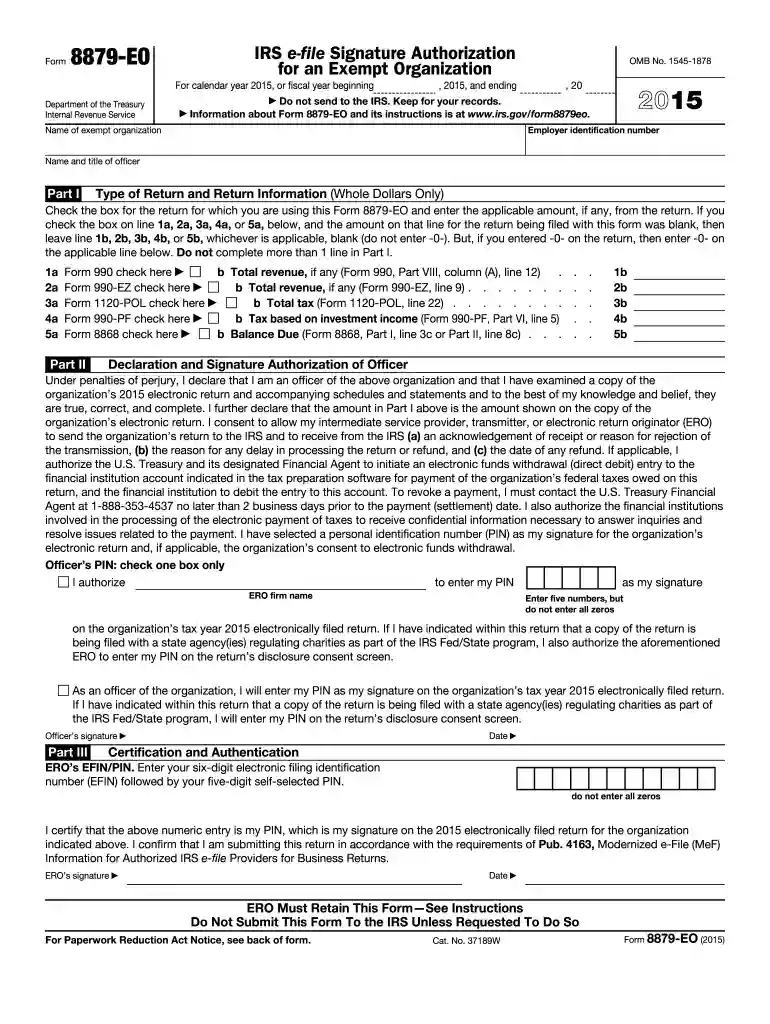
Form 8879-EO, officially known as the IRS e-file Signature Authorization for Exempt Organizations, is an IRS document used to allow an organization officer to electronically sign and authorize the filing of the organization’s tax return using a personal identification number (PIN). This form is critical in the e-filing process for tax-exempt organizations and outlines the responsibilities of both the organization officer and the electronic return originator (ERO).
Access the Form: Locate the form via the IRS website or authorized tax software platforms.
Enter Organization Details: Provide all necessary information about the exempt organization, including name, address, and employer identification number (EIN).
Obtain Officer’s Certification: The organization officer must review the tax return, authorize the ERO to file the return, and sign the form electronically using a PIN.
ERO Verification: The electronic return originator must verify the information and ensure the correct PIN is used before submission.
Retain the Form: Keep a signed copy for records. It should not be sent to the IRS but retained with the organization’s tax records.


By ensuring proper completion and retention of Form 8879-EO, exempt organizations can effectively meet IRS electronic filing requirements, maintain compliance, and ensure the efficient processing of their tax returns.
We've got more versions of the 2015 8879 eo form form. Select the right 2015 8879 eo form version from the list and start editing it straight away!
At DocHub, your data security is our priority. We follow HIPAA, SOC2, GDPR, and other standards, so you can work on your documents with confidence.
If you are going to make an electronic funds withdrawal (direct debit) with this Form 8868, see Form 8453-EO and Form 8879-EO for payment instructions. FormRead more
As an officer of the organization, I will enter my PIN as my signature on the organizations tax year 2015 electronically filed return. If I have indicatedRead more
Jun 15, 2022 If you are going to make an electronic funds withdrawal (direct debit) with this Form 8868, see Form 8453-EO and Form 8879-EO for payment.Read more


