






Definition and Meaning of the 4 Month ASQ Score Sheet
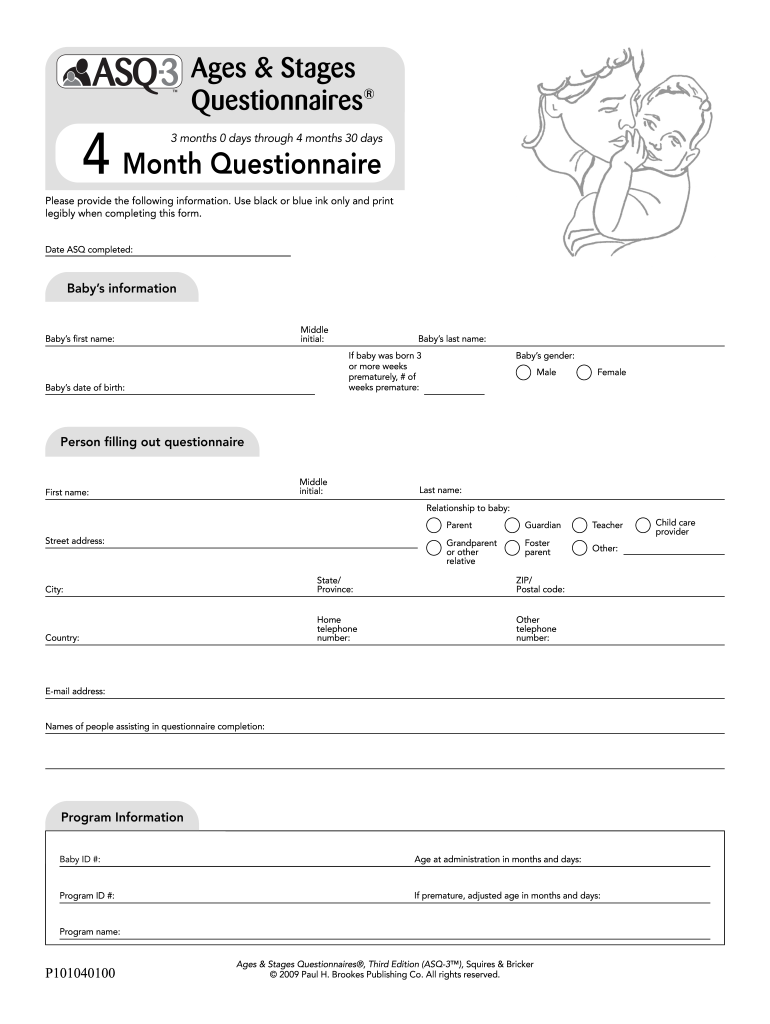
The 4 month ASQ score sheet is a screening tool from the Ages & Stages Questionnaires® (ASQ-3™) tailored to evaluate developmental milestones in infants aged three to four months. This form serves as a vital resource for parents and caregivers, offering insights into a child's development in essential areas such as communication, gross motor skills, fine motor skills, problem-solving, and personal-social abilities. By identifying developmental progress and potential delays, the score sheet plays a role in early intervention, ensuring children receive the support they need during these critical early months.
The ASQ-3 comprises a series of straightforward questions designed for caregivers to observe their child's abilities. As caregivers respond, they note specific behaviors and skills exhibited by the child, contributing to a comprehensive assessment of developmental health. The scoring is simple and intuitive, allowing caregivers to determine areas where the child is meeting, exceeding, or lagging behind expected developmental milestones.
Steps to Complete the 4 Month ASQ Score Sheet
Completing the 4 month ASQ score sheet involves several straightforward steps designed to ensure accurate and valuable responses.
-
Gather Necessary Information: Identify the full name, date of birth, and basic personal details of the child. Include additional caregiver information as well.
-
Review Instructions: Before answering the questions, read the instructions carefully to understand how to observe the child's behavior accurately.
-
Observation and Response: As you go through the sections, observe your child engaging in various activities. Answer the questions based on your observations regarding:
- Communication skills (e.g., does the child coo, smile, or make eye contact?)
- Gross motor skills (e.g., can the child hold their head up or push down on their legs when placed on a hard surface?)
- Fine motor skills (e.g., can the child reach for and grasp toys?)
- Problem-solving abilities (e.g., does the child show interest in exploring their surroundings?)
- Personal-social development (e.g., does the child show a preference for certain people or toys?)
-
Score the Responses: After answering all questions, tally your responses to assess where the child stands concerning developmental milestones.
-
Interpret Results: Use the scoring chart provided with the score sheet to interpret the results. Check if the child is progressing as expected or requires further evaluation.
-
Consult with Professionals: If you have concerns based on the scores, consider discussing the results with a pediatrician or child development specialist, who can provide further guidance or resources for support.
How to Obtain the 4 Month ASQ Score Sheet
Acquiring the 4 month ASQ score sheet can be done through several channels to ensure easy access for caregivers:
-
Official ASQ Website: The ASQ website provides downloadable PDFs of the 4 month score sheet, making it accessible for immediate use. Caregivers can easily print and fill them out at home.
-
Pediatric Clinics: Many pediatricians and healthcare providers have these questionnaires available in their offices. Families can request a copy during routine check-ups or developmental screenings.
-
Local Early Intervention Programs: Community organizations and early intervention programs often use the ASQ as part of their developmental screenings. Caregivers can reach out to these services for a copy and further assistance.
-
Educational Resources: Child development resources and parenting websites may also offer access to the ASQ score sheets and related materials.
Important Terms Related to the 4 Month ASQ Score Sheet
Understanding key terminology related to the 4 month ASQ score sheet enhances comprehension and ensures proper use. Some essential terms include:
-
Developmental Milestones: Key skills that children typically achieve by certain ages, encompassing various domains such as motor skills, communication, and social interactions.
-
Screening Tool: An instrument designed to identify children who may benefit from further evaluation and support regarding their development.
-
Caregiver Observations: Insights provided by the parent or caregiver during the completion of the score sheet, reflecting the child’s day-to-day abilities.
-
ASQ-3™: The third edition of the Ages & Stages Questionnaires, designed for broader use across different child ages, including the 4 month ASQ.
By familiarizing oneself with these terms, caregivers can enhance their ability to accurately complete the score sheet and engage in meaningful discussions with health professionals.
Examples of Using the 4 Month ASQ Score Sheet
Utilizing the 4 month ASQ score sheet effectively can lead to valuable insights regarding child development. Here are a few examples:
-
Identifying Delays: Suppose a caregiver notices that their child is not cooing or smiling at three to four months. Recording these observations on the ASQ may highlight a potential developmental delay in social and communication skills, prompting a discussion with a pediatrician.
-
Assessing Progress: After six weeks of engaging in tummy time and various sensory activities, a caregiver may retake the ASQ score sheet. They may find that their child has made significant improvements, such as increased neck strength or enhanced grasping abilities, illustrating the effectiveness of early interventions.
-
Gathering Data for Support: A caregiver concerned about their child's developmental progress may use the ASQ to collect data that can be presented to educators or specialists. This information is invaluable for developing a targeted intervention strategy tailored to the child's unique needs.
By applying the ASQ score sheet in these scenarios, caregivers can make informed decisions regarding their child's developmental support and participate actively in their growth.
Why Use the 4 Month ASQ Score Sheet
Employing the 4 month ASQ score sheet is beneficial for several reasons, promoting proactive engagement in a child's developmental journey:
-
Early Identification: The score sheet enables caregivers to identify areas where a child may need further evaluation or support. Early detection of developmental delays is crucial for implementing timely interventions.
-
Guiding Developmental Activities: Responses from the ASQ can help caregivers tailor their interactions and activities with their child, ensuring they promote skills that might need reinforcement.
-
Enhanced Communication with Health Providers: The ASQ serves as a standard tool that facilitates conversations between caregivers and healthcare providers, enabling them to speak the same language regarding child development and interventions.
-
Monitoring Growth Over Time: By periodically completing the ASQ score sheet, caregivers can track their child's progress over time, making adjustments to their approach as necessary and documenting improvements in developmental skills.
Using the 4 month ASQ score sheet actively contributes to a collaborative approach to child development, ensuring the best outcomes possible for infants.