






Definition and Purpose of the CA-17
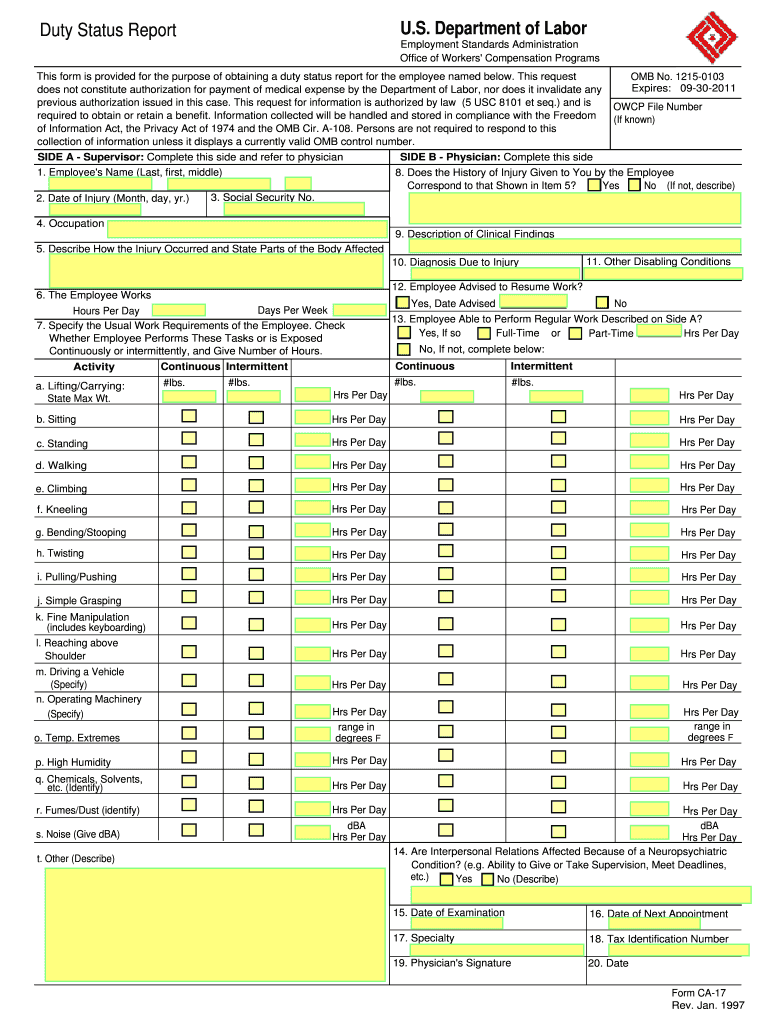
The CA-17, or Duty Status Report, is an essential form utilized by the U.S. Department of Labor's Office of Workers’ Compensation Programs. This document collects critical information about an employee's work-related injury and their capacity to return to work. It is designed to assess the impact of the injury on the employee's job performance and recovery timeline, ultimately facilitating the workers’ compensation process.
The CA-17 form includes detailed sections that must be filled out by the employee's supervisor and physician. These sections cover various aspects, such as the employee's injury history, clinical findings, and their functional capabilities to fulfill job responsibilities. It is important to note that this form does not authorize any payments for medical expenses, and compliance with its completion is crucial to avoid legal complications or delays in the claims process.
Steps to Complete the CA-17
Completing the CA-17 is a systematic process that involves several key steps. Here is a detailed breakdown:
- Initial Information Gathering: Collect the necessary details about the employee, including personal information, job title, and the nature of the injury.
- Supervisor's Section:
- Record the employee's job description.
- Document the circumstances surrounding the injury.
- Provide any relevant observations on the employee's current work performance.
- Physician's Section:
- Include clinical findings and evaluation results.
- Specify the employee's work capabilities or restrictions.
- Confirm the expected duration of the employee's condition and the time required for recovery.
- Review for Accuracy: Ensure that all provided information is complete and accurate to avoid any processing delays.
- Submission: Submit the completed CA-17 to the appropriate workers' compensation office, following the prescribed submission methods.
Following these steps meticulously is essential to ensure a smooth processing of the workers' compensation claim.
Important Components of the CA-17
Understanding the essential components of the CA-17 is vital for effective completion and compliance. The form includes the following key sections:
- Employee Information: This section captures critical details such as the employee's name, address, social security number, and job title.
- Injury Details: Supervisors need to provide insight into the incident that caused the injury, including date, time, and situational context.
- Clinical Assessment: The physician’s section must articulate findings from the medical evaluation, including diagnostic results and recommended treatment plans.
- Work Capacity Evaluation: This outlines what tasks the employee is capable of performing post-injury and any necessary accommodations.
- Signatures: The final part of the CA-17 requires the signatures of both the supervisor and physician to validate the information provided.
Each component plays a crucial role in establishing a clear understanding of the employee's situation, which can significantly affect the compensation process.
Who Uses the CA-17?
The CA-17 form is primarily used by a variety of stakeholders involved in workers' compensation cases, including:
- Employees: Individuals who have sustained a work-related injury are required to have this form completed to support their claims.
- Supervisors: They provide critical observations and insights regarding the employee's job functions and the injury circumstances, which are necessary for the completion of the report.
- Physicians: Medical professionals complete the medical assessment portion, contributing essential information about the employee's health status and work capabilities.
- Insurance Adjusters: These individuals may review the completed CA-17 as part of the claims processing to determine eligibility for benefits.
By involving these parties, the CA-17 ensures a comprehensive understanding of the impact of workplace injuries.
Legal Considerations for Using the CA-17
It is important to operate within legal parameters when utilizing the CA-17 form. Here are several key legal considerations:
- Compliance with Workers' Compensation Laws: The correct use of the CA-17 ensures that all parties adhere to existing workers' compensation regulations, avoiding potential legal disputes.
- Accuracy in Reporting: Failing to provide accurate information can result in serious legal repercussions, including potential fraud allegations, loss of benefits, or penalties for the employer.
- Documentation Standards: The CA-17 serves as an official record and must be completed according to specified standards to maintain its legal integrity.
- Confidentiality: Sensitive employee information contained in the CA-17 must be protected in compliance with privacy laws to prevent unauthorized access.
Understanding these legal aspects is crucial for all parties involved and helps to foster a compliant and efficient workers’ compensation process.