






Definition and Meaning of Notification of Death Letter to Credit Bureaus
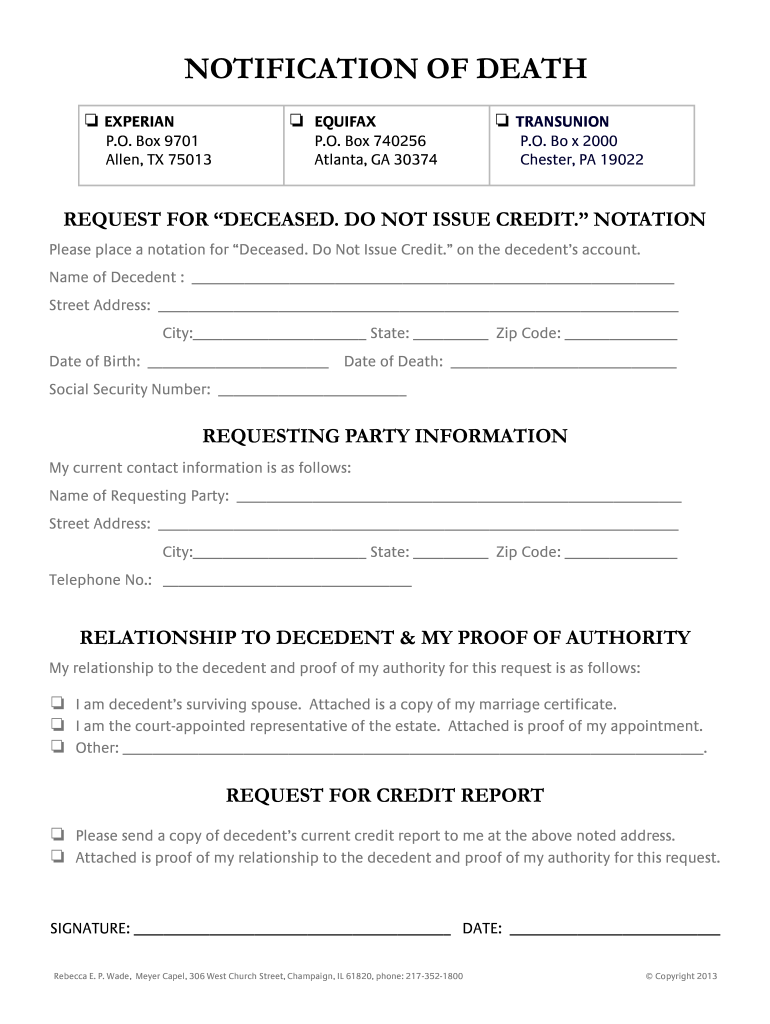
A notification of death letter to credit bureaus is an official document used to inform credit reporting agencies, such as Experian, Equifax, and TransUnion, about the death of an individual. This letter is vital for correcting the deceased’s credit records, thereby protecting their identity and preventing unauthorized credit applications in their name. The notification requests the bureaus to place a "Deceased. Do Not Issue Credit" notation on the deceased individual's credit report, which restricts new credit account approvals.
The letter typically includes pertinent details about the deceased, including their full name, date of birth, social security number, and the date of death. It also provides the contact information of the individual submitting the letter, who may be a family member, executor of the estate, or legal representative. This ensures that credit bureaus can verify the request and contact the appropriate person for any follow-up information required to process the notification.
Steps to Complete the Notification of Death Letter to Credit Bureaus
Completing the notification of death letter to credit bureaus requires careful attention to detail. Here are the key steps involved:
-
Gather Necessary Information: Collect all required information including:
- Full name of the deceased
- Social Security Number
- Date of birth
- Date of death
- Contact details of the requesting party (name, address, phone number)
-
Draft the Letter: Write a formal notification letter. Ensure it includes:
- A clear subject line indicating the purpose of the letter
- A brief introduction outlining the purpose of the notification
- Personal information about the deceased
- Request for a 'Deceased. Do Not Issue Credit' notation
- Proof of authority (like a copy of the death certificate or legal documentation)
-
Attach Required Documentation: Include copies of necessary documents that support your claim. These may include:
- Death certificate
- Legal documents proving the relationship to the deceased if applicable
- Any prior correspondence with the credit bureaus regarding the deceased's account
-
Select Submission Method: Choose whether to submit the letter online, via mail, or in person at the credit bureau's office. If sending by mail, consider using certified mail for confirmation of delivery.
-
Send the Notification: Follow through with the selected submission method and keep a copy of the notification and any documents sent for your records.
-
Follow Up: After sending the notification, it’s advisable to follow up with the credit bureau to ensure the request was processed and confirm the changes to the credit report.
Important Terms Related to Notification of Death Letter to Credit Bureaus
Understanding key terminology is crucial when handling a notification of death letter to credit bureaus. Some important terms include:
- Deceased Alert: A notation placed by credit bureaus on a deceased individual’s credit report to prevent identity theft and unauthorized credit applications.
- Credit Report: A detailed report outlining an individual's credit history, including credit accounts, payment history, and outstanding debts.
- Executor of Estate: A person legally appointed to administer the deceased's estate, responsible for managing their assets, including handling debts and notifications such as this letter.
- Proof of Authority: Documentation that verifies the person sending the notification has the legal right to act on behalf of the deceased, such as being an executor or close relative.
Familiarity with these terms can ease the process of notifying credit bureaus and ensure that all necessary actions are appropriately executed.
Examples of Using the Notification of Death Letter to Credit Bureaus
The practical usage of the notification of death letter can vary based on individual circumstances. Here are some potential examples:
- Family Members: A spouse or child of the deceased may need to notify credit bureaus after the passing to protect the deceased’s credit integrity, especially if there are ongoing financial obligations or shared accounts.
- Executors: The executor of the estate is responsible for settling debts and might initiate this notification as part of the estate's management process. This helps to prevent fraudulent use of the decedent’s identity and ensures that existing credit accounts are accurately reported.
- Legal Representative: An attorney representing the estate may send the notification on behalf of the family, utilizing their insight into legal requirements and ensuring all necessary information is provided accurately.
In each scenario, it is essential that the letter is completed accurately and accompanied by proper documentation to facilitate the credit bureaus’ prompt and efficient handling of the request.
Legal Use of the Notification of Death Letter to Credit Bureaus
The legal basis for submitting a notification of death letter to credit bureaus encompasses several critical points:
- Identity Protection: It is a legal requirement for credit bureaus to handle sensitive information responsibly. Sending this letter helps safeguard the deceased's identity and prevents credit application fraud.
- Accurate Record Keeping: By notifying credit bureaus of a death, the requesting party ensures that the deceased’s credit report is updated promptly, reflecting accurate information. This is important for potential creditors or for legal matters related to estate management.
- Compliance with Federal Regulations: Credit reporting agencies must comply with the Fair Credit Reporting Act, which ensures the accuracy and privacy of credit information. Notifying them of a death fulfills necessary steps to prevent incorrect reporting.
Understanding the legal context surrounding the notification process aids in ensuring compliance and protects the interests of both the deceased and the requesting party.