




01. Edit your ifta mileage sheet online
Type text, add images, blackout confidential details, add comments, highlights and more.

Type text, add images, blackout confidential details, add comments, highlights and more.

Draw your signature, type it, upload its image, or use your mobile device as a signature pad.

Send ifta trip sheets pdf via email, link, or fax. You can also download it, export it or print it out.
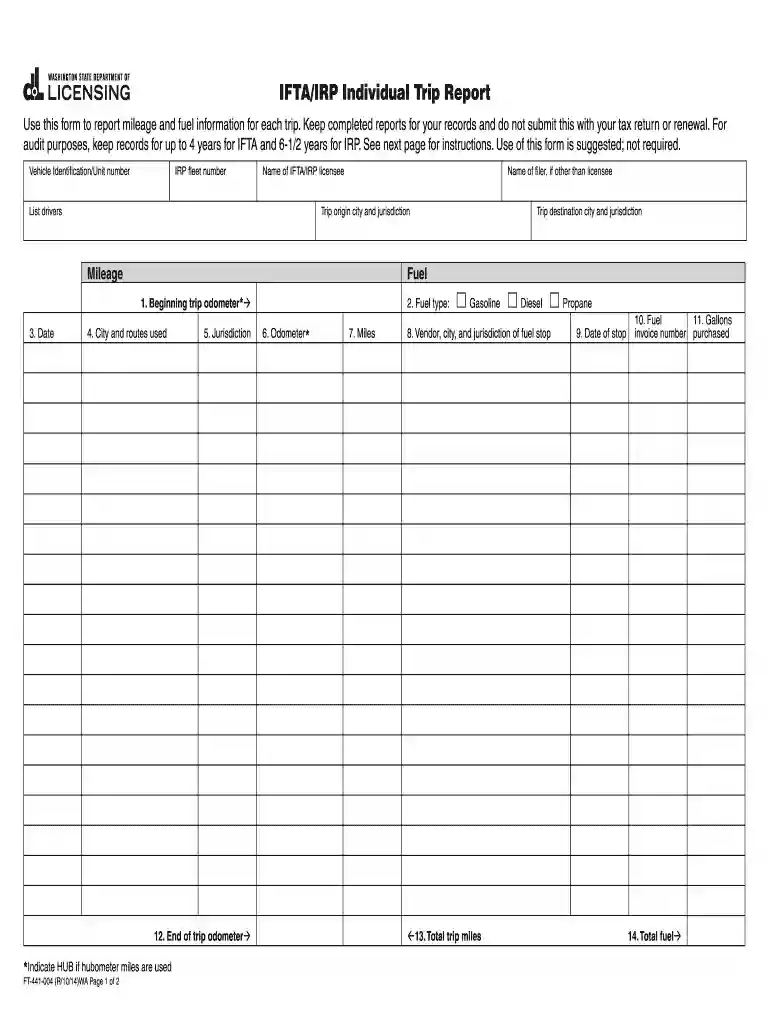
The IFTA trip form, formally known as the IFTA/IRP Individual Trip Report, serves as an essential document for recording mileage and fuel usage for commercial vehicles operating across state lines in the United States and Canada. This form aids carriers in determining the amount of fuel tax owed to each jurisdiction based on the miles traveled in that area. Within the report, critical sections allow for the input of vehicle identification, trip specifics, fuel types used, and odometer readings for accurate tax reporting and compliance.
The IFTA trip form is particularly vital for trucking companies and independent drivers engaged in interstate transportation. It ensures that fuel use is accurately documented and that taxes are filed correctly, reducing the risk of audits and potential penalties from taxing authorities. The form not only facilitates compliance with tax regulations but also helps in managing operational costs related to fuel consumption, making it a key tool in the logistics and transportation industries.
When preparing the IFTA trip form, users must understand the key components included in the report. These elements are designed to streamline data entry and ensure all necessary information is captured for accurate tax calculations:
Vehicle Identification: The form requires the vehicle's unique identification information, including the International Registration Plan (IRP) account number and the vehicle's license plate and VIN (Vehicle Identification Number).
Trip Details: This section captures vital trip information, such as trip starting and ending odometer readings, total miles driven, and the specific states visited during the journey.
Fuel Types and Amounts: Users must provide details on the different fuel types utilized during the trip, alongside the quantity of each type. This data is important for calculating taxes accurately based on jurisdictional fuel rates.
Jurisdictional Mileage: Breakdown of miles driven in each state helps in determining tax assessments for each jurisdiction, ensuring compliance with local laws and regulations.
Signatures and Certification: The IFTA trip report must be signed by the driver or authorized representative, certifying the accuracy of the information provided.
Understanding these elements is crucial for accurate completion of the form, as any errors or omissions can lead to complications during audits and tax filings.
Completing the IFTA trip form accurately requires careful attention to detail. Follow these steps to ensure the form is filled out correctly:
Gather Necessary Information: Before starting, collect all required documentation related to your trips, including fuel receipts, mileage logs, and vehicle details.
Complete Vehicle Information: Begin by filling in the vehicle's identifying information, including the IRP number, plate number, and VIN. Accuracy in this section is critical for record tracking.
Record Trip Details: For each trip taken, document the start and end odometer readings. Ensure that these readings are accurate and correspond to the actual mileage traveled.
List Fuel Transactions: Input the types and quantities of fuel purchased during the trip. It is necessary to keep fuel receipts to support these entries if audited.
State Mileage Allocation: Take note of the miles driven in each jurisdiction. This data is essential for determining how much tax is owed to each state or province.
Verify and Sign: Review all entries for accuracy before signing the form. Ensure all required information is complete to avoid delays or penalties.
Submission: Determine the submission method (typically through your state’s IFTA office) and make copies of the completed form for your records.
By following these structured steps, users can confidently complete the IFTA trip form, minimizing the risk of errors and facilitating compliance with tax regulations.
The IFTA trip form is not just a tool for convenience; it holds legal significance in the regulation of interstate commerce. It must be completed accurately in alignment with the laws established by the International Fuel Tax Agreement, which governs fuel tax collection across member jurisdictions. Ensuring compliance with these regulations means:
Maintaining Accurate Records: The records associated with the IFTA trip form must be accurate and readily available for review by state taxing authorities in the event of an audit.
Timely Submission: Failure to submit the form by the required deadlines can lead to penalties and interest charges, further complicating tax compliance.
Adhering to Jurisdictional Regulations: Each jurisdiction may have different rules regarding the treatment of fuel taxes, which must be recognized and followed to mitigate risks.
Understanding the legal implications of the IFTA trip form allows drivers and businesses to manage their compliance responsibilities effectively, ensuring adherence to federal and state laws while operating across state lines.
Familiarity with specific terminology associated with the IFTA trip form is critical for accurate usage and compliance. Key terms include:
IFTA (International Fuel Tax Agreement): A cooperative agreement among U.S. states and Canadian provinces to simplify the reporting of fuel use by motor carriers that operate in more than one jurisdiction.
IRP (International Registration Plan): A registration reciprocity plan for commercial vehicles that travel in two or more jurisdictions, allowing for the payment of registration fees based on the miles traveled in each jurisdiction.
Jurisdiction: Refers to the states or provinces where the vehicle operates and where fuel taxes may be applicable.
Odometer Reading: The recorded distances that indicate the total miles driven, crucial for determining fuel tax obligations.
Understanding these terms helps users navigate the IFTA trip form more effectively and enhances communication regarding compliance matters within the trucking and logistics industry.
Compliance with federal and state regulations is paramount for carriers utilizing the IFTA trip form. Essential guidelines to consider include:
IRS Regulations: While the IFTA trip report is primarily regulated at the state level, IRS guidelines regarding fuel tax credits and deductions can impact how data reported on the IFTA trip form is utilized during tax preparation.
Filing Deadlines: Typically, IFTA trip reports are submitted quarterly, with specific deadlines depending on the state of registration. It is crucial for carriers to track these deadlines to avoid late fees or compliance issues.
Record Keeping: The IRS recommends maintaining records related to fuel purchases, mileage logs, and all pertinent documentation for a minimum of three years. This is vital for substantiating claims made on tax forms and reports.
Awareness of these guidelines and deadlines ensures that trucking companies and drivers remain in good standing with tax authorities and minimize the risks associated with non-compliance.
We've got more versions of the ifta mileage sheet form. Select the right ifta mileage sheet version from the list and start editing it straight away!
| Versions | Form popularity | Fillable & printable |
|---|---|---|
| 2014 | 4.8 Satisfied (38 Votes) |
At DocHub, your data security is our priority. We follow HIPAA, SOC2, GDPR, and other standards, so you can work on your documents with confidence.
If travel goes beyond 30 miles of the border, all IFTA requirements apply and the 30 miles must be included in fuel tax reporting. Unified Carrier Registration.Read more
Ifta/irp individual trip report (example) use this form to report mileage and fuel information for each trip. Up to $32 cash back complete mileage and fuel tripRead more
Complete a Schedule A IRP/IFTA Combined Application (form 9908) for a license. Oregon IFTA Tax Return. All active Oregon IFTA licensees must file an IFTA TaxRead more


