






Definition & Meaning
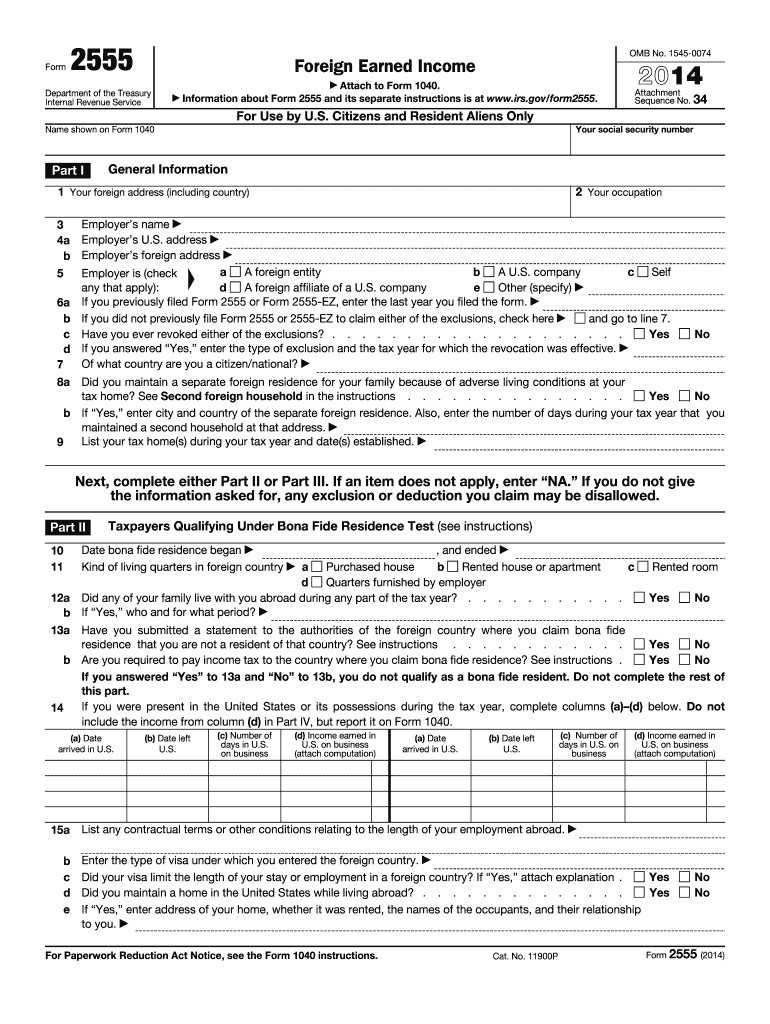
The 2014 Form 2555 is a tax form used by U.S. citizens and resident aliens to report foreign earned income during the 2014 tax year. Utilizing this form, individuals can claim exclusions or deductions related to that income, aimed at reducing tax obligations on income earned outside the United States. The form covers sections like general information, qualifications under the bona fide residence test and physical presence test, and details regarding foreign earned income, housing exclusions, and deductions.
Key Features of the Form
- It helps taxpayers exclude or deduct some or all of their foreign earned income.
- Provides options to claim housing exclusions or deductions based on foreign housing expenses.
- Allows taxpayers to avoid double taxation on income earned both domestically and abroad.
How to Use the 2014 Form 2555
Using the 2014 Form 2555 involves calculating your foreign earned income and any applicable exclusions or deductions. To effectively utilize this form:
- Qualify for Exclusions: Determine if you qualify for the foreign earned income exclusion by passing the bona fide residence test or the physical presence test.
- Calculate Exclusions: Deduct up to $99,200 of foreign earned income for the 2014 tax year, if eligible.
- Foreign Housing: Calculate exclusions or deductions for foreign housing, noting that specific limits apply based on geographic location.
Important Considerations
- Ensure complete accuracy to avoid complications during the filing process.
- Suitable documentation supporting foreign earned income claims is vital.
Steps to Complete the 2014 Form 2555
Completing the 2014 Form 2555 involves a series of structured steps:
- General Information: Fill out basic taxpayer information, such as name and Social Security Number.
- Qualification Tests: Indicate how you qualify for the foreign earned income exclusion with either test.
- Income Reporting: Declare total foreign earned income and housing expenses, if applicable.
- Calculating Exclusions: Use provided worksheets to calculate eligible exclusions.
- Form Review: Thoroughly review for accuracy and completeness before submission.
Detailed Instructions
- Utilize IRS guidelines and resources for specifics on foreign income documentation.
- Check eligibility criteria carefully to ensure compliance.
Important Terms Related to 2014 Form 2555
Understanding terminology is crucial when dealing with the 2014 Form 2555:
- Foreign Earned Income: Wages or income from working in a foreign country.
- Bona Fide Residence Test: A test based on the taxpayer’s intent to establish a foreign residence.
- Physical Presence Test: A test based on the number of days spent in a foreign country.
Glossary of Terms
- Exclusion: Reduction of income subject to U.S. taxes.
- Deductions: Specific costs that reduce taxable income.
- Housing Exclusion: Applicable to employees regarding foreign housing expenses.
Eligibility Criteria
To qualify for using the 2014 Form 2555, certain criteria must be met:
- U.S. Citizenship or Residency: Must be a U.S. citizen or resident alien.
- Foreign Earnings: Must have income earned from services performed in a foreign country.
- Residence or Presence: Must meet either the bona fide residence test or physical presence test.


Test Requirements
- Bona Fide Residence Test: Requires having a permanent residence in a foreign country for an uninterrupted period.
- Physical Presence Test: Requires being in a foreign country for at least 330 full days during a 12-month period.
Penalties for Non-Compliance
Failing to comply with Form 2555 requirements can lead to:
- Fines: Penalties for underreporting income or incorrect filings.
- Back Taxes: Additional taxes owed due to unreported or inaccurately claimed income.
Avoiding Penalties
- Ensure completeness and accuracy in all provided details.
- Adhere strictly to filing deadlines to avoid extensions and potential fines.
Filing Deadlines / Important Dates
Timely filing of the 2014 Form 2555 is crucial:
- Standard Deadline: Typically due by April 15 of the following year unless extended.
- Extended Deadline: Automatic extensions may apply for U.S. citizens abroad, pushing the due date to June.
Planning and Preparation
- Begin gathering necessary documentation and foreign income statements well in advance.
- Use IRS resources to track any changes in filing procedures or deadlines.
Form Submission Methods
The 2014 Form 2555 can be submitted via different methods:
- Online Filing: Use approved tax preparation software that supports Form 2555.
- Mail: Send a completed paper form to the IRS as per given instructions.
- In-Person: Consult with a licensed tax professional for filing assistance.
Digital vs. Paper Submission
- Online filing is quicker and allows for immediate confirmation, while paper submission might take longer but is suitable for those preferring hard copies.
Overall, thorough preparation and understanding of the 2014 Form 2555 subcomponents facilitate a seamless filing process and ensure compliance with IRS regulations for reporting foreign earned income.