




Definition & Meaning of Employability Life Skills Assessment
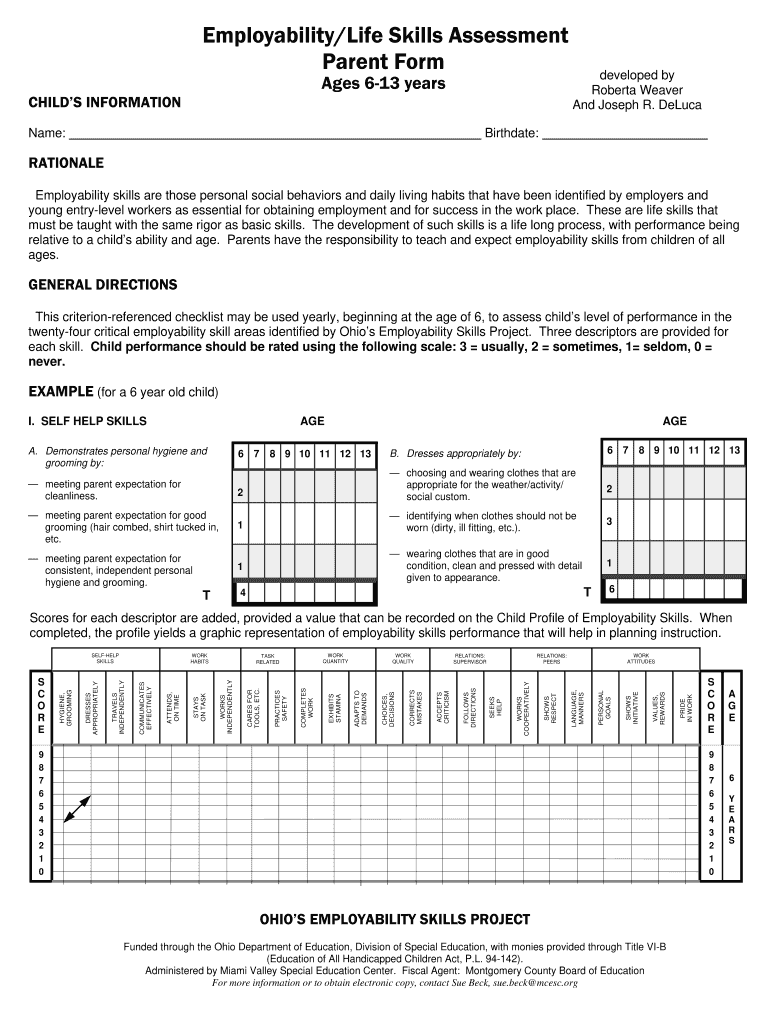
The employability life skills assessment is a comprehensive tool designed to evaluate essential personal and social skills vital for workplace success. These assessments are particularly relevant for individuals aged six to thirteen years, focusing on core competencies that employers seek. The assessment criteria often align with established frameworks—such as Ohio's Employability Skills Project—which identify 24 fundamental skills. These skills may include aspects like teamwork, communication, problem-solving, and adaptability, which are critical in various professional environments.
Purpose of the Employability Life Skills Assessment
The primary aim of this assessment is to guide parents, educators, and employers in understanding a child’s preparedness for future job markets. By providing a structured checklist, the assessment allows evaluators to identify strengths and areas needing improvement, fostering targeted instruction and development. This intentional focus helps equip young individuals with the necessary skills to thrive in diverse workplace settings.
How to Use the Employability Life Skills Assessment
Employability life skills assessments can be effectively utilized through the following steps:
- Administering the Assessment: Distribute the assessment form or checklist to parents and guardians, encouraging them to assess their child's skills objectively.
- Rating Skills: Parents should rate their child’s abilities across the identified skill areas using a predetermined scale, typically ranging from basic to advanced proficiency.
- Reviewing Results: Compile the ratings to identify patterns, strengths, and potential gaps in skills. Detailed insights can assist in tailoring further educational strategies or experiences.
- Planning Instruction: Use the assessment results to inform individualized learning plans, which may include extracurricular activities, targeted training sessions, or mentorship opportunities aimed at skill enhancement.
By following these steps, stakeholders can ensure a thorough evaluation process that directly contributes to the child's skill development.
Steps to Complete the Assessment Form
Completing an employability life skills assessment form involves specific, organized actions:
- Preparation: Gather all necessary materials, including the assessment form, writing tools, and any supporting documentation regarding the child’s experiences or performances.
- Engaging the Child: Involve the child in the evaluation process under parental guidance, encouraging honest discussion about strengths and challenges in various skill areas.
- Documenting Responses: Mark answers directly on the assessment form. Each skill should be addressed thoroughly, ensuring that multiple examples or situations are provided where applicable.
- Final Review: Before submission, review the completed form for clarity and completeness, ensuring the ratings accurately reflect the child's abilities.
Following these outlined steps helps to maximize the effectiveness of the assessment, ensuring it serves its intended purpose.
Importance of Employability Life Skills Assessment
An employability life skills assessment holds significant value for various stakeholders, including:
- Parents and Guardians: Provides insight into a child's readiness for future employment and helps in deciding areas for growth.
- Educators: Serves as a reliable tool for designing lesson plans and curricula that align with skill development needs.
- Employers: Gauges the baseline capabilities of potential hires, especially for internship or entry-level positions, ensuring better alignment with workplace expectations.
The assessment acts as a bridge between education and workforce readiness, reflecting its crucial role in personal and professional development.
Key Elements of the Employability Life Skills Assessment
The assessment typically encompasses several critical components:
- Skills Checklist: A structured list detailing the specific life skills being assessed, often adapted to the needs of the local job market or educational standards.
- Rating Scale: Various metrics, such as numerical ratings or descriptive performance indicators, allowing for qualitative and quantitative analysis of skills.
- Comments Section: An area for additional remarks and specific instances that illustrate the child’s proficiency, providing context to the ratings.
- Action Plan Recommendations: Suggestions based on assessment outcomes, advising on practical steps parents and educators can take to support skill development.
These elements work cohesively to create a comprehensive picture of an individual's life skills, enhancing their readiness for future challenges.
Variants of the Employability Life Skills Assessment
Various versions of the employability life skills assessment exist, accounting for differences in target age groups and specific skill focuses. For instance:
- ELSA Employability Life Skills Assessment: Tailored for various educational contexts and typically aligns with state standards.
- Employability Life Skills Assessment for Ages 14-21: Adjusts focus to include more mature skills required in adult workplaces, addressing transitional challenges.
- Life Skills Assessment PDF: Digital formats facilitate easy distribution and completion via online platforms, promoting accessibility and efficiency in data collection.
Each version serves distinct audiences and addresses unique requirements, ensuring relevance in diverse scenarios across educational and community settings.