







Definition and Purpose of the Simple Overtime Form
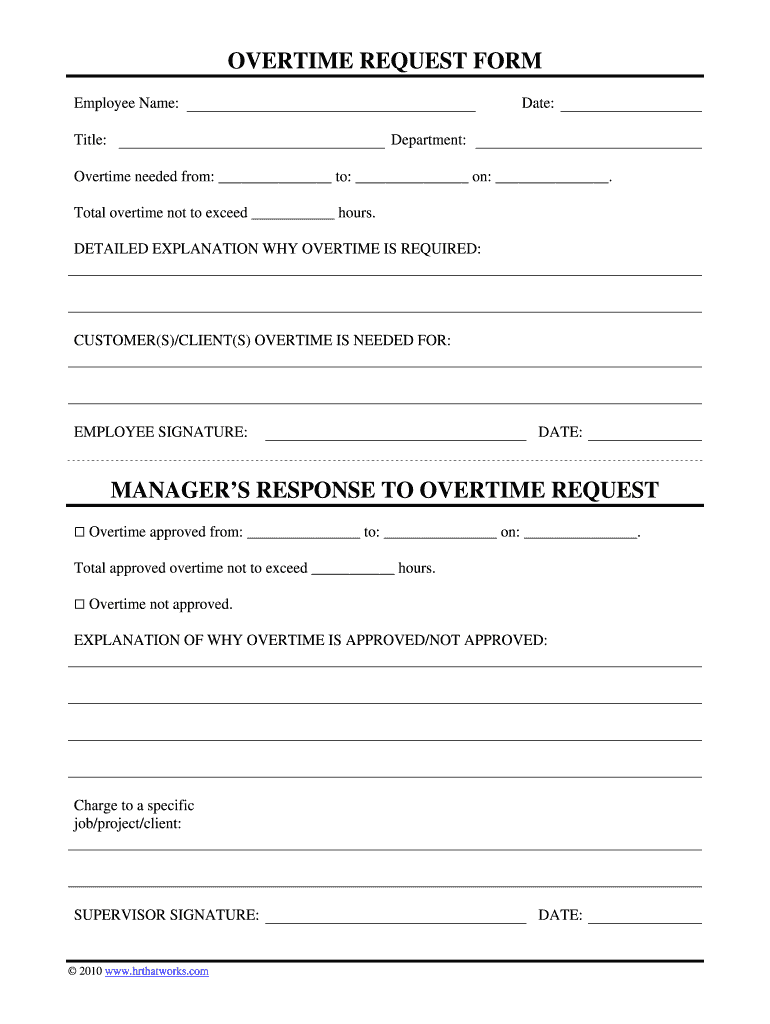
The simple overtime form serves as an essential document for employees seeking approval for work performed beyond their regular hours. Designed to capture key details about the overtime worked, this form is critical for ensuring compliance with labor laws and company policies.
-
Employee Details: This section typically includes the employee's name, department, and employee ID, ensuring proper identification within the organization. It may also specify the manager's name to whom the request is submitted.
-
Duration of Overtime: Employees must provide specific dates and hours for the overtime worked. This includes the start and end times to give management a clear view of the duration.
-
Reason for Overtime: A brief description is required to justify the additional hours worked. Common reasons may include project deadlines, unexpected workload increases, or emergency situations.
-
Manager's Response: The form usually features a section for the manager to either approve or deny the request, along with their signature and date. This establishes an official record of the decision.
The purpose of this form is not only to obtain necessary approvals but also to ensure accurate compensation calculations for the extra hours worked.
Steps to Complete the Simple Overtime Form
Effectively completing the simple overtime form involves several key steps to ensure all necessary information is accurately conveyed.
-
Gather Required Information: Compile personal and work-related information, including dates, hours, and reasons for the overtime.
-
Fill Out Employee Section: Enter your name, department, and any required identification numbers. Accuracy here is vital for processing.
-
Detail Overtime Hours: Clearly outline the specific dates and hours for the overtime worked. Precision in this area helps mitigate any potential discrepancies in pay.
-
Explain the Reason for Overtime: Provide a succinct rationale for the overtime request. Clearly articulated reasons can lead to smoother approval processes.
-
Review and Sign: Before submitting, carefully review the entire form for errors or omissions. Your signature indicates that the information provided is accurate and complete.
-
Submit for Approval: Once completed, submit the form to the designated manager or supervisor for their approval. Keep a copy for your records.
Following these steps ensures that the form is completed correctly, increasing the likelihood of timely approval and proper remuneration for extra work.
Important Components of the Simple Overtime Form
The simple overtime form contains several critical components that facilitate its function as an approval mechanism for additional work hours.
-
Header Section: This area often contains the title "Simple Overtime Form," along with the company name and logo, which adds professionalism and clarity to the document.
-
Employee Information: Essential personal details, such as the employee's name, job title, and department, must be included for proper identification.
-
Overtime Details: Comprehensive information regarding the nature and duration of the overtime is critical. Employees should delineate exact hours and, if needed, the projects involved.
-
Manager’s Comments and Approval: An important feature of the form is a place for managerial comments and the approval or denial decision, contributing to a formalized review process.
-
Signature Lines: Designated areas for both the employee's and manager's signatures finalize the document and confirm that both parties acknowledge the request and its outcome.
These components work together to create a comprehensive and functional overtime request process.
Legal Considerations Related to the Simple Overtime Form
When utilizing the simple overtime form, it’s important to be aware of legal considerations that govern overtime work, especially under the Fair Labor Standards Act (FLSA).
-
Eligible Employees: Determine whether the employee qualifies for overtime under federal law. Non-exempt employees are typically entitled to overtime pay, whereas exempt employees are generally not.
-
Document Retention: Employers are required to keep records of overtime requests and approvals. Proper documentation helps protect against potential labor disputes or claims.
-
State-Specific Laws: Labor laws can vary by state, impacting overtime eligibility and pay rates. Employees must be familiar with local regulations that may affect their overtime rights.
-
Bonafide Reasons: Providing a valid reason for overtime work is essential to conform with labor laws. Employers cannot arbitrarily deny requests that fit legal criteria.
Understanding these legal components ensures that both employees and employers adhere to labor laws, safeguarding rights and responsibilities in the workplace.
Examples of Using the Simple Overtime Form in Practice
In various workplace scenarios, the simple overtime form can be utilized to address different needs for requesting overtime.
-
Project Deadlines: An employee working on a critical project nearing its deadline may submit an overtime request to finish tasks. The approval ensures payment for extra hours.
-
Unexpected Workload: If an employee is tasked with a sudden increase in workload due to absences or emergencies, they can utilize the overtime form to receive authorization for additional hours.
-
Special Events or Functions: Companies might require employees to work overtime during special events or peak seasons. Employees would submit their overtime requests accordingly.
-
Team Collaboration: In scenarios where multiple team members may require overtime to meet a joint deadline, the form can facilitate coordination and ensure all necessary hours are documented.
These real-world examples illustrate the overtime form's versatility and importance in maintaining efficient workload management and compliance with compensation practices.
Submission Methods for the Simple Overtime Form
Submitting the simple overtime form can vary based on company policies, with several common methods available:
-
Digital Submission: Many companies utilize online systems that allow employees to fill out and submit their overtime forms electronically, often integrating with payroll systems to automate processing.
-
Email Submission: Employees may send a scanned copy of their completed form via email to their supervisors or HR departments. This method can expedite the approval process.
-
In-Person Submission: Some workplaces may require that forms be submitted in person, where direct communication with the manager or HR can occur to discuss the request.
-
Physical Mail: In rare cases, especially in larger organizations, a physical copy may be needed for formal record-keeping and processing.
Understanding the submission methods can help streamline the approval process and ensure proper handling of overtime requests within the company framework.




