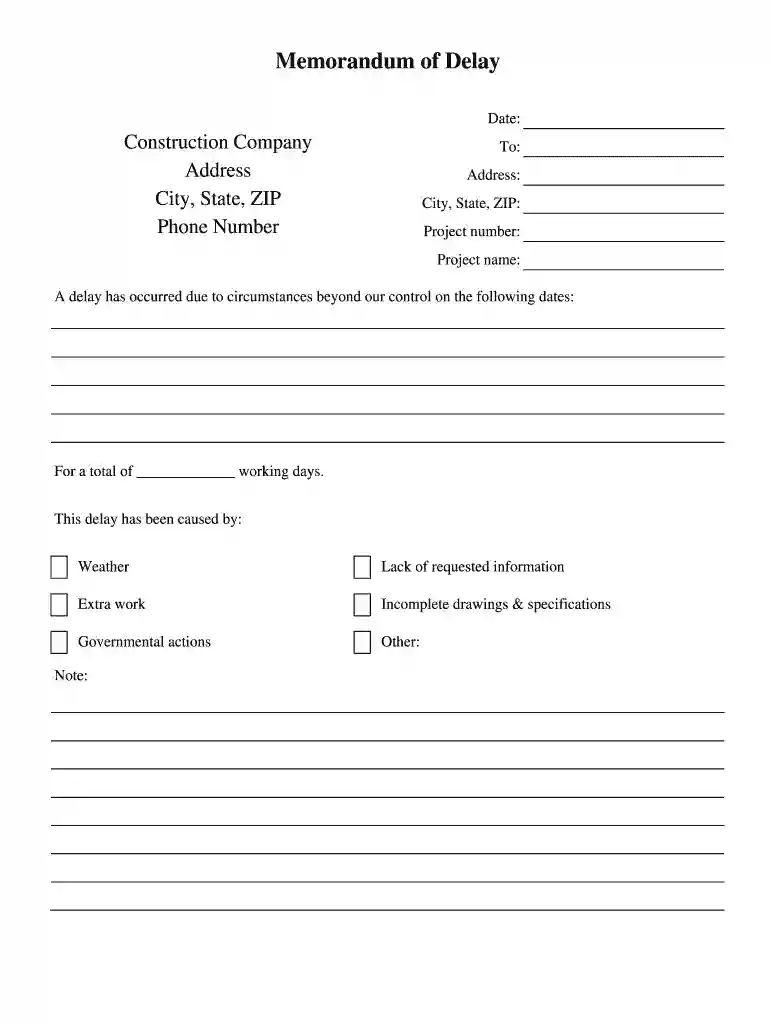
Memorandum of delay forms 2026

Get Form
notice of delay template Preview on Page 1

Here's how it works

01. Edit your notice of delay template online
Type text, add images, blackout confidential details, add comments, highlights and more.

02. Sign it in a few clicks
Draw your signature, type it, upload its image, or use your mobile device as a signature pad.

03. Share your form with others
Send construction delay notice template via email, link, or fax. You can also download it, export it or print it out.

Understanding the Memorandum of Delay Forms

The memorandum of delay forms serve as a critical notification mechanism within construction and project management, signaling delays to relevant stakeholders. This document outlines the factors leading to project delays, such as inclement weather, unavailability of crucial information, extra work requests, or governmental actions. By formally documenting these delays, project managers can communicate effectively with contractors, clients, and other parties involved in the project.

Key Elements of the Memorandum of Delay Forms

  • Title and Date: Clearly state the title as "Memorandum of Delay" and include the date of issuance.
  • Project Information: Provide essential details about the project, such as name, location, and project number.
  • List of Affected Parties: Specify all parties affected by the delay, including contractors, subcontractors, and clients.
  • Description of Delay: Include a thorough description outlining the nature of the delay and the events causing it, with emphasis on uncontrollable factors.
  • New Timeline: Provide an updated timeline or project schedule that reflects the changes due to the delay.
  • Signature Line: Ensure the form includes a section for signatures from authorized personnel acknowledging receipt of the memorandum.

These elements are critical in ensuring clarity and transparency regarding the delay and its impacts.

How to Use the Memorandum of Delay Forms

Using the memorandum of delay form effectively involves several steps:

  1. Identify the Cause of Delay: Before drafting the memorandum, gather evidence and documentation regarding the reason for the delay, such as weather reports or correspondence with contractors.
  2. Fill Out the Form: Incorporate all required elements mentioned previously, ensuring that the information is accurate and comprehensive.
  3. Distribute the Memorandum: Once completed, distribute copies of the memorandum to all affected parties. This may be done via email or traditional mail to ensure all stakeholders are informed.
  4. Follow Up: After distribution, follow up with parties to confirm receipt and understanding of the memorandum, allowing for any necessary discussions.

By following these steps, you ensure that all stakeholders are aware of delays and the resulting implications, minimizing misunderstandings.

Important Terms Related to Memorandum of Delay Forms

Understanding some key terms can enhance your ability to navigate the memorandum of delay processes:

  • Force Majeure: A legal clause that may provide relief for delays caused by unforeseen and unavoidable circumstances.
  • Breach of Contract: An event where one party fails to fulfill its contractual obligations, often linked with project delays.
  • Liquidated Damages: Pre-determined sums that may need to be paid due to failure to meet project deadlines, often stipulated in contracts.

Clear knowledge of these terms helps in effectively articulating the reasons behind project delays in the memorandum.

Legal Use of the Memorandum of Delay Forms

The memorandum of delay forms carry legal weight, particularly in the context of contracts and project management agreements. These documents help to:

  • Establish a Formal Record: Having a documented account of delays can protect parties against potential litigation or claims for damages.
  • Support Claims: In disputes, the memorandum serves as evidence should claims arise regarding project timelines and obligations.
  • Ensure Compliance: Using the memorandum helps organizations abide by contractual conditions surrounding project delays.

It is advisable to ensure all documentation complies with relevant state laws and contractual terms to uphold its integrity in legal contexts.

Examples of Using the Memorandum of Delay Forms

Various scenarios illustrate the application of the memorandum of delay forms:

  • Weather-Related Delays: A construction company may issue a memorandum due to heavy rainfall that halts work on-site, detailing the number of workdays affected.
  • Regulatory Delays: If a permit required for construction is delayed, a memorandum can formally notify stakeholders of the potential impact on project timelines.
  • Supply Chain Issues: If a supplier fails to deliver materials on schedule, issuing a memorandum can inform parties about the delay while outlining steps to mitigate the impact.

These examples emphasize the versatility of the memorandum in addressing a range of project delays effectively.

Who Typically Uses the Memorandum of Delay Forms

Typically, a variety of professionals utilize these forms, including:

  • Project Managers: Responsible for overseeing projects and communicating with stakeholders about delays.
  • Contractors: Need to inform clients and management about potential issues affecting timelines.
  • Clients: May request documentation detailing delays to manage expectations and planning.

Understanding the diverse audience helps in tailoring the content of the memorandum for maximum clarity and effectiveness.


decoration image ratings of Dochub

Required Documents for Memorandum of Delay Forms

When preparing the memorandum, certain supporting documents can enhance credibility:

  • Correspondence: Emails or written communication that confirm the reasons for the delay.
  • Photographic Evidence: Images depicting site conditions or external factors causing delays, such as weather conditions.
  • Official Records: Any governmental notices or regulatory documents that support the delay claims.

Collecting these documents beforehand can streamline the preparation process and reinforce the validity of the memorandum.

be ready to get more

Complete this form in 5 minutes or less

Get form

Got questions?

We have answers to the most popular questions from our customers. If you can't find an answer to your question, please contact us.
Contact us
The key elements of the letter are: An apology at the start of the letter to set the tone of the letter to your client. An explanation/description of the reason for the delay. The expected length of the delay. New updated deadlines. Open the letter up to a discussion or further questions for the client.
Description of Delay Event: Provide a detailed account of the delay event, including its causes, duration, and impacts on the project schedule and cost. Identification of Parties and Contracts: Clearly identify all parties involved in the project, including the contractor, subcontractors, and relevant stakeholders.
Types of Construction Delay Claims Such examples of an excusable delay include design errors, owner-initiated changes, unanticipated weather, or acts of God. Conversely, inexcusable delays are those in which the contractor has assumed the risk under the contract and will likely not be compensated for the delay.
When a contractor is at fault for a delay, an owner may have a claim for: Supervision costs. Extended general conditions. Jobsite trailer rental. Temporary facilities/utilities. Liability insurance. Equipment rental maintenance costs. Field labor. Increased materials cost.
There are three categories of delays in the construction industry: excusable, inexcusable, and concurrent. Excusable ones are generally unforeseen circumstances that are outside of the contractors control and mainly include force majeure situations, such as weather, war, pandemics, and government actions.

Security and compliance

At DocHub, your data security is our priority. We follow HIPAA, SOC2, GDPR, and other standards, so you can work on your documents with confidence.

Learn more
ccpa2
pci-dss
gdpr-compliance
hipaa
soc-compliance
be ready to get more

Complete this form in 5 minutes or less

Get form

People also ask

How to write an email to explain a delay Start by explaining theres a delay. Apologize for the delay and any inconvenience the delay may cause. Take ownership of the situation. Be transparent about problems. Set out timelines for solutions and ensure you can stick to them.

notice of delay letter construction sample