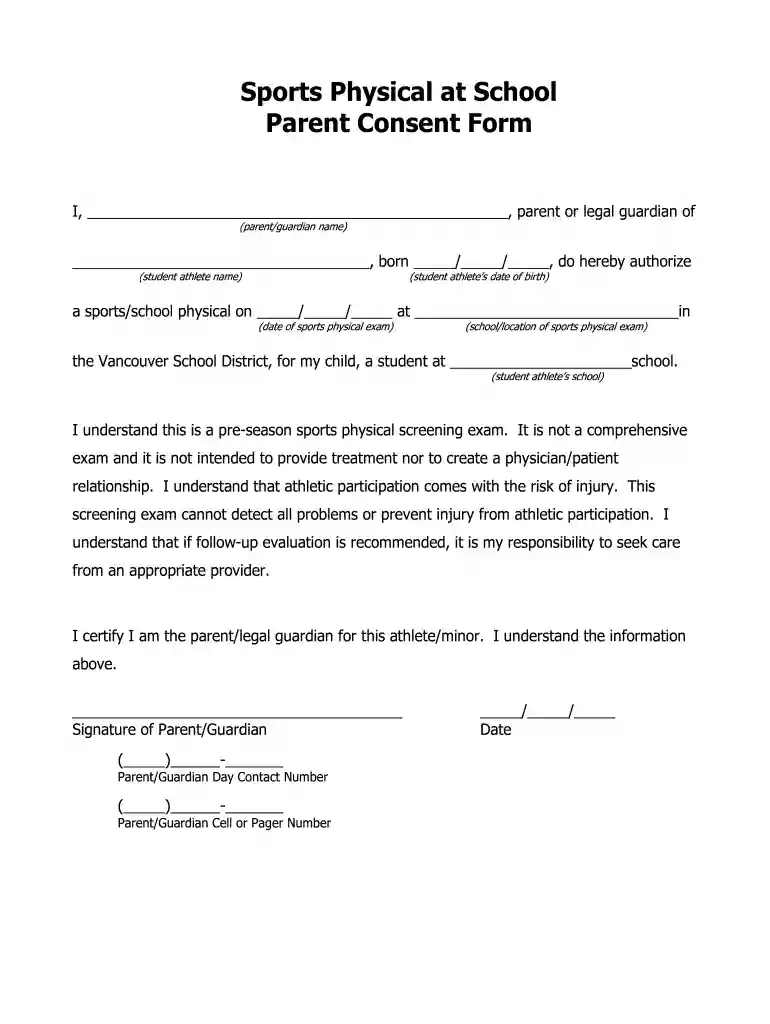
Definition and Importance of a Consent Form for Sports Participation
A consent form for sports participation is a legal document designed to obtain permission from a parent or guardian for a minor athlete to engage in sports activities. This form aims to inform guardians about the potential risks associated with athletic participation and to clarify the responsibilities of both the parents and the sports organization. It typically requires the signature of a parent or guardian, indicating their understanding and acceptance of these risks.
- Purpose: The consent form serves as a risk management tool, ensuring that guardians are aware of the inherent dangers of physical activities, such as injuries.
- Legal Protection: By obtaining consent, sports organizations protect themselves from legal liability arising from accidents or injuries that may occur during participation.
- Insurance Requirements: Many sports programs require a signed consent form to prove that the organization has communicated risks and obtained permission, which is often a prerequisite for insurance coverage.
Key Elements of the Consent Form for Sports Participation
A well-structured consent form includes several critical elements. Understanding these elements ensures comprehensive risk acknowledgment and informed consent from guardians.
- Athlete Information: The form typically requests the athlete's name, age, and sport involved to ensure the document is specific to the individual.
- Acknowledgment of Risks: A detailed description of the potential risks and injuries associated with the sport includes physical, emotional, and psychological aspects.
- Medical History Disclosure: Parents may be asked to disclose any pre-existing medical conditions or injuries that could affect the athlete's participation.
- Emergency Contact Information: Including contact details for guardians or emergency contacts is vital for addressing any urgent situations that may arise during practice or events.
Steps to Complete the Consent Form for Sports Participation
Completing a consent form accurately is crucial. Follow these outlined steps to ensure the form is filled out properly.
- Provide Athlete Information: Fill in the name, age, and any relevant identification numbers.
- Review Risks: Carefully read the section outlining the risks involved with the specified sport.
- Health Disclosure: Complete any required health-related questions. This may include listing allergies, medications, or prior injuries.
- Sign and Date: The parent or guardian must sign and date the form, acknowledging their understanding of the document.
- Submit the Form: Ensure the form is returned to the appropriate coach or sports administrator by the specified deadline.
Who Uses the Consent Form for Sports Participation?
Consent forms are utilized by a variety of organizations and individuals involved in the realm of youth sports.
- Schools and Educational Institutions: Schools require these forms for their sports teams to protect themselves while ensuring parental awareness of risks.
- Youth Sports Leagues: Local leagues rely on consent forms to enroll minors in sports, ensuring that families understand the responsibilities and potential hazards.
- Coaches and Trainers: Coaches often need these forms for practice sessions and competitions to maintain compliance with regulations and protect their organization.
Legal Considerations of the Consent Form for Sports Participation
The legalities surrounding consent forms are essential for understanding their implications and enforcing the protections they offer.
- Informed Consent: For a consent form to be legally effective, it must demonstrate that the parent or guardian is fully informed about the nature of the risks involved.
- Oversight Regulations: Different states may have specific laws governing the use of consent forms, including how they must be structured and archived.
- Enforceability: In case of legal action, the signed consent form can serve as evidence that the organization took steps to inform participants about risks, potentially limiting liability.
Examples and Scenarios for Using the Consent Form for Sports Participation
Practical applications of consent forms illustrate their importance in various sports settings.
- High School Football: In a high school setting, consent forms might include specific provisions around concussion risks, requiring parents to acknowledge understanding and compliance with safety protocols.
- Community Soccer Programs: A local soccer league may use a consent form to gather health information essential for ensuring children's safety during games and practices.
- Specialized Sports Camps: Sports camps, like those for gymnastics or swimming, may require more detailed health history or tailor consent forms to address specific activities that pose unique risks.
Variants and Alternatives to the Consent Form for Sports Participation
In addition to the standard consent form, there may be variations or alternatives tailored to specific needs or situations.
- Parental Waiver Forms: Some organizations may use waivers that provide stronger language limiting liabilities, which require more detailed risk disclosures.
- Registration Documents: Often paired with consent forms, registration papers may cover administrative aspects while ensuring consent for participation.
- Event-Specific Forms: For tournaments or special events, organizers may issue customized consent forms that address peculiar risks associated with that specific event.