







Definition and Meaning of Rain Shadow Effect
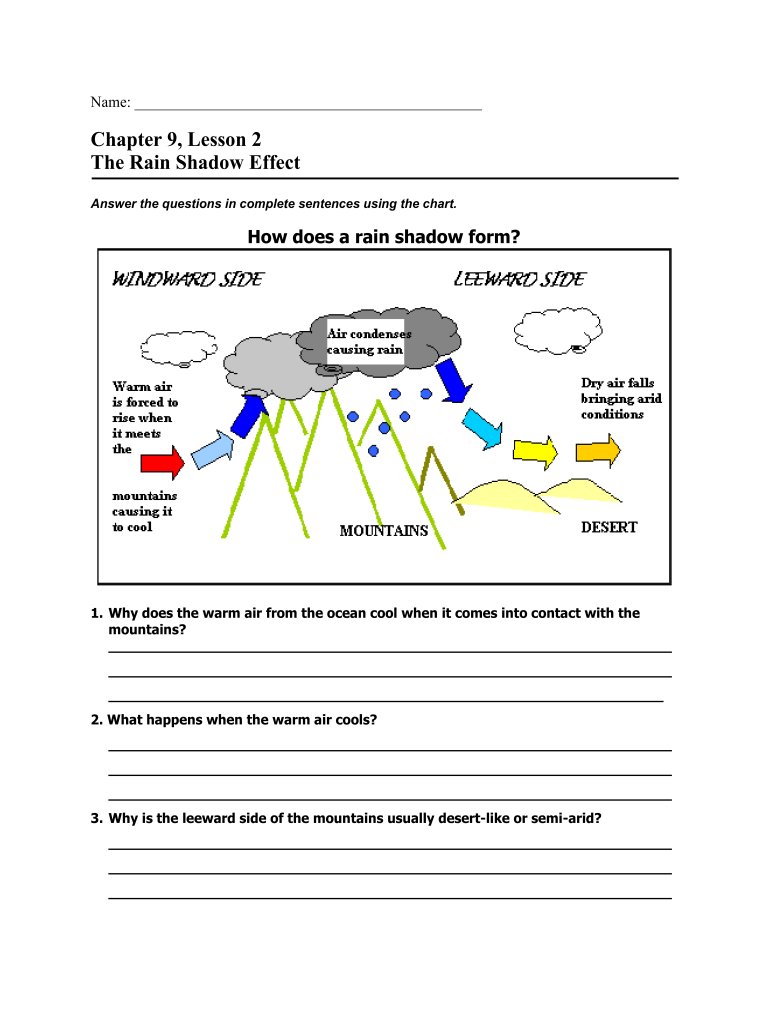
The rain shadow effect is a meteorological phenomenon that occurs when moist air ascending a mountain range cools and loses moisture in the form of precipitation on the windward side, which is the side facing the wind. As this air flows over the peak and descends on the leeward side, it warms and dries, resulting in significantly less precipitation. This often leads to arid or semi-arid conditions in the rain shadow region.
- Mechanism: Warm air from the ocean increases moisture content as it travels. Upon encountering mountains, this air rises, cools, and condenses into rain on the windward side. The descending air on the leeward side heats up, reducing humidity and leading to dry conditions.
- Impact on Ecosystems: The rain shadow effect creates distinct climate zones within relatively short distances. For example, the western slopes of the Sierra Nevada receive heavy rainfall, supporting lush forests, while the eastern slopes can be desert-like.
How to Use the Rain Shadow Lesson Answer Key
The rain shadow lesson answer key is a resource designed to assist educators and students in understanding the principles of the rain shadow effect through various questions and activities. To utilize this resource effectively:
- Review Questions: Familiarize yourself with the questions included in the lesson. These may cover definitions, processes, and examples of where the rain shadow effect occurs.
- Conduct Activities: Engage students with hands-on activities, such as mapping out rain shadows using Google Earth or identifying local geographical features that illustrate this concept.
- Evaluate Understanding: Use the answer key to assess student responses to ensure they grasp the concepts of moisture, elevation, and climate associated with rain shadows.
Important Terms Related to Rain Shadow Lesson Answer Key
Familiarizing oneself with key terms enhances comprehension of the rain shadow effect. Important terms include:
- Windward Side: The side of the mountain range that faces the wind, where precipitation is most abundant.
- Leeward Side: The opposite side of the mountain, typically dry due to the descending air.
- Orographic Lift: The process by which an air mass is forced to rise over a topographic barrier, such as a mountain.
- Moisture Content: The amount of water vapor present in the air, which decreases after the air passes over a mountain.
Understanding these terms provides a solid foundation for further exploration of related topics.
Key Elements of the Rain Shadow Lesson Answer Key
The rain shadow lesson answer key covers essential elements to enhance understanding:
- Processes: Explains how moist air cools and condenses when it rises and the resultant climate variations on either side of the mountain range.
- Illustrations: Visual aids such as maps and diagrams clarify where rain shadow regions exist and their characteristics.
- Examples: Provides case studies of well-known rain shadow regions, such as the Cascade Range in Washington state and the Andes mountains in South America.
This structured approach aids in grasping the complexities of the rain shadow effect.
Who Typically Uses the Rain Shadow Lesson Answer Key
The rain shadow lesson answer key is primarily utilized by:
- Educators: Teachers and professors incorporate the resource into geography and environmental science curricula to enhance student engagement.
- Students: Learners use it to verify their understanding of the material, prepare for tests, and participate in discussions.
- Researchers: Individuals studying climate patterns and geographical influences may reference this resource as part of their methodological approach.
The diverse user group highlights the utility of the lesson key across varying educational contexts.


Examples of Using the Rain Shadow Lesson Answer Key
To apply the rain shadow lesson answer key in practical scenarios:
- Class Discussions: Facilitate debates on the implications of rain shadows on local agriculture and water supply.
- Research Projects: Assign projects that require students to investigate specific regions affected by the rain shadow effect, such as the Atacama Desert in Chile or the Great Basin in the United States.
- Interactive Learning: Utilize online platforms like Google Earth to visually explore the rain shadow effect, allowing students to see real-world examples and assess temperature and precipitation trends.
These methods enhance learning and retention of the material regarding the rain shadow phenomenon.


