Individual speech evaluation form 2026

Get Form
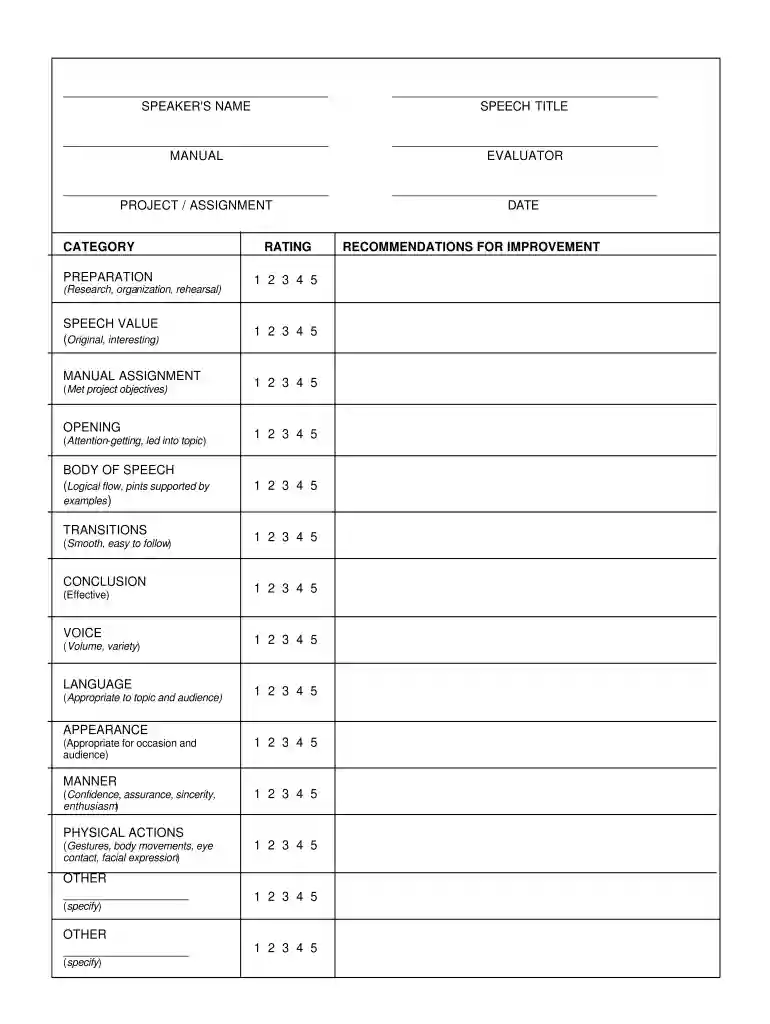
speech evaluation template Preview on Page 1

Here's how it works

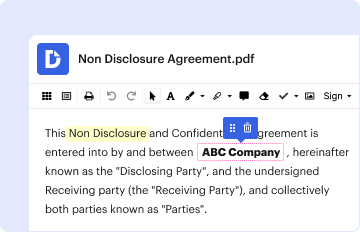
01. Edit your speech evaluation template online
Type text, add images, blackout confidential details, add comments, highlights and more.

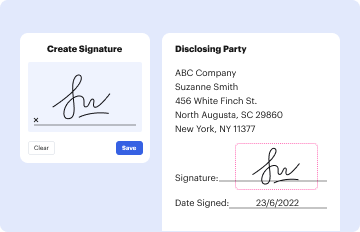
02. Sign it in a few clicks
Draw your signature, type it, upload its image, or use your mobile device as a signature pad.

03. Share your form with others
Send speech evaluation form via email, link, or fax. You can also download it, export it or print it out.

Definition and Purpose of the Individual Speech Evaluation Form

The Individual Speech Evaluation Form is a structured tool used to assess a speaker's performance comprehensively. This evaluation tool encompasses several performance categories, including preparation, speech value, opening, body of speech, transitions, and conclusion. Evaluators can also assess vocal delivery, language use, appearance, mannerisms, and physical actions. By providing a standardized framework, this form facilitates thorough feedback that encourages growth and development in speaking skills.

  • Categories of Assessment: Each category focuses on a different aspect of the speech, making it easier for evaluators to identify specific strengths and areas needing improvement. For example:
    • Preparation considers the organization and structure of the content.
    • Transitions assesses how smoothly the speaker moves between points, enhancing overall coherence.
  • Rating Scale: The form typically includes a five-point rating scale for each category. This quantitative measure allows for a clear comparison of evaluations over time or among multiple speakers.
  • Recommendations for Improvement: An essential feature of the form is the provision for evaluators to recommend specific enhancements, grounded in their observations. This adds practical value to the feedback process.

How to Use the Individual Speech Evaluation Form

Using the Individual Speech Evaluation Form effectively involves several steps to ensure thoughtful and constructive assessments.

  1. Preparation: Before the speech, familiarize yourself with the form's categories. Determine the criteria you will focus on based on the speech context.
  2. Observing the Speech: During the presentation, take notes corresponding to the form's categories. This will help you recall specific examples and observations.
  3. Filling Out the Evaluation: Post-speech, complete the form by assigning ratings in each category based on your notes. Be as specific as possible in your comments.
  4. Providing Feedback: Use the designated section to offer personalized recommendations for improvement. Highlight strengths as well to encourage the speaker.

Important Tips for Evaluation

  • Be Objective: Strive for neutrality in your evaluation, focusing on performance rather than personal feelings about the speaker.
  • Be Constructive: Frame your feedback positively to support the speaker's development.

Steps to Complie the Individual Speech Evaluation Form

Completing the Individual Speech Evaluation Form involves a systematic approach to ensure all relevant aspects of the speech are covered.

  1. Initial Review: Review the form's structure and categories before the speech.
  2. Active Listening: Pay careful attention to the speaker, noting how they engage the audience and convey their message.
  3. Rate Each Category: After the speech, rate each category using the provided scale, taking careful consideration of your observations.
  4. Provide Justification: In the comments section, justify your ratings with specific examples from the speech.
  5. Final Review: Once the form is complete, review your comments and ratings for clarity and coherence before sharing them with the speaker.

Who Typically Uses the Individual Speech Evaluation Form

The Individual Speech Evaluation Form is primarily utilized by professionals and organizations dedicated to enhancing public speaking and communication skills.


  • Toastmasters: Members often use this form during speech competitions or club meetings to provide constructive feedback about presentations.
  • Speech Therapists: These professionals may employ the form to evaluate clients with speech impairments, focusing on performance aspects relevant to their therapy goals.
  • Teachers and Educators: In education settings, instructors can use the form to assess student presentations, cultivating important communication skills within the curriculum.
decoration image ratings of Dochub

Key Elements of the Individual Speech Evaluation Form

Several critical elements characterize the Individual Speech Evaluation Form, making it an integral part of the evaluation process.

  • Performance Categories: As discussed earlier, these include vital areas such as speech organization and delivery.
  • Rating Scale: This feature quantifies assessments, allowing for easy comparisons and tracking progress over time.
  • Feedback Section: Space is provided for evaluators to offer qualitative insights that add depth to the numeric ratings.
  • User-Friendly Design: The form is typically designed to be straightforward, allowing for quick completion while encouraging thorough evaluations.

By understanding these components, users can appreciate the form's value in fostering communication and public speaking capabilities effectively.

be ready to get more

Complete this form in 5 minutes or less

Get form

Got questions?

We have answers to the most popular questions from our customers. If you can't find an answer to your question, please contact us.
Contact us
Positive presentation feedback The flow of your presentation made sense and helped the audience understand the depth of the topic. You went above and beyond with the research on this presentation. Including slides about [subject] proved to the audience that you understood their viewpoints and concerns.
Evaluation Tips Remember both the written and verbal evaluation matter Make a personal connection to the speech Be specific in both praise and suggestions Evaluate the speech, not the speaker Give personal feedback - use ``I statements Use these phrases: Demonstrate your suggestions
Positive Feedback examples I appreciate how you always listen to our ideas and encourage open communication within the team. Your ability to stay calm under pressure sets a great example for the rest of us. The way you break down complex projects into manageable tasks is incredibly helpful.
11 Elements Of A Speech Evaluation Report Date of Evaluation. Dont forget to include the date of your assessment! Subjective Information. Objective Information. Current Level of Functioning/Evaluation. Treatment Diagnosis. Prognosis. Plan of Care: Patient Goals. Plan of Care: Therapeutic Intervention.
Positive reinforcement Weak FeedbackStrong Feedback Wow! What a great presentation! You did an excellent job of conveying your message. Everything was clear and I understood your key points. I liked the way it looked. I liked the way you used visual aids to support your points, they were engaging and original. Jun 25, 2024

People also ask

These components are structure, content, and delivery. A clear structure is paramount if you want to make sure your message is conveyed effectively and your audience is left with some meaningful learning. Regardless of the Toastmasters pathway you select, your first speech will be your icebreaker.
See the sample speaking test feedback Communicative effectiveness: Very well done. I know the last section of the exam was difficult, but your hesitation was not a problem. Pronunciation: Very good. Accuracy: Good. Range: Very good.

speech therapy assessment form pdf