





Understanding the Blank Motion Form AZ
The blank motion form AZ is a legal document commonly utilized in court proceedings throughout Arizona. It serves as a means for a party involved in a lawsuit to request the court to make a ruling or order regarding specific matters within a case. Understanding the distinct components and usage of this form is critical for individuals navigating the Arizona court system.
Definition and Purpose
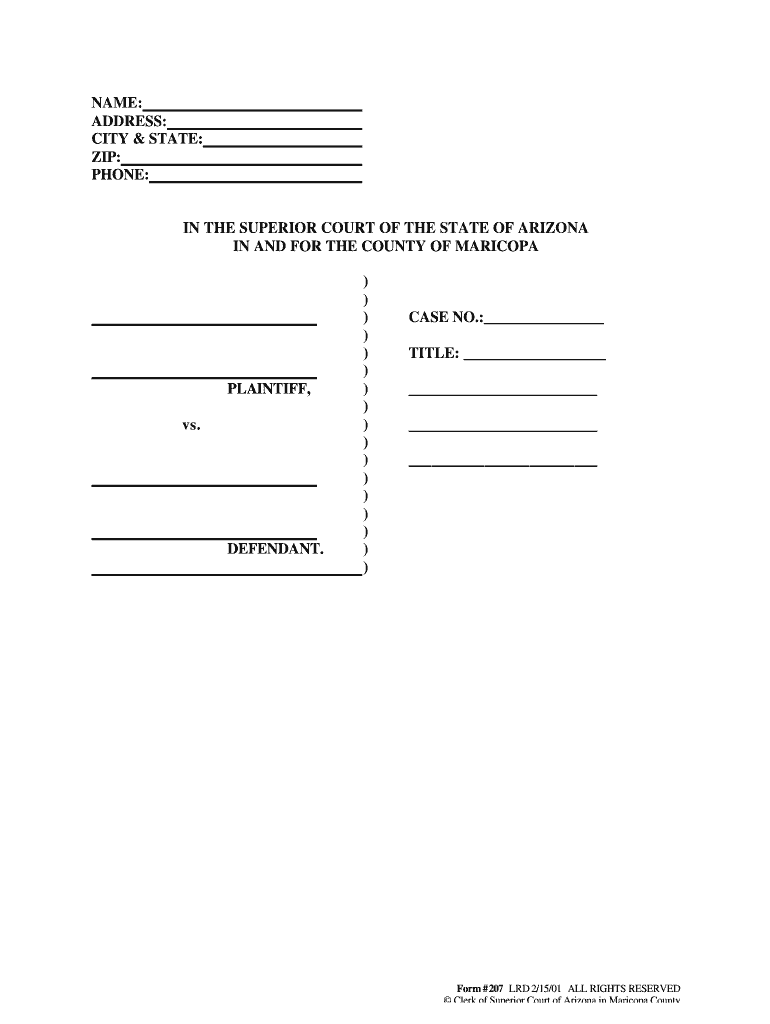
The blank motion form AZ is a standardized document that outlines a request made to the court. It is essential to understand its primary components, which usually include:
- Title: Identification of the motion.
- Case Information: Fields for relevant case details, including case number and parties' names.
- Motion Statement: A clear and concise explanation of the request being made.
- Supporting Arguments: Reasons why the court should grant the motion.
The primary purpose of the blank motion form is to provide a structured methodology for petitioners to present their requests clearly and formally to the court. This ensures that the requesting party presents sufficient information to substantiate their claims, making it easier for the judge to make informed decisions.
How to Complete the Blank Motion Form AZ
Completing the blank motion form AZ involves several important steps to ensure accuracy and compliance:
-
Gather Case Information: Collect all necessary information, including party names, addresses, and the case number. This information should be readily available from previous court documents.
-
Fill Out the Motion Statement: Clearly articulate the request. This section should explicitly state what action you want the court to take. Use straightforward language to communicate your needs.
-
Provide Supporting Arguments: Elaborate on the reasons for the motion. Include relevant facts that support your request, drawing on evidence or legal precedents where applicable.
-
Review and Verify: Once you have filled out the form, verify that all information is accurate. Double-check spelling, case numbers, and party information to avoid delays due to errors.
-
Sign and Date: Ensure to sign and date the form before submission, as a failure to do so can result in your motion being deemed invalid.
Who Uses the Blank Motion Form AZ?
The blank motion form AZ is primarily utilized by:
- Plaintiffs and Defendants: Individuals or organizations involved in legal disputes may file motions to request various court actions.
- Attorneys: Legal professionals often submit motions on behalf of their clients, ensuring compliance with legal standards and court etiquette.
- Self-Represented Litigants: Individuals who represent themselves in court proceedings can also utilize this form to request significant rulings without legal representation.
This form serves diverse purposes in both civil and criminal cases, including requesting continuances, amending pleadings, or seeking protective orders.
Important Terms Related to the Blank Motion Form AZ
Understanding specific terms related to the blank motion form AZ is crucial for effective communication within the legal framework of Arizona. Key terms include:
- Motion: A formal request made to a judge for a specific ruling.
- Affidavit: A written statement confirmed by oath for use as evidence in court.
- Opposition: A formal response from another party contesting the motion.
- Order: A directive issued by a court that establishes a legal obligation.
Grasping these terms helps users better interpret legal documents and navigate the courtroom effectively.
Filing Methods for the Blank Motion Form AZ
Submitting the blank motion form AZ can be done through various methods, including:
-
In-Person: Parties may file their motion directly with the court clerk's office. This method allows for immediate confirmation of receipt.
-
Mail: Sending the completed motion via postal service is also an option. Ensure to account for mailing time and obtain a certificate of mailing for your records.
-
Electronic Filing: Many jurisdictions in Arizona allow for electronic submissions through their case management systems. Utilize online portals for efficiency, ensuring compliance with local electronic filing rules.
Understanding these submission methods is essential for meeting court deadlines and ensuring that motions are considered in a timely manner.