Definition and Meaning of Authorization to Release Medical Record Information
The authorization to release medical record information serves as a formal document that grants permission for a healthcare provider or institution to disclose a patient’s medical information to a specified individual or organization. This document is crucial for protecting patient confidentiality and ensuring compliance with regulations like the Health Insurance Portability and Accountability Act (HIPAA). In essence, it empowers patients to control who has access to their sensitive health information.
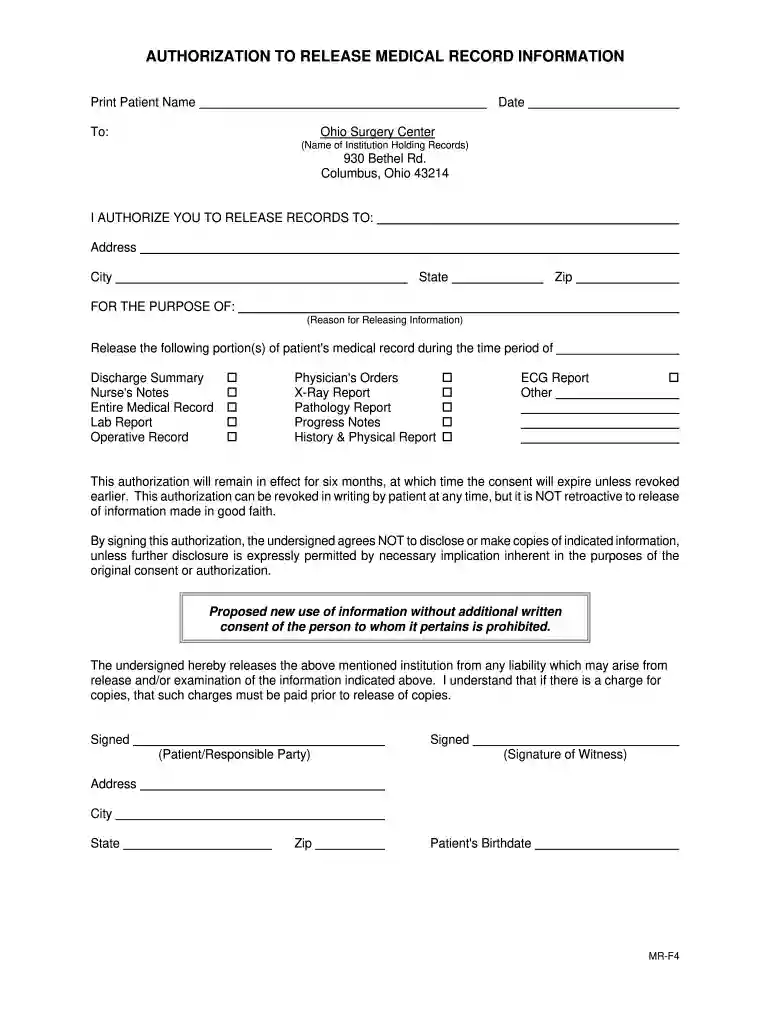
The contents of the authorization typically specify details such as:
- Types of records: Specifies the medical records being shared, which could include treatment history, lab results, and notes from healthcare providers.
- Duration of authorization: Defines the time period during which the release of the information is valid.
- Recipient details: Identifies the person or entity receiving the information, such as another healthcare provider, insurance company, or family member.
- Purpose of release: Outlines why the information is being requested, which is often necessary for continuity of care, insurance claims, or legal proceedings.
This form must be signed and dated by the patient or their legally authorized representative to be valid, reinforcing the importance of informed consent in the healthcare sector.
Steps to Complete the Authorization to Release Medical Record Information
Completing an authorization to release medical record information can be straightforward if approached methodically. Below are essential steps to ensure proper completion:
- Download or obtain the form: Access the authorization form from a healthcare provider's office, their website, or reputable online resource platforms.
- Fill in patient information: Include the full name, date of birth, and contact details of the patient whose medical records are being released.
- Specify the recipient: Clearly identify who will receive the records by including their name, address, and relationship to the patient.
- Detail the information to be released: Be as specific as possible regarding the types of records requested, such as particular tests, dates of service, or general medical history.
- Indicate the purpose of release: Explain why the information is necessary, whether for medical reasons, legal matters, or personal use.
- Set the expiration date: Specify when the authorization will expire, if applicable. If left blank, the expiration often defaults to a standard duration set by law.
- Sign and date the form: Ensure the patient or their legal representative signs and dates the form. If applicable, provide details of the representative’s authority to sign on the patient’s behalf.
Following these steps carefully ensures compliance with legal guidelines and facilitates the appropriate transfer of medical information.
Legal Use of the Authorization to Release Medical Record Information
The legal context surrounding the authorization to release medical record information is governed by federal and state regulations that emphasize patient rights and privacy. Understanding the legal framework is essential for healthcare providers and patients alike.
- Health Insurance Portability and Accountability Act (HIPAA): This federal law mandates that patient health information is kept confidential and cannot be shared without explicit consent. The authorization form is a key element in compliance with HIPAA, ensuring that patients are informed of their rights regarding medical records.
- State Laws: Different states may have specific laws that govern how medical information must be handled. Some states may require additional steps or more stringent requirements for the authorization process, so it is vital to check state-specific regulations.
- Informed Consent: The authorization must be clear and transparent, outlining what information will be shared and with whom. Patients must understand their rights before signing, reinforcing the principle of informed consent.
- Liability and Revocation: Providers must inform patients about their right to revoke authorization at any point. Additionally, they need to manage liability issues by ensuring that released information is handled according to established privacy protocols to avoid repercussions.
Adhering to these legal guidelines helps maintain trust in healthcare relationships and protects sensitive patient information against unauthorized disclosures.
Key Elements of the Authorization to Release Medical Record Information
Understanding the key elements of the authorization to release medical record information is crucial for both healthcare providers and patients. Each element has significance regarding legal compliance and patient rights.
- Patient Identifiers: Essential information such as the patient's name, date of birth, and identification number helps ensure accurate document processing.
- Information to be Released: Clearly listing specific types of records helps avoid misunderstandings and ensures only relevant information is shared.
- Recipient Information: Providing details about the individual or organization that will receive the medical records supports accountability and tracking of information dissemination.
- Purpose of Release: Documenting the reason for the request helps justify the need for sharing sensitive information and ensures it's used appropriately.
- Expiration: Including an expiration date protects patient privacy by limiting how long the authorization is valid, ensuring that medical information is not shared indefinitely.
These key elements not only enhance clarity but also strengthen the document's legal standing, providing protection for both the patient and the entity handling the release.
Examples of Using the Authorization to Release Medical Record Information
Practical applications of the authorization to release medical record information showcase its importance across various scenarios:
- Continuity of Care: When a patient transitions from one healthcare provider to another, the new provider often requires access to previous medical records to ensure comprehensive treatment. The patient can use the authorization form to grant permission for their former provider to share relevant records.
- Insurance Claims: Patients may need to authorize the release of medical records to their insurance companies as part of the claims process. This often involves submitting documentation that validates the need for coverage or reimbursement.
- Legal Cases: In scenarios involving personal injury claims or legal disputes regarding health care, legal representatives may request the authorization to access medical records necessary for substantiating claims or defenses.
- Family Involvement: Sometimes patients wish to include family members in their healthcare decisions. By using the authorization form, they can allow these individuals to access medical records, facilitating better communication among family caregivers and providers.
These examples illustrate the role of the authorization in various contexts, emphasizing its significance in managing patient health information effectively.