




01. Edit your septic inspection form online
Type text, add images, blackout confidential details, add comments, highlights and more.

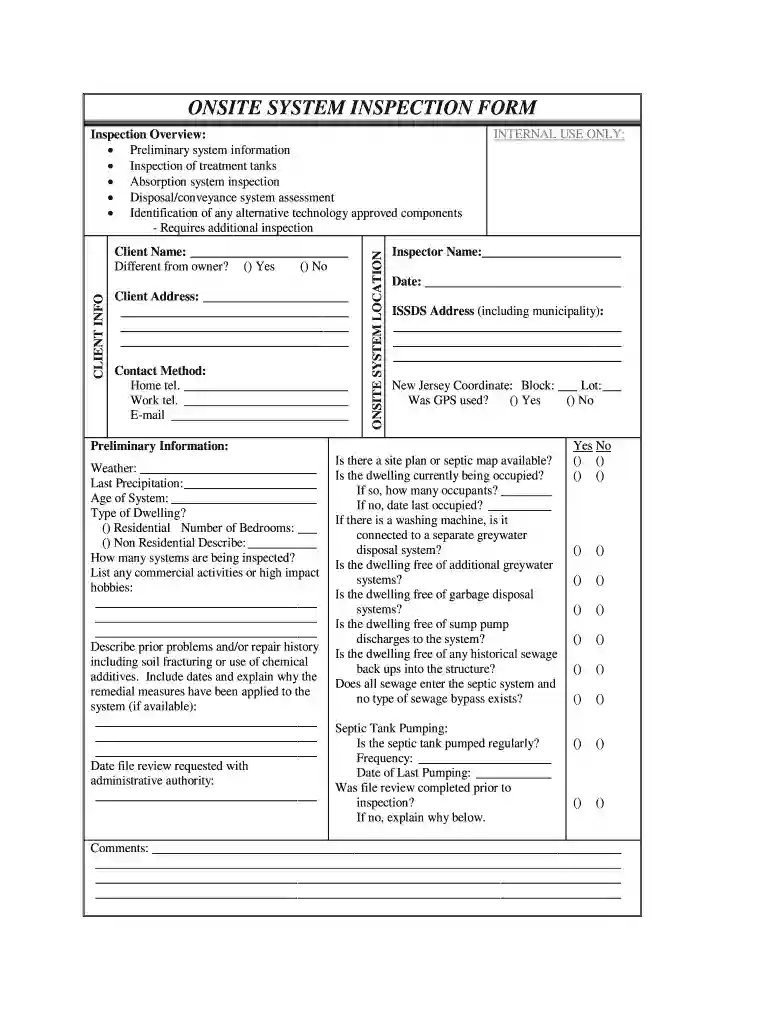
Type text, add images, blackout confidential details, add comments, highlights and more.

Draw your signature, type it, upload its image, or use your mobile device as a signature pad.

Send septic tank inspection report via email, link, or fax. You can also download it, export it or print it out.
The septic inspection form printable serves as a critical instrument in assessing the operational condition and safety of septic systems. This document is utilized primarily by professionals in the environmental health sector, including inspectors and contractors, to ensure compliance with local regulations and to identify any potential issues within an onsite sewage disposal system.
Each septic inspection form typically includes several key sections that ensure a thorough evaluation of the septic system:
Client Information: This section requires the name, address, and contact information of the property owner. Accurate data is essential for follow-up communications.
Inspection Details: Documenting the date of inspection, the inspector's name, and relevant qualifications can help validate the assessment and establish accountability.
System Description: This part outlines the type of septic system being inspected, including specifics such as the number of bedrooms in the residence and the size of the tank.
Components Evaluated: Here, inspectors provide details on various components of the system, including:
Health Department Reporting: The form should include requirements for reporting any non-compliant findings to authorized health departments. This is crucial for maintaining public health standards and ensuring timely remediation.
Properly completing the septic inspection form is essential for accuracy and compliance. Here are detailed steps to guide the process:
Gather Necessary Information: Collect all relevant data, including property deeds, previous inspection reports, and any repair or maintenance records.
Inspect the Components: Conduct a thorough visual inspection of all system parts. Take detailed notes on the condition of tanks and leach fields, noting any signs of wear, leaks, or clogs.
Document Findings: Clearly articulate any issues found during the inspection. Use the predefined sections on the form to categorize problems. For instance:
Client Acknowledgment: At the end of the inspection, ensure the client signs the form, acknowledging the findings and recommendations. This signature is important for future accountability.
Provide a Copy: After completion, provide the form to the property owner and retain a copy for your records. This not only maintains good practice but also supports future inspections.
Utilizing a septic inspection form printable is vital in various scenarios, including:
Home Sales: When a home is listed for sale, a comprehensive septic inspection can be a key factor in negotiations. Buyers often request proof of a functioning system.
Maintenance Requirements: Regular inspections help maintain the septic system's functionality and can prevent costly repairs or health hazards if issues are identified early.
Regulatory Compliance: Many states require regular inspections and reports to ensure properties meet health and safety standards. Utilizing this form helps satisfy those regulatory demands.
Understanding the legal framework surrounding septic systems is essential for those using the inspection form. Key points include:
State Regulations: Inspections must comply with state-specific regulations, which can dictate how often inspections are required and what must be included in reports.
Liability: Inspectors should be aware of their liability concerning the accuracy of their reporting. Ensuring comprehensive documentation reduces the risk of legal complications.
Certification: In many jurisdictions, inspectors must hold valid certifications to conduct inspections, underscoring the importance of accurate reporting on the form.
To maximize the utility of a septic inspection form, consider these best practices:
Continual Education: Inspectors should stay updated on regulations and best practices related to septic systems. This knowledge ensures inspections are thorough and compliant.
Use Technology: Implementing digital forms can streamline the inspection process, allowing for easy data retrieval and enhanced reporting capabilities.
Client Education: Offer clients guidance on how to maintain their septic systems. Completed forms can serve as a reference for ongoing care and potential repairs.
By adhering to these practices and fully utilizing the septic inspection form printable, professionals can ensure effective and efficient assessments of septic systems while safeguarding public health and maintaining compliance with regulatory frameworks.
At DocHub, your data security is our priority. We follow HIPAA, SOC2, GDPR, and other standards, so you can work on your documents with confidence.
Existing SSTS inspection form instructions (PDF) and Existing SSTS inspection form (DOCX); Sewage tank integrity inspection form (DOCX); New constructionRead more
Sep 23, 2011 waterborne disease outbreaks, which they report voluntarily to. CDC using a standard form (CDC 52.12). The form solicits data onRead more
DO-IT-YOURSELF SEPTIC INSPECTION CHECKLIST: Sandfilter Drainfield. □Assemble tools and materials needed for inspection (pg. 7-9 in the field guide).Read more


