






Definition & Meaning
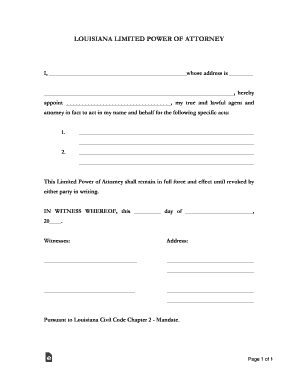
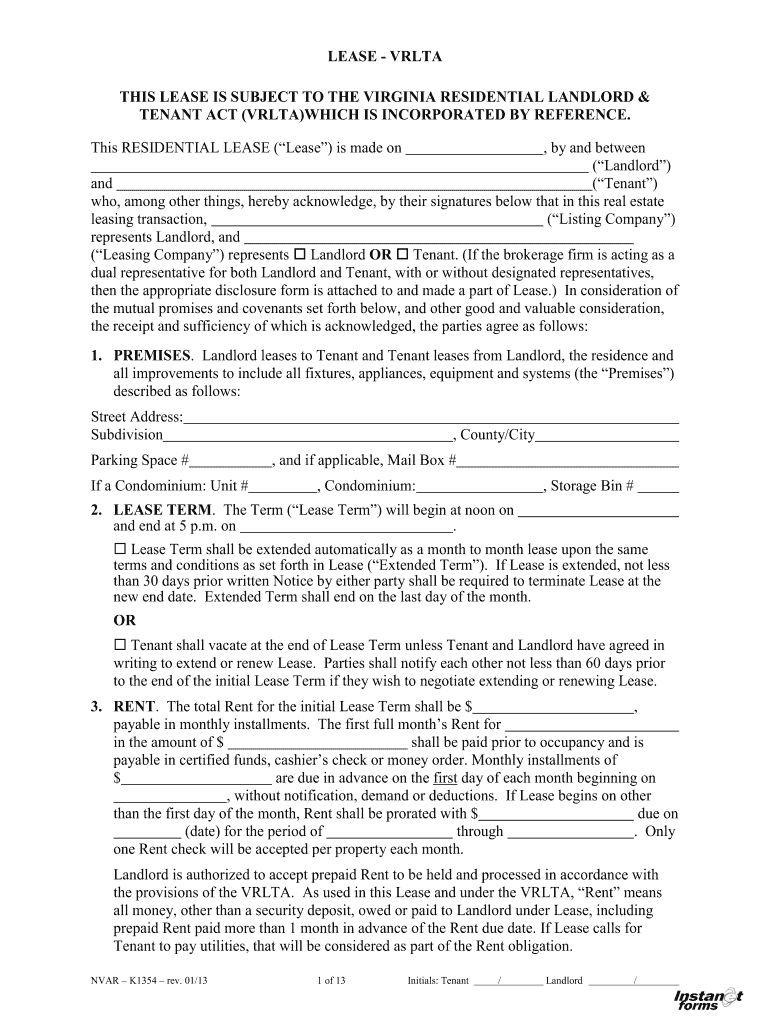
The Virginia Residential Landlord and Tenant Act (VRLTA) lease is a legally binding agreement that outlines the terms and conditions between landlords and tenants renting a residential property in Virginia. The VRLTA is designed to protect the rights of both landlords and tenants by clearly defining their responsibilities and obligations under Virginia law. The lease agreement includes critical details such as the lease term, rent amount, payment schedule, maintenance duties, security deposit handling, and provisions for lease termination. Specific sections address tenant and landlord rights concerning pets, utilities, property access, and adherence to legal standards.
How to Use the VRLTA Lease
The VRLTA lease is used as a framework to establish a formal relationship between landlords and tenants in Virginia. To effectively utilize the lease, landlords should prepare a well-drafted document that captures all the necessary elements required by the VRLTA. This includes:
- Comprehensive property details: Address, unit number, and description.
- Payment terms: Clearly state rent amount, due dates, late fees, and acceptable payment methods.
- Maintenance and repair responsibilities: Specify which party is responsible for upkeep and repair duties, ensuring the property remains habitable.
- Legal compliance: Confirm that the lease terms comply with both the VRLTA and any additional local ordinances.
Prospective tenants should review the lease thoroughly before signing to ensure they understand and agree with all the provisions.
How to Obtain the VRLTA Lease
Landlords and tenants can access the VRLTA lease in various ways. Here’s a guide to obtaining a lease form:
-
Online Templates: Websites dedicated to legal documents and real estate often offer downloadable VRLTA lease templates that comply with Virginia law. These templates can be customized to meet specific landlord and tenant needs.
-
Real Estate Professionals: Licensed real estate agents or property managers often provide VRLTA leases as part of their services, ensuring all legal requirements are met.
-
Legal Services: Engaging a lawyer familiar with Virginia’s real estate laws can provide a customized lease agreement tailored to unique situations and requirements.
Steps to Complete the VRLTA Lease
Completing the VRLTA lease involves several steps to ensure legality and clarity:
-
Gather Information: Collect necessary details about the tenant, landlord, and property, including names, contact information, and property specifics.
-
Customize the Lease: Using either an online template or legal advice, fill in the lease form with relevant information, personalizing sections that pertain to payment terms, security deposits, and specific rules or addendums.
-
Review Terms: Both parties must carefully review the entire document, paying close attention to defined responsibilities, restrictions, and conditions.
-
Sign the Lease: After thorough discussion and mutual agreement on all terms, both parties must sign the lease. Signatures validate the document, making it legally enforceable.
-
Distribute Copies: Ensure each party receives a signed copy for their records, retaining the original document for future reference.
Key Elements of the VRLTA Lease
A VRLTA lease includes several key elements designed to protect the interests of both parties:
- Lease Duration: Specifies the start and end dates of the tenancy.
- Rent Details: Lists the amount of rent, payment schedule, and procedures for raising rent if applicable.
- Security Deposit: Terms regarding the handling, return, and conditions for withholding deposits.
- Termination Terms: Conditions under which either party can terminate the lease early, including notice requirements and potential penalties.
- Tenant Obligations: Specific responsibilities of the tenant, such as maintenance of property condition and adherence to community rules.
Legal Use of the VRLTA Lease
VRLTA leases must align with both federal and state legal regulations to be valid. This involves:
- Compliance with the VRLTA: All leases must meet the mandates outlined in the Virginia Residential Landlord and Tenant Act, which stipulates tenant rights and landlord obligations.
- Anti-Discrimination Laws: Landlords must ensure their leases are free from discriminatory clauses and comply with federal Fair Housing laws.
- Amendments and Addendums: All changes to the lease agreement must be documented legally, with both parties consenting in writing to any modifications.
Important Terms Related to VRLTA Lease
Understanding specific legal terms within the VRLTA lease aids in grasping the agreement's scope:
- Lessee: The tenant, also referred to as the renter, who occupies the property per lease terms.
- Lessor: The landlord or property owner who grants the right to occupy the property under the lease.
- Habitable Condition: The obligation for landlords to ensure the rental property is fit for living, meeting safety and health standards.
- Breach of Lease: Violations of lease terms by either party, which could result in penalties or lease termination.
State-Specific Rules for the VRLTA Lease
Virginia imposes specific rules under the VRLTA that must be considered:
- Military Provisions: Special terms apply for military personnel, allowing for lease termination if service requirements demand relocation.
- Security Deposit Limit: Virginia law caps security deposits at two months’ rent and outlines return timelines upon tenancy conclusion.
- Disclosure Requirements: Landlords must disclose any known mold existence, building code violations, or planned sales that affect tenancy.
By following these guidelines and requirements, both landlords and tenants can engage in a VRLTA lease agreement that is comprehensive, clear, and compliant with Virginia’s legal standards.