





Definition and Meaning of Deed of Undertaking in Real Estate
A Deed of Undertaking in real estate is a binding legal document that outlines specific commitments made by parties involved in a real estate transaction. It is often used to ensure that certain obligations are met, such as property repairs, financial agreements, or compliance with local laws. This document is crucial in real estate transactions to protect the interests of all parties involved.
Key Elements of a Deed of Undertaking
The Deed of Undertaking typically includes the following essential components:
- Identification of Parties: Clearly state the names and details of the individuals or entities involved in the agreement.
- Description of Commitment: Specify the exact nature of the undertaking, such as financial commitments or obligations related to property conditions.
- Timeline: Outline any deadlines or time frames for the obligations mentioned in the deed.
- Signatures: Require the signatures of all parties involved to validate the document legally.
- Witnesses: Depending on local laws, it may be necessary to have independent witnesses sign the deed to further ensure its validity.
Importance of Deed of Undertaking in Real Estate Transactions
The Deed of Undertaking serves several critical functions in real estate transactions:
- Legal Assurance: It provides legal backing for the commitments made by each party, offering recourse if terms are not met.
- Clarity of Expectations: It clarifies what is expected from each involved party, reducing the likelihood of misunderstandings or disputes.
- Facilitates Financing: Lenders often require a Deed of Undertaking to ensure that borrowers comply with certain conditions before or during the loan term.
How to Draft a Deed of Undertaking
Creating a robust Deed of Undertaking requires attention to detail and clear framing of each party's obligations. Follow these steps:
- Gather Necessary Information: Collect all relevant data, including parties' full names, property details, and specific commitments.
- Draft the Document: Use a clear and concise format. Outline all terms and obligations. Employ legal jargon appropriately while ensuring it's understandable.
- Review for Completeness: Ensure that all commitments, timelines, and signatures are accounted for before finalizing the document.
- Obtain Legal Review: If the document is complex or significant financial commitments are involved, it may be wise to have it reviewed by a legal professional.
- Execution: Have all parties sign the document in the presence of witnesses, if required, to validate the agreement legally.
Common Uses of a Deed of Undertaking
In the context of real estate in the Philippines, there are several scenarios where a Deed of Undertaking may be applicable:
- Real Estate Purchases: Buyers may sign a deed promising to fulfill specific conditions before the purchase is finalized, such as obtaining financing or performing inspections.
- Lease Agreements: Landlords and tenants may use a Deed of Undertaking to clarify obligations related to property maintenance or payment schedules.
- Development Agreements: Developers may require a Deed of Undertaking from contractors to ensure completion of work by a certain date or according to specified standards.
Compliance and Legal Considerations
Understanding the legal implications of a Deed of Undertaking is crucial, particularly in real estate transactions. Here are some compliance factors to consider:
- Local Laws and Regulations: Familiarize yourself with property laws in your jurisdiction to ensure the deed complies with local legal reforms and standards.
- Notarization Requirements: Some jurisdictions may require deeds to be notarized to add a layer of authenticity and legal weight. Check local requirements.
- Enforceability: Ensure that the commitments made in the Deed of Undertaking are enforceable under local law, protecting parties in case of non-compliance.
Sample Deed of Undertaking Templates
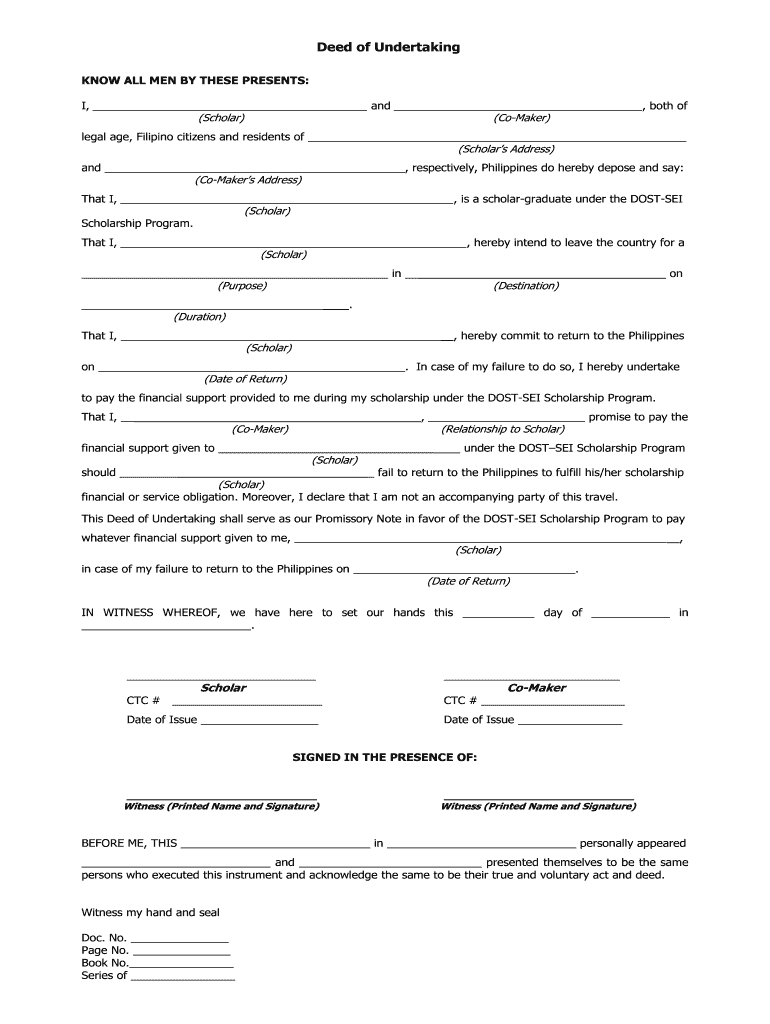
To facilitate the drafting process, it can be helpful to refer to sample formats of the Deed of Undertaking. Common elements included in a sample format may consist of:
- Title: Clearly state it as a "Deed of Undertaking."
- Preamble: Outline the purpose of the document.
- Main Content: Detailed clauses covering obligations, terms, and responsible parties.
- Signatory Section: Space for parties and witnesses to sign and date the document.
By utilizing a sample deed, individuals can ensure that they capture all necessary aspects while tailoring the document to their specific situation.
Conclusion: Significance of a Deed of Undertaking
The Deed of Undertaking in real estate transactions in the Philippines plays a crucial role in binding parties to their commitments. It functions as a legal safeguard, ensures compliance with obligations, and helps maintain transparency throughout various stages of real estate transactions. Understanding the structure, drafting process, and legal implications of this document can greatly benefit any party involved in real estate dealings.