





Definition & Meaning of Triage Form PDF
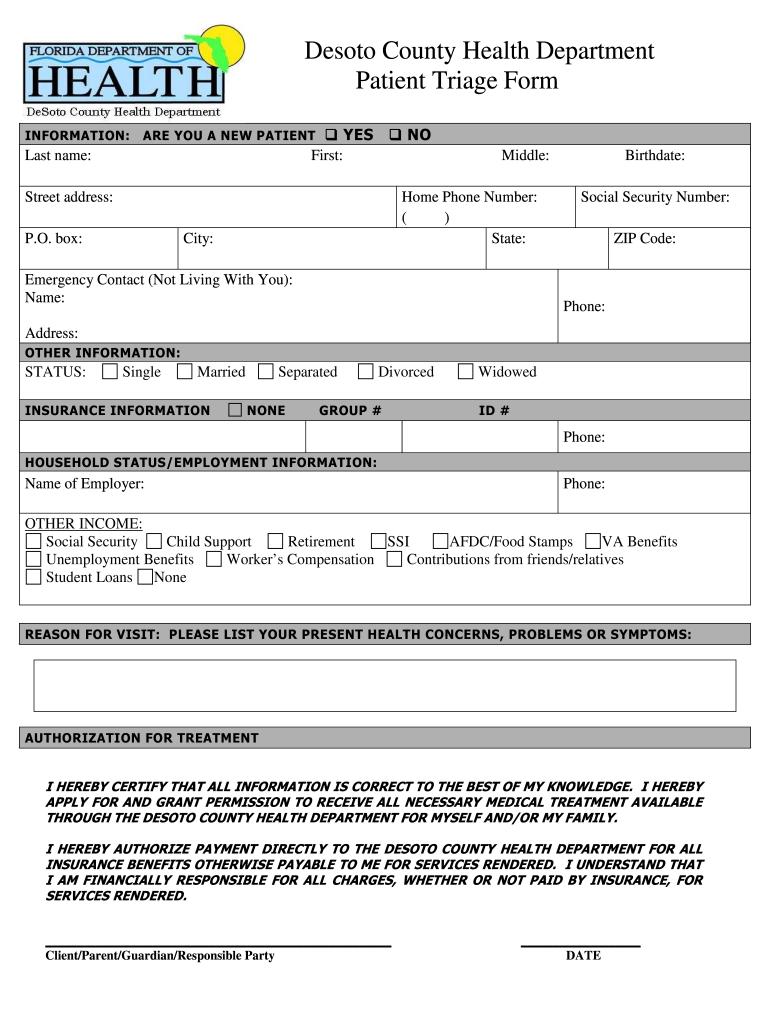
A triage form PDF is a structured document designed to assess and categorize patients based on the severity of their condition during medical evaluations. The purpose is to ensure that those who require urgent medical attention receive it in a timely manner while effectively organizing patient flow in clinical or emergency settings. This form collects essential demographic information, medical history, and other relevant details to help healthcare providers determine the appropriate course of action.
The triage assessment typically includes sections for personal information (name, age, contact details), presenting complaints (symptoms, duration), vital signs (heart rate, blood pressure), and any pertinent medical history (allergies, pre-existing conditions). By having a standardized template, medical facilities can enhance consistency and improve patient care.
Steps to Complete the Triage Form PDF
Completing a triage form PDF efficiently involves several steps. Each section of the form must be filled out accurately to ensure appropriate patient care. The following steps provide a comprehensive guide:
-
Gather Patient Information
- Collect the patient's full name, birth date, contact information, and insurance details.
-
Assess Presenting Complaints
- Document specific symptoms the patient is experiencing. Ask questions about the onset, duration, and severity of the symptoms.
-
Record Vital Signs
- Measure and input vital indicators, including temperature, blood pressure, respiratory rate, and heart rate. This data is crucial for triaging the patient correctly.
-
Capture Medical History
- Inquire about allergies, previous surgeries, chronic illnesses, and any medications the patient is currently taking. This section helps identify potential complications.
-
Final Review
- Double-check the completed form for accuracy and clarity. Make sure all sections are filled out correctly, as missing information could delay patient assessment.
-
Submit the Form
- Provide the completed form to the healthcare provider or designated staff for further evaluation.
By adhering to these steps, healthcare providers can ensure that the information collected enhances patient care and supports effective triage procedures.
How to Obtain the Triage Form PDF
Acquiring a triage form PDF is essential for medical facilities looking to streamline their patient assessment processes. Here's how to obtain this document:
-
Visit Trusted Medical Websites: Many healthcare organizations offer free downloadable triage form templates. Quality medical sites often provide these forms in PDF format to ensure easy access and compatibility.
-
Consult Professional Associations: Organizations like the American Medical Association frequently publish resources and templates for medical forms, including triage assessments. Membership may be required for some resources.
-
Use Document Management Platforms: Websites such as DocHub provide customizable PDF templates for triage forms. Users can modify existing forms to suit specific needs and download them directly.
-
Contact Healthcare Institutions: Local hospitals or clinics may have their own standardized triage forms. Institutions can provide copies or direct links to their templates.
-
Create Your Own: If existing forms do not meet specific needs, consider designing a triage form using document editing software. Ensure that all essential sections for patient assessment are included.
By utilizing these methods, healthcare providers can secure a triage form PDF that is suitable for their practice environment.
Important Terms Related to Triage Form PDF
Understanding the terminology surrounding a triage form PDF is vital for efficient communication in a medical setting. Here are key terms:
-
Triage: The process of prioritizing patient care based on the severity of their conditions and the immediacy of treatment required.
-
Vital Signs: Measurements that indicate the basic functions of the body, including heart rate, blood pressure, temperature, and respiratory rate.
-
Assessment: The evaluation of a patient's condition through history taking, physical examination, and relevant diagnostic testing.
-
Categorization: Dividing patients into groups based on the urgency of their needs, typically seen in emergency situations.
-
Electronic Health Records (EHR): Digital versions of patients' paper charts, which can include information from the triage process for continuous care.
-
Referral: The process of sending a patient to another healthcare professional or facility for specialized care based on the triage assessment.
Familiarity with these terms enhances communication and improves the overall effectiveness of triaging patients in various medical environments.
Key Elements of the Triage Form PDF
A well-structured triage form PDF includes several key elements that facilitate comprehensive patient assessment. The following components are critical:
-
Patient Information: This section captures essential identifying details such as name, date of birth, address, and insurance information, establishing a point of reference for all further medical interactions.
-
Medical History: A thorough medical history, including allergies, current medications, and prior health conditions, allows healthcare providers to anticipate potential complications and make informed decisions.
-
Symptoms Overview: Specific questions regarding the nature, location, and duration of symptoms help prioritize care based on the presenting complaint.
-
Vital Signs Section: This area is crucial for noting physiological measurements that can indicate the patient's current state of health, guiding urgency in treatment.
-
Assessment Scale: Some forms include a triage scale (e.g., Emergency Severity Index) that helps classify patients into different categories (e.g., immediate, urgent, non-urgent) based on their conditions.
-
Signature and Date: This final section ensures that the form is completed formally, often requiring the patient or staff member to sign, indicating all information is accurate and up-to-date.
By including these elements, a triage form can effectively support healthcare providers in delivering the required level of care, ensuring that no critical information is overlooked during the assessment process.