




01. Edit your plcb incident report online
Type text, add images, blackout confidential details, add comments, highlights and more.

Type text, add images, blackout confidential details, add comments, highlights and more.

Draw your signature, type it, upload its image, or use your mobile device as a signature pad.

Send ramp incident report via email, link, or fax. You can also download it, export it or print it out.
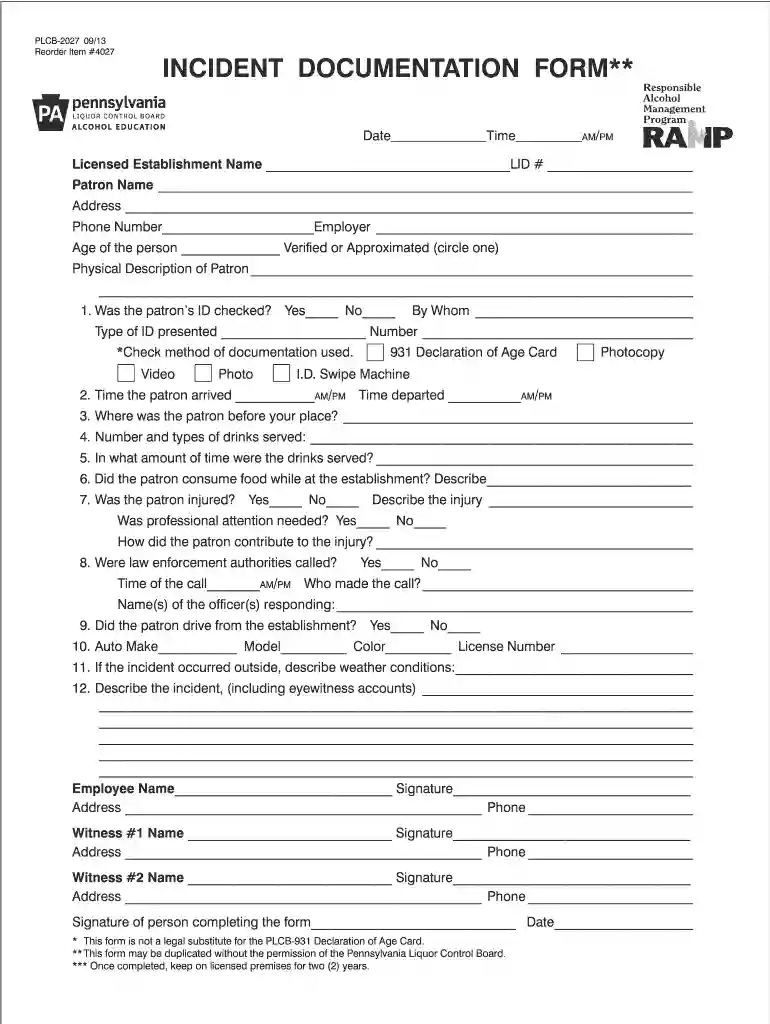
The incident documentation form, utilized by licensed establishments in Pennsylvania, is crucial for recording details regarding occurrences that involve patrons, particularly those related to alcohol consumption. This form serves multiple purposes, including documentation of incidents, compliance with state regulations, and protection for the establishment against potential legal disputes.
When completing the incident documentation form, you should include the following essential elements:
Patron Identification: This section captures identifying details about the patron involved in the incident, such as name, age, address, and any relevant identification numbers.
Drink Service Details: Record the specifics of the beverages served to the patron, including the type of drink, time served, and the server’s identification. This information is vital to establish a timeline of events.
Incident Description: Provide a thorough account of the incident, outlining what occurred, including whether any injuries were sustained and the involvement of law enforcement.
Witness Accounts: Document statements from any eyewitnesses. This can include their names, contact information, and a brief overview of their observations regarding the incident.
Follow-Up Actions: Note any subsequent actions taken by the establishment, such as notifying law enforcement or medical personnel, as this demonstrates the establishment's response to the incident.
Records such as incident documentation forms and proof of carding should be kept for two years. This is crucial for compliance with the Pennsylvania Liquor Control Board regulations, as maintaining these records protects the establishment legally and ensures accountability regarding interactions with patrons.
Establishments must document various incidents, including but not limited to:
Over-service of Alcohol: Situations where a patron is served alcohol beyond a responsible limit should be thoroughly recorded.
Altercations or Fights: These incidents require detailed documentation, including the involvement of multiple parties.
Medical Emergencies: Any event requiring medical intervention must be noted for liability protection.
Underage Drinking: If a minor is identified as consuming alcohol on the premises, this must be documented comprehensively.
When completing the incident documentation form, it is equally important to understand what should not be included:
Personal Opinions: Avoid subjective statements or opinions about the incident.
Speculative Information: Do not include unverified claims or speculations regarding what might have happened.
Confidential Information: Ensure that no private information about patrons that is not relevant to the incident is included.
The incident documentation form is integral to maintaining compliance with Pennsylvania Liquor Control Board requirements. Understanding its components and legal significance ensures that license holders protect their establishments effectively while fostering a safe environment for all patrons.
We've got more versions of the plcb incident report form. Select the right plcb incident report version from the list and start editing it straight away!
At DocHub, your data security is our priority. We follow HIPAA, SOC2, GDPR, and other standards, so you can work on your documents with confidence.
(a) Consume an alcoholic beverage of any kind or description, as defined by the. Liquor Control Board of Pennsylvania An incident report is submittedRead more
FORM MAY BE DUPLICATED AS NEEDED. ONCE COMPLETED, KEEP ON LICENSED PREMISES FOR TWO YEARS. PLCB-2027 10/23. LICENSED ESTABLISHMENT NAME: LID#:. PATRON NAME:Read more


