
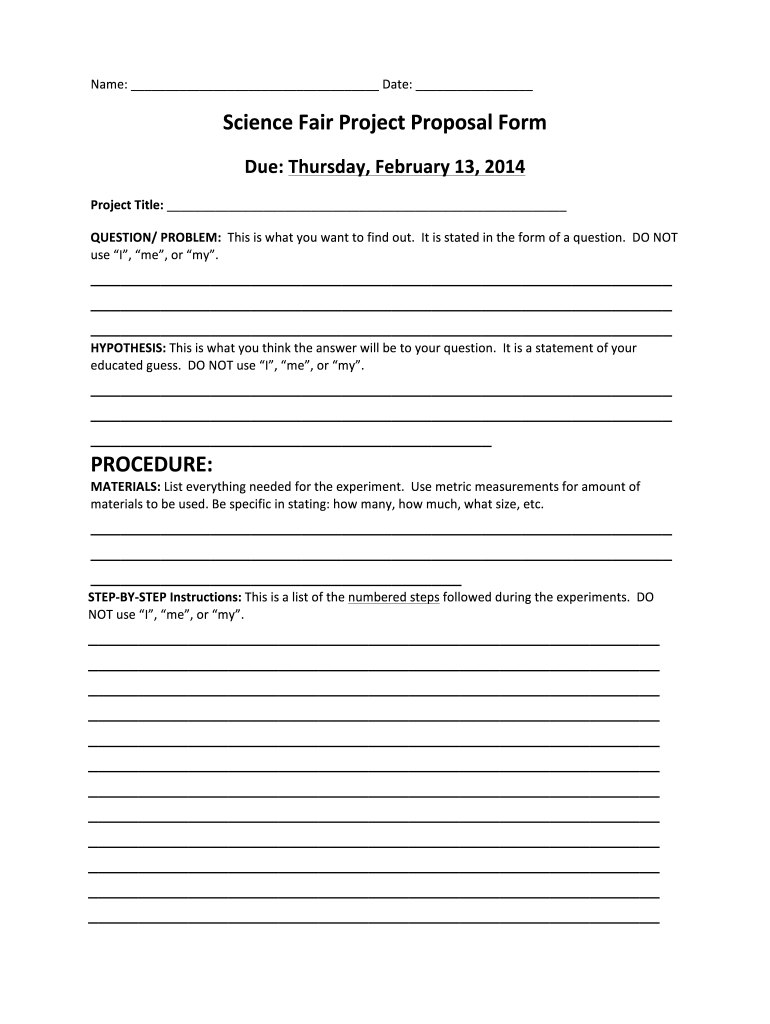







Definition & Meaning
A science fair proposal form is a structured document that outlines a student's intended project for a science fair. This form typically includes several key elements, such as the project title, hypothesis, methodology, and anticipated outcomes. The primary purpose of this form is to provide a comprehensive overview of the proposed project and to seek approval from teachers, mentors, or judging panels. In addition to detailing the scientific inquiry, the proposal form often helps students clarify their project goals and the steps needed to achieve them. Understanding the specific requirements of the science fair proposal form is essential for students to ensure their projects meet educational standards and fair regulations.
Key Elements of the Science Fair Proposal Form
To create an effective science fair proposal form, several key components should be included:
- Project Title: A concise yet descriptive name that captures the essence of the project.
- Problem Statement: Clear articulation of the scientific question being addressed.
- Hypothesis: An educated guess predicting the outcome of the experiment based on existing knowledge.
- Materials and Methods: Detailed enumeration of the tools and materials required for the experiment, alongside a step-by-step outline of the procedure.
- Data Collection and Analysis: Description of how data will be collected and analyzed to support or refute the hypothesis.
- Timelines: A clear schedule for completing various stages of the project, including milestones for research, experimentation, and presentation preparation.
Including these elements ensures that the proposal is comprehensive and can be evaluated effectively by judges or educators.
How to Use the Science Fair Proposal Form
Using the science fair proposal form involves several steps:
- Research the Topic: Begin by conducting preliminary research on the chosen topic to establish a foundation of understanding.
- Outline the Proposal: Use the form to outline the project's key elements, ensuring all important aspects are covered.
- Fill out the Form: Provide detailed responses to each section, using clear and precise language. Make sure to adhere to any provided guidelines.
- Review and Revise: After completing the original draft, review the proposal for clarity, coherence, and completeness. Consider seeking feedback from peers or mentors.
- Submit the Form: Adhere to the submission deadlines and protocol specified by your science fair rules, whether online, by mail, or in person.
Following these steps will help ensure that the proposal is well-prepared and meets all necessary requirements.
Important Terms Related to the Science Fair Proposal Form
Familiarity with specific terminology enhances the comprehension and effectiveness of the science fair proposal. Important terms include:
- Hypothesis: A testable prediction of what one expects to happen in their experiment.
- Variables: Factors that can change in an experiment; includes independent (manipulated) and dependent (measured) variables.
- Control Group: A group in an experiment that does not receive the treatment, used as a benchmark to measure how the other variable(s) perform.
- Data Analysis: The process of inspecting, cleaning, and modeling data to discover useful information, inform conclusions, and support decision-making.
Understanding these terms will aid students in articulating their project and ensuring their proposal aligns with scientific standards.
Examples of Using the Science Fair Proposal Form
Practical application of the science fair proposal form can significantly enhance student understanding:
- Science Fair Project Proposal Example: A student might propose an investigation into the effects of different fertilizers on plant growth, detailing the materials needed, methodology, and how results will be recorded over several weeks.
- Science Project Proposal Example: Another example could include a project examining the impact of temperature on the solubility of sugar in water by systematically testing various temperatures and measuring the amount of sugar that dissolves.
These examples reflect the variety of scientific inquiries that students can pursue and the critical thought involved in preparing the proposal.
Steps to Complete the Science Fair Proposal Form
Completing the science fair proposal form requires careful attention to detail and organization. Here are the essential steps:
- Select a Topic: Choose a scientific concept or question that interests you and is manageable within the given timeframe.
- Conduct Background Research: Gather existing information to inform your hypothesis and methodology, ensuring your project is based on solid scientific principles.
- Draft Your Proposal: Use the designated sections of the form to write your project details, maintaining clarity and a logical flow. Each section should build upon the last, leading to a complete picture of your proposed research.
- Edit for Precision: Check for grammatical correctness, scientific accuracy, and adherence to any length or format requirements specified by the science fair guidelines.
- Finalize and Submit: After final revisions, submit the complete proposal to the designated authority, whether that is a teacher, a committee, or an online portal.
By adhering to these steps, students can produce a thoughtful and comprehensive proposal that reflects their scientific understanding and project planning.
Who Typically Uses the Science Fair Proposal Form
The science fair proposal form is predominantly used by:
- Students: Primarily middle and high school students engaging in science fairs as part of their curriculum.
- Teachers: Educators guiding students in their scientific inquiries using the proposal form as a means to assess project feasibility and educational value.
- Judges and Organizers: Fair organizers who require a structured format for evaluating and approving projects prior to the fair.
Each group plays a vital role in ensuring the objectives of the science fair are met while promoting scientific inquiry and education.


State-Specific Rules for the Science Fair Proposal Form
Different states may have specific requirements regarding the completion of science fair proposal forms. These regulations can include:
- Ethics and Safety Protocols: Requirement for projects involving human subjects, animals, or hazardous materials to adhere to ethical guidelines established by local educational boards.
- Project Review Boards: Some states may require students to get approval from a review board prior to commencing their projects, especially for experiments that may pose risks.
- Submission Deadlines: Each state may have unique deadlines for when the proposal must be submitted, which can significantly affect project planning.
Understanding these guidelines is crucial for students to ensure compliance and a smooth experience participating in science fairs.




