
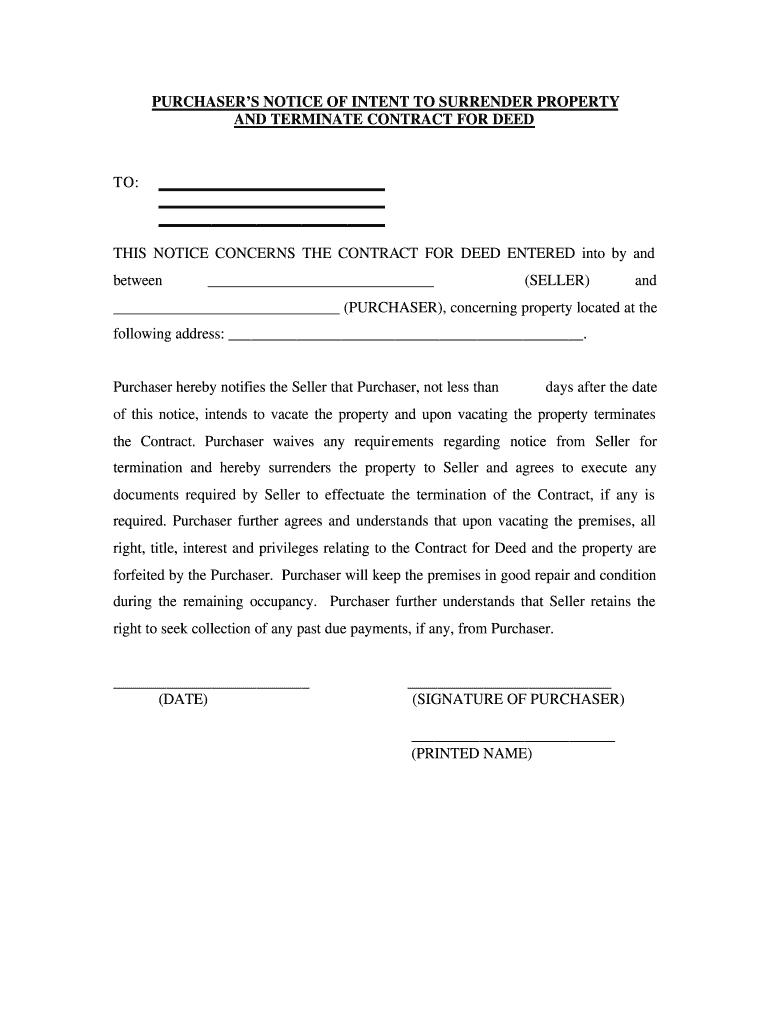







Understanding the Sample Letter of Surrender of Property
A sample letter of surrender of property serves as a formal notice from a tenant or a property purchaser to the landlord or property owner. It indicates the intent to vacate the premises and outlines the terms involved in surrendering the property. This type of letter helps to clarify the responsibilities of both parties and ensures that the process adheres to any applicable lease agreements or legal requirements.
Key Components of a Surrender Letter
When drafting a property surrender letter, it is crucial to include specific details to avoid disputes. Here are the essential elements to include in your letter:
- Identifying Information: Include complete names and addresses of both the sender (tenant or purchaser) and recipient (landlord or seller).
- Date of Notice: Clearly mention the date on which the letter is written.
- Property Description: Provide a clear description of the property being surrendered, including the address and any relevant identifiers, such as unit numbers.
- Intent to Surrender: State explicitly that you are surrendering the property and include the effective date of the surrender.
- Condition and Maintenance: Mention the condition of the property and outline any maintenance obligations until vacating.
- Return of Possession: Explain how and when the keys or access to the property will be returned.
- Waivers: If applicable, include a clause waiving any notice period required by the lease or contract.
- Signatures: Ensure that both parties sign the letter, acknowledging the surrender agreement.
Template for a Voluntary Surrender of Property Letter
Here is a sample letter format that can be modified according to specific circumstances:
[Your Name]
[Your Address]
[City, State, Zip Code]
[Date]
[Landlord/Property Owner's Name]
[Landlord's Address]
[City, State, Zip Code]
Subject: Surrender of Property
Dear [Landlord/Property Owner's Name],
I am writing to formally surrender the property located at [Property Address], effective on [Effective Date]. As per our agreement, I have ensured that the property is in acceptable condition, free from damage beyond normal wear and tear.
I will return the keys to the property on [Key Return Date]. Please confirm that my security deposit will be processed as outlined in our lease agreement.
Thank you for understanding. I appreciate our time as tenants/partners.
Sincerely,
[Your Name]
[Your Contact Information]
Legal Considerations When Surrendering Property
Before proceeding with a property surrender, it is essential to understand the legal implications that may arise. Some important points include:
- Lease Terms: Review the lease agreement thoroughly to ensure compliance with the rules regarding surrender.
- Security Deposit: Familiarize yourself with the laws governing the return of security deposits in your state.
- Notice Period: Determine if there is a required notice period for surrendering the property and ensure that you adhere to this timeline.
- Mutual Agreement: In some instances, a mutual release agreement may be necessary to officially terminate any obligations between tenant and landlord.
Steps to Complete Your Surrender Letter
To ensure a smooth surrender process, follow these steps:
- Gather Information: Collect all necessary identification and property details.
- Draft the Letter: Use the template provided to create your letter, ensuring all fields are filled out accurately.
- Review Lease Obligations: Check your lease agreement to confirm you are adhering to all terms.
- Send the Letter: Deliver the letter in a manner that provides proof of receipt (e.g., certified mail).
- Keep Records: Maintain a copy of the letter and any correspondence related to the surrender for future reference.
Scenarios for Property Surrender Letters
Different circumstances can lead to the need for a sample letter of surrender of property. Here are common scenarios:
- Tenant to Landlord: A tenant who has decided to move out before the lease ends may need to inform the landlord formally.
- Purchaser to Seller: In property sales, a buyer may have to surrender the property due to contract disputes or if they opt out before closing.
- Commercial Leasing: Businesses often submit surrender letters when downsizing or closing operations to mitigate lease obligations.
This substantive understanding and careful consideration of the letter of surrender of property will ensure compliance with legal standards and protect the interests of both signatory parties involved in the property transaction.




