
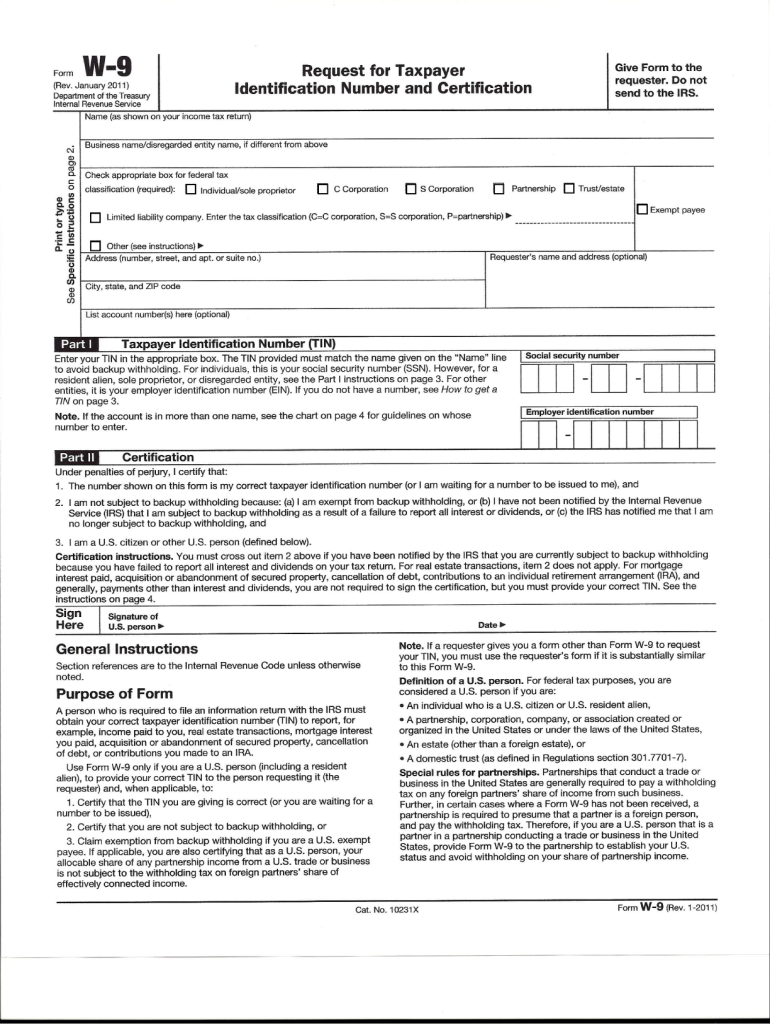




Here's how it works

01. Edit your dochub w9 online
Type text, add images, blackout confidential details, add comments, highlights and more.

02. Sign it in a few clicks
Draw your signature, type it, upload its image, or use your mobile device as a signature pad.

03. Share your form with others
Send fillable w 9 form via email, link, or fax. You can also download it, export it or print it out.
How to use or fill out W9 with our platform

- Click ‘Get Form’ to open the W9 form in the editor.
- Begin by entering your name in the first field. Ensure it matches your tax documents for accuracy.
- In the next section, provide your business name if applicable. This is crucial for identifying your entity type.
- Select the appropriate tax classification by checking the corresponding box. Options include individual, corporation, partnership, etc.
- Fill in your address details accurately. This includes street address, city, state, and ZIP code.
- Enter your taxpayer identification number (TIN), which can be either your Social Security Number (SSN) or Employer Identification Number (EIN).
- Review all entered information for correctness before signing at the bottom of the form.
Start using our platform today to fill out your W9 form online for free!
Fill out w9 online
It's free
It's free
Got questions?
We have answers to the most popular questions from our customers. If you can't find an answer to your question, please contact us.
Contact us
Who is required to submit a W9?
You must fill out a W-9 if you are a U.S. person (individual, sole proprietor, LLC, etc.) providing services or receiving certain reportable payments (like interest, real estate proceeds, awards) from a business or payer, especially if you expect to earn $600 or more in a year, to provide your Taxpayer Identification Number (TIN) for 1099 reporting and avoid backup withholding. Its primarily for independent contractors, freelancers, and vendors not treated as employees. Who needs to fill one out: Independent Contractors Freelancers: Anyone performing services for a business who isnt an employee. Landlords: Individuals or partnerships you pay rent to. Professionals: Consultants, attorneys, designers, and other specialists you pay. Vendors: U.S.-based vendors needing to DocHub their tax status. Individuals Receiving Certain Payments: For interest, dividends, real estate transactions, or award money. Why its required: To Provide Your TIN: The payer needs your Social Security Number (SSN), Individual Taxpayer Identification Number (ITIN), or Employer Identification Number (EIN). For 1099 Reporting: The payer uses the W-9 info to file forms like Form 1099-NEC for non-employee compensation. To Avoid Backup Withholding: Not providing a W-9 with a correct TIN can result in the payer withholding 24% of your payments. When its not usually needed: Employees: They receive a W-2 instead. Corporations (often): Businesses generally dont need W-9s from C-corporations or S-corporations (though exceptions exist). Foreign Persons: They should use a Form W-8 instead. For financial advice, consult a professional. About Form W-9, Request for Taxpayer Identification Number and Use Form W-9 to provide your correct Taxpayer Identification Number (TIN) to the person who is required to file an information retIRS (.gov)Who is required to fill out a W-9 tax form? | DocHubDocHub
Why is someone asking me for a W9 form?
Someone is asking for a W-9 form to get your correct name, address, and Taxpayer Identification Number (TIN, usually your SSN) so they can legally report payments made to you (like freelance income, interest, or rent) to the IRS, often for preparing Form 1099s for the tax year. Its a standard request for independent contractors, freelancers, or anyone receiving certain types of income from a business, ensuring proper tax reporting and determining if backup withholding is needed. Common Reasons for a W-9 Request: Independent Contractor Payments: If youre a freelancer or gig worker, the business needs it to issue a Form 1099-NEC (Nonemployee Compensation) if they pay you $600 or more in a year. Other Income: For interest, dividends, rents, or other payments over a certain threshold. Real Estate/Mortgage: For mortgage interest paid or real estate transactions. Tax Compliance: The requester needs your information to comply with IRS rules and avoid penalties. What to Do: Fill it out: Provide your correct name, address, and TIN (Social Security Number or ITIN). Sign it: Sign and return the form to the requester. Be cautious: Ensure the requester is legitimate; you can ask for their Tax ID to verify. What if You Dont Provide It? You might face backup withholding (where the payer takes out 24% of your payment for taxes) and a $50 penalty for each failure to provide the info, according to Forbes. For financial advice, consult a professional. Youre Asked For An IRS Form W-9, What Should You Say?Jan 27, 2021ForbesInstructions for the Requester of Form W-9 (03/2024) - IRS.govMar 13, 2024 Individual Taxpayer Identification Number (ITIN) Form W-9 (or an acceptable substitute) is used by persons required toIRS (.gov)
What is a W9 form used for?
A IRS Form W-9 is used to request a persons correct name, address, and Taxpayer Identification Number (TIN) from individuals or entities (like freelancers or vendors) receiving certain payments from a business or payer. The business uses this information to report payments to the IRS on Form 1099, ensuring accurate tax reporting for things like independent contractor earnings, interest, dividends, or other taxable income. Key purposes of Form W-9: Information Gathering: Collects your name, business name, address, and TIN (Social Security Number for individuals, EIN for businesses). Tax Reporting: Allows businesses to correctly file information returns (like Form 1099) with the IRS for payments made to you. Backup Withholding: Helps avoid backup withholding (a mandatory tax withholding) if you dont provide a valid TIN. Verification: Used by payers to confirm your identity and tax status for various reportable transactions, including grants, royalty payments, and real estate transactions. Who fills it out: Independent contractors, freelancers, and self-employed individuals. Vendors and other service providers. Anyone receiving reportable income from a U.S. person or entity that needs to report it to the IRS. When its used: When a business engages you as a non-employee for services. When payments to you are expected to DocHub certain IRS reporting thresholds (e.g., $600 for contractors). For various other taxable events like mortgage interest, rents, or royalties. For financial advice, consult a professional. Form W-9 (Rev. March 2024) - IRS.govUse Form W-9 only if you are a U.S. person (including a resident alien), to provide your correct TIN. Caution: If you dont returnIRS (.gov)About Form W-9, Request for Taxpayer Identification Number and Certification | Internal Revenue ServiceIRS (.gov)
Who pays the taxes on a W9?
Payments earned by a contractor who completes a W-9 form arent subject to IRS withholding, meaning its the payees responsibility to report the income and pay the self-employment taxes, which is calculated at a rate of 15.3 percent as of 2022.
Whats the difference between a 1099 and a W-9?
A W-9 collects a contractors tax info (name, TIN) from them; a 1099 reports payments (like $600+) made to that contractor to the IRS and the contractor at year-end, using the W-9 data. Think of the W-9 as the data gathering form (payee fills it out) and the 1099 (e.g., 1099-NEC) as the reporting form (payer fills it out) for non-employee compensation. You need the W-9 before you can correctly file the 1099. This video explains the basic differences between W-9 and 1099 tax forms: 54sIntuit QuickBooksYouTube Feb 12, 2026Form W-9 (Request for Taxpayer Identification Number and Certification) Who Fills It Out: The independent contractor or freelancer. Purpose: To provide their name, address, and Taxpayer Identification Number (TIN) (Social Security Number or Employer Identification Number) to the business paying them. When: Before or at the start of the contract/service. Why its needed: The business keeps it on file to accurately prepare the 1099. This video explains what a W-9 form is and why its important: 56sHR Party of OneYouTube Dec 10, 2024Form 1099 (e.g., 1099-NEC for Nonemployee Compensation) Who Fills It Out: The business (payer). Purpose: To report payments of $600 or more made to a non-employee contractor during the year to the IRS and the contractor. When: After the tax year ends (typically by January 31st). Why its needed: The contractor uses it to file their own taxes, and the IRS uses it for income verification. This video explains what a 1099 form is and its importance: 1mPatrick Bray CPAYouTube Feb 16, 2023Key Relationship A business uses the information from a W-9 to create and file the 1099. Without a W-9, a business might face penalties for not reporting income correctly. AI can make mistakes, so double-check responsesW-9 vs. 1099: Key Differences for Finance Compliance Teams - TipaltiFeb 13, 2026 The main difference between the W-9 form and the 1099 tax form is that the supplier or independent contractor fills ouTipaltiForms and associated taxes for independent contractors | Internal Revenue ServiceNov 26, 2025IRS (.gov)
Security and compliance
At DocHub, your data security is our priority. We follow HIPAA, SOC2, GDPR, and other standards, so you can work on your documents with confidence.
Learn more


Related forms

Voya outgoing rollover form
The document is an Outgoing Rollover/Transfer/Exchange Request form for Fixed/Variable Annuities related to employer-fun ...
Study Requisition Form - Cardiology - Health in Code
The document is an Informed Consent Form for genetic testing related to cardiology, requiring the patient's or guardian' ...
Rtf 3
The document is a form (RTF-3) issued by the New Jersey Division of Taxation for claiming refunds of the Realty Transfer ...

Forms Public Employee Retirement System of Idaho
The document outlines the process for Idaho residents to indicate their tax withholding preferences from their PERSI ben ...
Delaware 1100s form
The document is the 2021 Delaware S Corporation Reconciliation and Shareholders Information Return Form 1100S, which out ...

2021 TAX TABLES
The document provides the 2021 tax tables for Individual Income Tax in Arkansas, detailing two main tables: the Low Inco ...
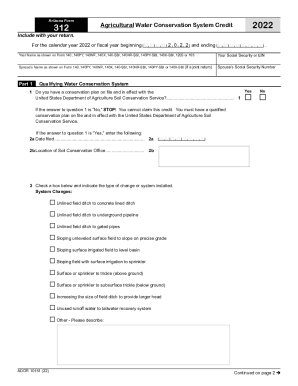
For the calendar year 2022 or fiscal year beginning M M D D 2 0 2 2 and ending M M D D Y Y Y Y
For the calendar year 2022 or fiscal year beginning M M D D 2 0 2 2 and ending M M D D Y Y Y Y
The document is the Arizona Form 312 for the year 2022, which pertains to the Agricultural Water Conservation System Cre ...
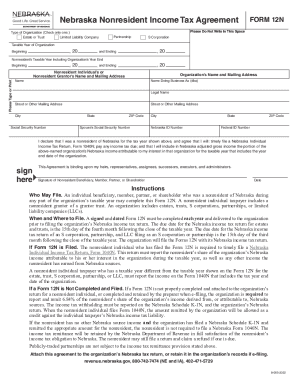
Revenue.nebraska.govtax-forms2021FORM 12N Nebraska Nonresident Income Tax Agreement 2021
The document is a Nebraska Nonresident Income Tax Agreement (Form 12N) that outlines the requirements for nonresident in ...
People also ask
Is a W9 and a 1099 the same thing?
No, a W-9 and 1099 are not the same; a W-9 collects a contractors tax info, while the payer uses that info to file a 1099 to report payments to the IRS and the contractor, so they work together but serve different purposes. The contractor fills out the W-9, giving their TIN and details to the business; the business then uses that W-9 to complete the 1099-NEC (for nonemployee compensation) or other 1099 forms and send them out at year-end. Form W-9 Who fills it out: The independent contractor (payee). Purpose: To provide their name, address, and Taxpayer Identification Number (TIN) to the business paying them. When: At the beginning of the working relationship, before payments are made. Form 1099 (e.g., 1099-NEC) Who fills it out: The business (payer) that made payments. Purpose: To report the total income paid to the contractor (usually $600 or more) to the IRS and the contractor. When: Annually, typically by January 31st, after the tax year ends. In simple terms: You give the company your W-9 when they hire you; the company uses the W-9 to send you a 1099 at the end of the year showing how much they paid you. AI can make mistakes, so double-check responsesForms and associated taxes for independent contractors | Internal Revenue ServiceNov 26, 2025IRS (.gov)W-9 vs. 1099: Key Differences for Finance Compliance Teams - TipaltiFeb 13, 2026 The main difference between the W-9 form and the 1099 tax form is that the supplier or independent contractor fills ouTipalti
Why would someone need our W9?
Youre being asked for a W-9 because a business or entity paying you needs your correct Taxpayer Identification Number (TIN) to report payments to the IRS, especially if youre an independent contractor, freelancer, or vendor receiving over a certain amount (like $600), so they can issue you a Form 1099 at year-end, and also to verify youre a U.S. person. Its a standard IRS request for non-employee income to ensure accurate tax reporting and can also cover other income like interest or real estate transactions. Common Reasons for a W-9 Request Independent Contractor/Freelancer Payments: If youre paid for services but arent a traditional employee, the payer needs your W-9 to report payments (usually $600+) on a Form 1099-NEC. Gig Economy Work: Similar to contractors, platforms often request W-9s to document earnings. Other Reportable Income: Businesses collect W-9s for things like interest, dividends, or mortgage interest paid to individuals. Backup Withholding: It helps the payer determine if they need to withhold taxes from your payments and send them to the IRS. U.S. Person Certification: It certifies youre a U.S. person, avoiding backup withholding required for non-U.S. persons. What the Payer Does with It Collects your legal name, address, and TIN (SSN, ITIN, EIN). Uses this info to file an information return (like a 1099) with the IRS at the end of the year, showing how much they paid you. What You Need to Do Provide your accurate information, including your name, address, and TIN. If youre not sure why youre being asked, clarify with the requester what type of income or payment they are reporting. For financial advice, consult a professional. Youre Asked For An IRS Form W-9, What Should You Say? - ForbesJan 27, 2021 Usually, if they dont agree the money simply will not be paid, or the payor will withhold 24% and send it to the IRS.ForbesForms and associated taxes for independent contractors - IRSNov 26, 2025 Form W-9. If youve made the determination that the person youre paying is an independent contractor, the first step IRS (.gov)


