
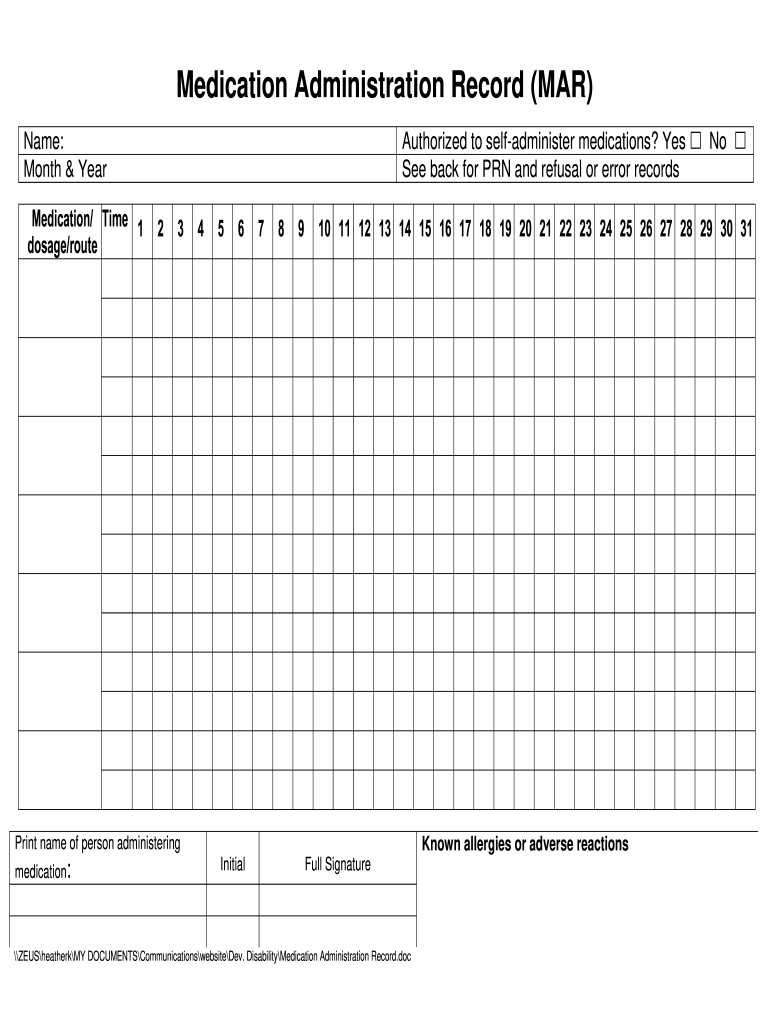







Key Elements of the Medication Administration Record
A Medication Administration Record (MAR) is essential in managing patient medications within healthcare settings. Understanding the key elements of this record can enhance compliance and safety. Here are the vital components that should be included:
-
Patient Information: This segment includes the patient's name, date of birth, medical record number, and any relevant identification information. Accurate patient identification is critical for preventing medication errors.
-
Medication Details: Each entry should include the name of the medication, dosage, route of administration (e.g., oral, intravenous), and frequency. Specificity here minimizes risks related to misuse and ensures adherence to treatment regimens.
-
Administration Times: A clear schedule should outline when medication is due or administered. This includes documentation of all administered doses and any missed doses, critical for tracking compliance and effectiveness.
-
PRN Medications: For "as needed" (PRN) medications, records should include indications for use and responses to these medications. Monitoring PRN use helps healthcare professionals evaluate treatment efficacy.
-
Vital Signs: Recording pertinent vital signs before and after medication administration is relevant for certain medications, like those affecting cardiovascular status. This ensures that the patient’s health is continuously monitored.
-
Allergies and Adverse Reactions: It's vital to note known allergies or adverse reactions to medications to avoid prescribing medications that could trigger these responses.
-
Signature of Personnel: The individual administering the medication must sign or initial the record, providing accountability. This documentation verifies that the medication was given as prescribed.
-
Date and Time Stamps: Each entry should be dated and time-stamped. This practice creates an accurate timeline for monitoring medication effects and assures proper documentation for audits.
How to Use the Medication Administration Record
Using the Medication Administration Record efficiently involves following systematic procedures. Here’s how to ensure proper use:
-
Preparation: Before administering any medication, review the MAR for accuracy. Verify patient identification, medication details, and any allergies or contraindications.
-
Administration: As medications are administered, document each dose on the MAR, noting the time, route, and any observations about the patient’s condition.
-
Post-Administration: After the medication is given, monitor the patient for any side effects or reactions. Record vital signs and any concerns in the MAR.
-
Update the MAR: If a medication is refused or not administered for any reason, this must be noted immediately, along with the reasoning behind it.
-
Final Review: At the end of shift or medication rounds, review the MAR entries for completeness. Ensure that all doses are logged accurately and follow up on any abnormal findings.
Adhering to these steps creates a reliable and effective system for medication management.
Legal Use of the Medication Administration Record
The MAR must adhere to strict legal standards to ensure compliance and protect patient rights. Here are the essential legal considerations:
-
Confidentiality: All records must comply with HIPAA regulations, ensuring patient information is kept confidential and secure. Unauthorized access to MARs can lead to significant legal ramifications.
-
Documentation Accuracy: Legally, all entries in the MAR must be accurate and timely. Inaccurate records could lead to liability in cases of medication errors.
-
Retention Policies: Healthcare facilities must maintain MARs for a specified duration as mandated by state laws and institutional policies. This duration typically ranges from five to seven years.
-
Legal Accountability: Healthcare providers must understand that documentation in the MAR serves as a legal document. It can be examined during legal battles or audits, establishing accountability for care delivery.
-
State Regulations: Different states have specific laws regulating the format and use of MARs. Practitioners should familiarize themselves with local laws to ensure compliance.
Understanding these legal frameworks is crucial for healthcare providers using the MAR.
Important Terms Related to the Medication Administration Record
Familiarity with terminology associated with the Medication Administration Record enhances understanding and communication among healthcare providers. Here are the essential terms:
-
Administration Time: The scheduled time at which medication is supposed to be administered, critical for managing timing directions.
-
Dosage: Refers to the specific amount of medication given, necessary for both compliance and therapeutic effect.
-
PRN (as needed): This term describes medications that are not scheduled and can be administered conditionally, based on patient needs.
-
Medication Reconciliation: A process where healthcare providers ensure that a patient’s medication lists are accurate and complete across transitions in care.
-
Adverse Drug Reaction (ADR): Refers to any harmful or unintended reaction to a drug. Recognizing ADRs is essential for patient safety.
Understanding these terms fosters clarity in discussions related to medication management.
Steps to Complete the Medication Administration Record
Completing the Medication Administration Record involves specific steps to ensure thorough documentation. The process can be broken down as follows:
-
Identify the Patient: Confirm the identity of the patient using two identifiers, such as name and date of birth or medical record number.
-
Verify Medication Orders: Cross-check physician orders against the MAR to ensure correct medication, dosage, route, and timing.
-
Administer the Medication: Once verified, administer the medication as prescribed. Observe and document the patient’s reactions and responses immediately following administration.
-
Record the Administration: Immediately after administering the medication, enter the details into the MAR, including the date, time, and signature. Ensure PRN medications are logged with the dose and indication for use.
-
Evaluate Outcomes: Post-administration assessments are critical. Record vital signs and any noted side effects or allergic reactions to the medication administered.
-
Communicate Changes: If any concerns arise during or after medication administration, report these to the healthcare team to ensure patient safety.
Following these steps ensures compliance and enhances the safety of medication administration processes.




