






Definition and Purpose of IRS Form 433-B
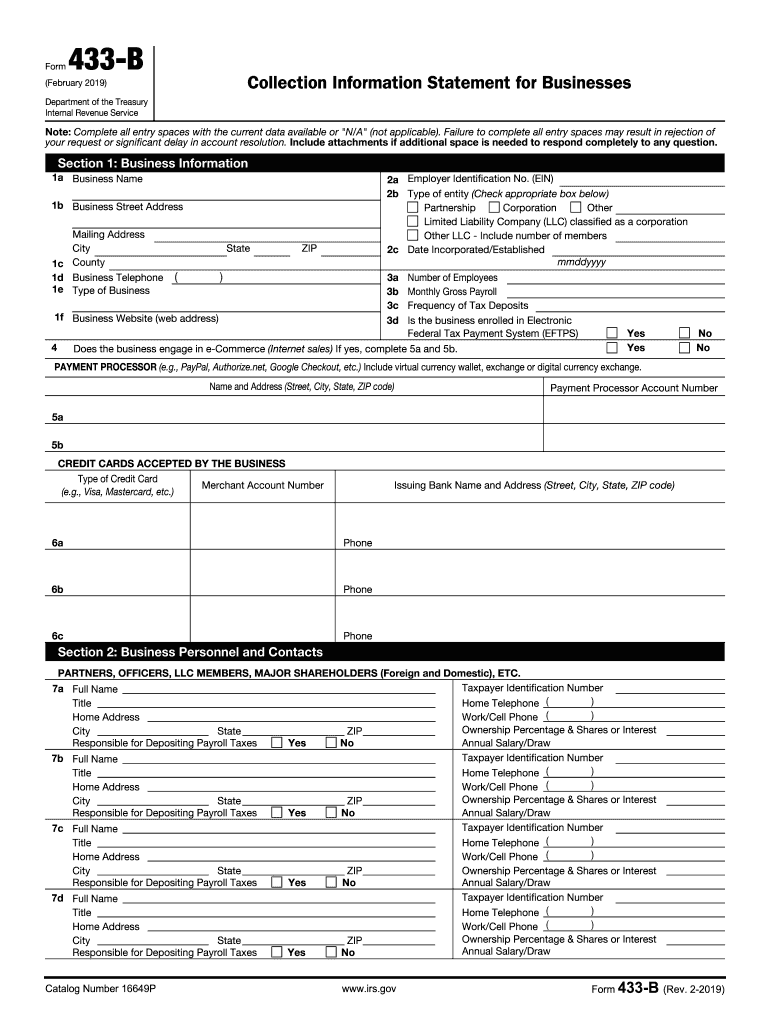
Form 433-B, officially known as the Collection Information Statement for Businesses, is a critical document used by the Internal Revenue Service (IRS) to gather detailed financial information from businesses. Its primary purpose is to evaluate a business's ability to pay its tax liabilities. The form is comprehensive, requiring information about the business's assets, liabilities, income, and expenses. This data is essential for the IRS when negotiating payment plans or evaluating offers in compromise from businesses struggling with their tax obligations.
Businesses use this form in various contexts, such as during audits or when requesting an installment agreement. The information provided helps the IRS determine an appropriate course of action based on the financial health and cash flow patterns of the business in question. Understanding its purpose will aid businesses in providing accurate and sufficient data to support their financial claims.
Steps to Complete IRS Form 433-B
Completing Form 433-B involves several detailed steps:
-
Business Information: Start by providing basic business information, including business name, address, and employer identification number (EIN). This section also requires information about the type of business entity, such as a corporation, partnership, or sole proprietorship.
-
Financial Information: Here, you’ll detail the business’s current financial status. This includes providing bank account details, accounts receivable information, and a breakdown of monthly income and expenses.
-
Assets and Liabilities: List all business assets, including vehicles, real estate, and machinery. Note any outstanding liabilities, including loans and credit card debts tied to the business.
-
Revenue and Expenses: Provide comprehensive data on monthly revenues and expenses. This involves detailing gross receipts, cost of goods sold, and any other ordinary and necessary business expenses.
-
Verification: Sign and date the form to verify the accuracy of the information provided. Prepare any required attachments that support the financial data you’ve submitted, as these documents solidify the credibility of your statements.
Completing this form accurately is crucial, as any discrepancies can lead to complications with the IRS. It’s often beneficial to consult with a tax professional to ensure all information is correct and complete.
How to Obtain IRS Form 433-B
Acquiring Form 433-B is straightforward. The IRS offers several methods to obtain this necessary form:
-
IRS Website: The most direct way is to download the form from the official IRS website. The site provides the latest version of the form, ensuring you have the most updated requirements and guidelines at your disposal.
-
Local IRS Office: Visit your local IRS office to obtain a physical copy of the form. Staff at the office can also assist with any questions regarding how to fill out the form.
-
Tax Professionals: Many tax advisors and accountants maintain copies of Form 433-B. They can also provide insights on how best to complete it to meet your specific business needs.
These options ensure that form acquisition is accessible for businesses across different locations and preferences, whether digital or paper-based.
Who Typically Uses IRS Form 433-B
IRS Form 433-B is primarily utilized by:
-
Businesses with Tax Debt: Companies that owe back taxes and are seeking to negotiate payment terms or resolutions with the IRS will need to complete this form. It outlines their financial ability to repay their obligations.
-
Businesses Undergoing Audits: Those that are being audited may also be asked to submit Form 433-B to provide transparency regarding their financial state.
-
Entities Requesting Payment Plans: Businesses unable to pay their tax debt in full may use this form as part of the process to request an installment agreement or an offer in compromise.
This form is an essential tool for businesses facing financial difficulties related to their tax obligations, offering a structured way to communicate their financial circumstances with the IRS.
Key Elements of IRS Form 433-B
Several critical sections make up Form 433-B:
-
Basic Identification: Includes business name, address, and EIN, essential for IRS tracking and identification purposes.
-
Financial Conditions: Details the company’s existing financial obligations and resources, a critical component for tax liability evaluation.
-
Asset and Liability Declaration: Offers a snapshot of the business’s capacity to fulfil its financial responsibilities.
-
Monthly Revenue and Expenses: Serves to provide the IRS with insights into the business’s cash flow, helping to establish realistic repayment plans.
Each of these elements requires accurate and detailed information, as they form the basis for any subsequent financial negotiations with the IRS.
Required Documents for IRS Form 433-B
Supporting documentation is critical when submitting Form 433-B. Businesses should prepare:
-
Bank Statements: Recent statements to verify financial information reported.
-
Accounts Receivable and Payable Ledgers: To support the financial data concerning cash flow and outstanding obligations.
-
Proof of Assets and Liabilities: Documentation related to holdings and debts, such as mortgage or loan statements, to substantiate the financial claims made on the form.
These documents validate the information provided on the form, helping to ensure a smoother process with the IRS. It is crucial to keep these records organized and readily available to respond promptly to any IRS requests for further evidence.
Form Submission Methods for IRS Form 433-B
There are multiple submission options for businesses filing Form 433-B:
-
Mail: Businesses can complete the form and submit a hard copy via mail. This traditional method provides a tangible record of the submission.
-
Online Submission: For those who prefer digital methods, the IRS offers electronic filing services, allowing businesses to submit forms through the IRS website’s secure portal.
-
In-person at IRS Offices: Submissions can be made directly at an IRS office, where staff may offer guidance and answers to any immediate questions.
Choosing the appropriate submission method is essential for ensuring timely and efficient processing by the IRS.
Penalties for Non-Compliance
Failure to submit Form 433-B when required can lead to serious consequences, including:
-
Levies: The IRS may impose levies on your accounts if they do not receive the necessary information for resolving tax debt.
-
Interest and Penalties: Continued non-compliance can lead to increased interest rates and penalty fees, exacerbating the business’s financial burden.
-
Legal Action: In extreme cases, ignoring IRS requirements can result in legal proceedings, putting the business at risk of further financial and operational challenges.
Ensuring the accurate and timely submission of Form 433-B helps avoid these penalties and facilitates a cooperative relationship with the IRS, potentially leading to more favorable outcomes for businesses seeking financial relief.