
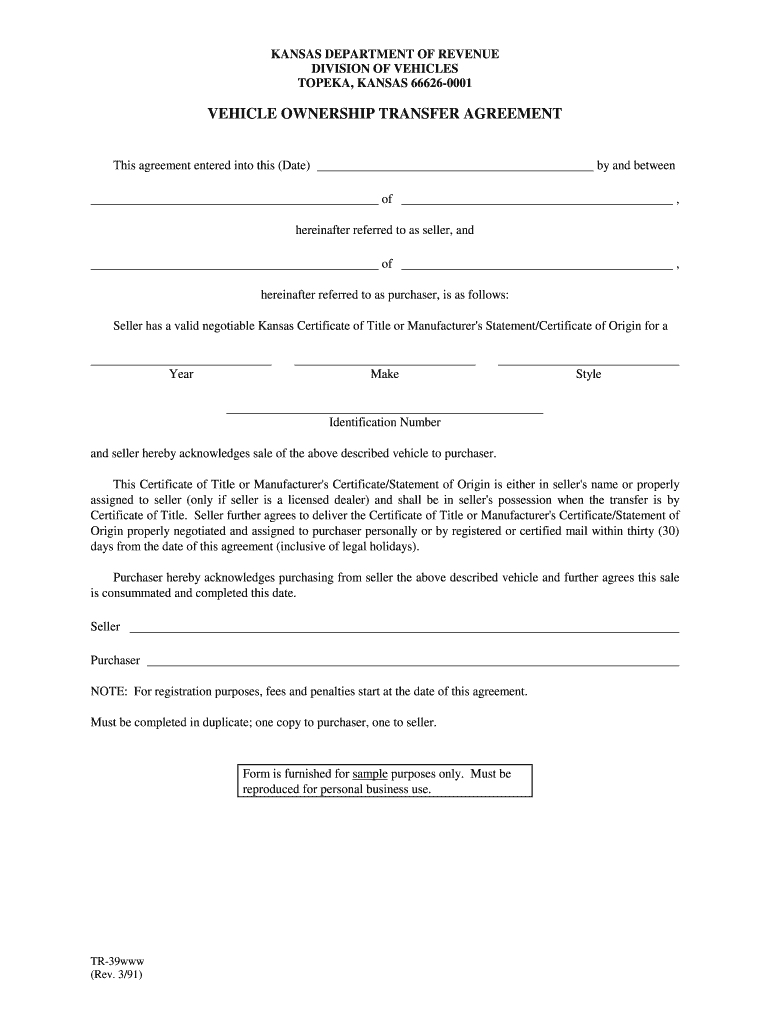







Definition and Meaning of Vehicle Ownership Transfer Agreement Form
A vehicle ownership transfer agreement form is a legal document that facilitates the transfer of ownership from one person to another. This form outlines the terms of the transaction between the seller and the buyer, ensuring that both parties understand their rights and responsibilities. It typically includes essential details such as the vehicle identification number (VIN), the make and model of the vehicle, the sale price, and the date of transfer. This agreement protects both the seller, who needs to formally document the sale to avoid future liabilities, and the buyer, who requires clear proof of ownership to register the vehicle under their name.
The use of this form is critical in various scenarios, particularly when purchasing used vehicles from private sellers or when formalizing the sale within a family or among friends. Without a properly executed ownership transfer agreement, issues might arise regarding ownership disputes or liability for accidents occurring after the sale. This document serves not only to clarify ownership but also provides a record that can be referenced in any related legal matters.
How to Use the Vehicle Ownership Transfer Agreement Form
Using the vehicle ownership transfer agreement form requires careful attention to detail. To effectively use this document, both the seller and the buyer should adhere to the following steps:
-
Gather Necessary Information: Each party should collect relevant details about the vehicle, including:
- VIN
- Make, model, and year
- The current owner's name
- Odometer reading at the time of transfer
- Sale price and payment method
-
Complete the Form: Fill in the form with accurate information. Both parties should ensure that their names, addresses, and contact information are correctly listed, alongside the vehicle's detailed description.
-
Sign the Document: Once completed, both parties must sign the form. This acknowledgment signifies that both the buyer and seller agree to the terms outlined in the agreement.
-
Keep Copies: Each party should retain a copy of the signed form for their records. This is crucial for future reference and for handling any subsequent vehicle registration processes.
-
Register the Vehicle: The buyer must take the signed agreement to their local department of motor vehicles (DMV) or equivalent agency to formally register the vehicle in their name, alongside any required payment of fees and taxes.
Utilizing this form ensures a transparent transaction and minimizes potential disputes over the vehicle's ownership.
Steps to Complete the Vehicle Ownership Transfer Agreement Form
Completing the vehicle ownership transfer agreement form requires attention to detail and proper sequence to ensure that all necessary information is captured effectively. The following steps outline the process:
-
Download the Form: Obtain the vehicle ownership transfer agreement form from a reliable source, often available directly from state DMV websites or reputable document creation platforms.
-
Provide Seller Information: Include the seller's full name and address. This establishes their identity as the current owner of the vehicle.
-
Enter Vehicle Details:
- VIN: This unique code identifies the vehicle.
- Make and Model: Clearly state the manufacturer and model of the vehicle.
- Year: Indicate the year the vehicle was manufactured.
- Odometer Reading: Provide the mileage at the time of sale.
-
Detail Sale Information:
- Sale Price: State the agreed-upon monetary amount for the vehicle.
- Payment Method: Clearly specify how the transaction will be conducted (cash, check, etc.).
-
Transfer Conditions: Include any conditions associated with the transfer, such as warranties or disclaimers about the vehicle’s condition.
-
Signatures: Ensure both buyer and seller sign the document. Depending on state requirements, a witness or notarization may also be necessary.
-
File with DMV: After completing and signing the form, present it to your local DMV to finalize the registration and ownership transfer process.
Following these steps will help ensure that the vehicle ownership transfer is executed properly and legally recognized.
Important Terms Related to the Vehicle Ownership Transfer Agreement Form
Understanding key terms associated with the vehicle ownership transfer agreement form can simplify the process and enhance comprehension of its implications. Some important terms include:
- Vehicle Identification Number (VIN): A unique alphanumeric code assigned to every vehicle, used to track its history and ownership.
- Title: A legal document that records ownership of a vehicle, which must be transferred to the new owner during the sale.
- Odometer Reading: The measurement of the distance traveled by the vehicle, recorded at the time of sale to prevent fraudulent representations.
- Power of Attorney (POA): A legal authorization that allows someone to act on behalf of another person in legal matters, which may be useful in transactions involving shared ownership.
- Buyer's Premium: Any additional fees that may apply beyond the purchase price, often encountered in auction settings but relevant in private transactions as well.
- Notarization: The process of legally certifying a document by a notary public, which may be required in some states for the transfer agreement to be valid.
Familiarity with these terms helps participants in the vehicle sale understand their rights and obligations, ensuring a smoother transaction.
State-Specific Rules for the Vehicle Ownership Transfer Agreement Form
The rules governing the vehicle ownership transfer agreement form can vary significantly by state, as each state has its regulations and requirements for vehicle registration and ownership transfer. It is crucial to familiarize oneself with local laws to ensure compliance. Key state-specific considerations include:
-
Paperwork: Some states may require additional documents to be submitted alongside the ownership transfer agreement, such as a bill of sale or a lien release form if the vehicle was financed.
-
Fees: Different states have varying fees associated with the filing of transfer forms and registration. Knowing these fees upfront can help avoid surprises during the registration process.
-
Odometer Disclosure Statements: Certain states mandate that sellers provide an odometer disclosure statement, which is a separate document that confirms the mileage reading at the time of transfer.
-
Title Requirements: Requirements for transferring the title can differ. In some states, the seller may need to obtain a duplicate title before the transfer can be processed.
-
Timing of Transfer: Each state has its timeline within which the transfer must be completed after the sale. Familiarizing oneself with this timeline can help prevent penalties.
-
Tax Implications: Different states have their tax structures that may provide tax benefits or impose sales tax on the transaction. Being aware of these regulations is essential for both buyers and sellers.
Understanding state-specific rules helps ensure that both the seller and buyer fulfill their legal obligations and streamline the ownership transfer process without unnecessary complications.




